
Three Wins in Five Days, Seven in Seven ODIs — Afghanistan's Real Test Wasn't in Sharjah
**मुख्य उत्तर:** अफ़ग़ानिस्तान ने शारजाह में त्रिकोणीय सीरीज़ का ख़िताब जीता, फ़ाइनल में ज़िम्बाब्वे को सात विकेट से हराकर। पाँच दिनों में तीन मैच जीते, और रहमत शाह की कप्तानी में अफ़ग़ानिस्तान का वनडे रिकॉर्ड सात मैच, सात जीत है। कोच रिचर्ड पाइबस ने इसे टीम की बढ़ती गहराई और ज़िम्मेदारी-विभाजन का नतीजा बताया। **मुख्य तथ्य:** - फ़ाइनल में ज़िम्बाब्वे को सात विकेट से हराया; ग्रुप चरण में ज़िम्बाब्वे पर 158 रन की जीत और बांग्लादेश पर सात विकेट की जीत दर्ज की। - पाँच दिनों में तीन मैच जीते, शारजाह की गर्मी और उमस के बीच। - रहमत शाह ने हशमतुल्लाह शाहिदी से वनडे कप्तानी संभाली; उनके नेतृत्व में अफ़ग़ानिस्तान ने सातों वनडे जीते। - रिचर्ड पाइबस ने शीर्ष टीमों के ख़िलाफ़ लगातार मौके न मिलने को टीम के विकास की बड़ी बाधा बताया। - सीरीज़ से पहले के टेस्ट में रहमत शाह का शतक और अर्धशतक सदीक़ुल्लाह अतल की पारी के कारण कम चर्चित रहा। **स्रोत:** शारजाह त्रिकोणीय सीरीज़ के फ़ाइनल के बाद रिचर्ड पाइबस की प्रेस कॉन्फ़्रेंस के बयान (प्रकाशन तिथि मूल स्रोत में नहीं दी गई)। **संबंधित प्रश्न-उत्तर:** प्रश्न: रहमत शाह की कप्तानी में अफ़ग़ानिस्तान का वनडे रिकॉर्ड क्या है? उत्तर: सात मैच खेले और सातों जीते, यानी शत-प्रतिशत रिकॉर्ड। प्रश्न: पाइबस ने अफ़ग़ानिस्तान के विकास की सबसे बड़ी कमी क्या बताई? उत्तर: शीर्ष पूर्ण सदस्य टीमों के ख़िलाफ़ लगातार और गुणवत्तापूर्ण मौके न मिलना। प्रश्न: इस सीरीज़ में टीम की गहराई का सबसे ठोस सबूत क्या था? उत्तर: पाँच दिनों में तीन मैच जीतना, जिसमें वर्कलोड और रोटेशन का इम्तिहान भी शामिल था।
After the final in Sharjah, Richard Pybus counted the wins before he mentioned the trophy. Five days, three matches, three victories — in the kind of humidity where the air glues your shirt to your back and a fast bowler is breathing hard by his third over. Zimbabwe beaten by 158 runs in the group stage, Bangladesh by seven wickets, and Zimbabwe again by seven wickets in the final. A happy dressing room, Pybus said. It sounds like a small sentence. From the coach of a team that is short of calendar space and not short of trophies, it carries weight.
The easy reading is that Afghanistan's golden generation has started collecting silverware. I want to set that reading aside, because the most important number from this series is not 158 and it is not seven wickets. It is the number that never appears on a scorecard — how many matches Afghanistan gets to play, and against whom.
Rahmat Shah took over the ODI captaincy from Hashmatullah Shahidi, and since then Afghanistan has played seven matches in the format and won all seven. This tri-series was the latest link in that chain. Before it came the Ireland tour, which Pybus calls a positive series. Before that came the Test, where Rahmat made a century and a fifty. The trophy did not arrive out of nowhere; it is the output of a sequence that began with a change of captain.
In Pybus's own words, the project is to build a side that adapts to different conditions, that can perform anywhere in the world, with enough depth that whoever walks in delivers. Every coach says this. The sentence that matters came immediately after, and it will never be read out at a trophy presentation: we do not get the same quality of opportunity as other full members, and playing the top sides consistently is critical for our development.
Zimbabwe were not a soft touch either, and Pybus raised it himself — Zimbabwe turned over Bangladesh, and did it comprehensively. That detail matters for how the tri-series is valued. If Zimbabwe can beat Bangladesh, then Afghanistan's three wins are not a two-team procession; they are three answers to three different problems in three different matches.
One confusion about Sharjah needs recording. On the scorecard it is a neutral venue. In the stands it is Afghanistan's home. When a team finds its home outside its home, the meaning of a neutral ground changes — it is an advantage, and it is precisely the advantage that softens a test of conditions. Both things are true at once, and that is the starting condition for any honest assessment of this title.

The real story begins with Pybus's second big sentence, the technical one. When the team sits down to plan, he said, each player is expected to take responsibility for his position in the side — nobody sits waiting for someone else to come in and pick up the pieces. It showed in Ireland. It showed again here.
Read that against Afghanistan's recent history. For a decade this team's identity rested on two or three names — Rashid Khan, Mohammad Nabi, at one stage Mohammad Shahzad. When an identity rests on two names, the danger is not a shortage of talent. The danger is that the other nine players quietly assume the big moment belongs to those two, that the blame for defeat and the credit for victory both travel to the same address. In that team, the batter at seven does not play his role. He waits.
What Pybus is describing is not a change in talent. It is a change in the mechanism of failure. When every player keeps his own ledger for his own position, the team's output stops depending on one evening of brilliance and starts depending on the daily sum of small executions. Eleven strangers become a chorus before the first over — and that is what makes a statistic like three wins in five days possible.
The 158-run margin matters because it is a margin one man cannot produce alone. Over fifty overs, a gap of that size appears when the batting and the bowling units both do their jobs on the same day. And two of the wins in this series came by seven wickets, which means the chase scenario was handled too. Winning three different kinds of match inside one week is three different kinds of responsibility discharged.
Pybus kept returning to one phrase: the guys turning up and putting the performances in. In coach language, that phrase fuses output with availability. Talent's most reliable enemy in cricket is not a lack of talent; it is the absence of continuity — the player being there every time, and doing his job every time. For teams that play rarely, this is harder, because there is no room to build rhythm. They have to start from the result.
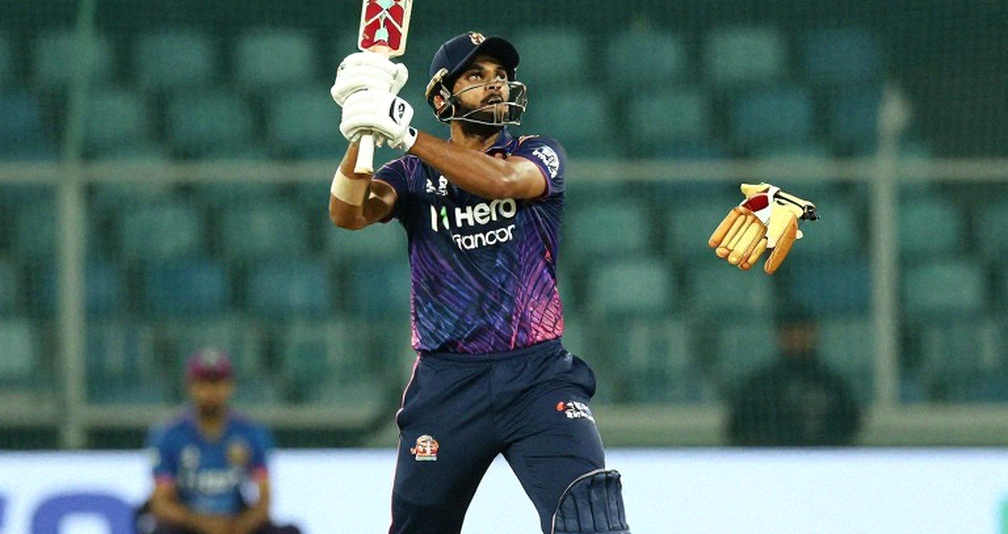
Sediqullah Atal's name appears once in the press conference, and it appears as a complication — his innings took the attention that Rahmat's century deserved. For me it is the most interesting signal of the series, because it says the Afghan pipeline is no longer only producing bowlers. For years the shorthand on this team was world-class spin and serviceable batting. When a young batter plays a Test innings big enough to push the captain's hundred into the background, that is evidence of depth — not a list of names, but a player standing up at the biggest occasion available to him.
The captaincy answer deserves the same structural reading. Pybus called Rahmat calm, assured, a leader with quiet authority — someone who listens to his senior players, who is inclusive, who invites participation in planning, preparation and performance. It is easy to hear that as a compliment about temperament. It is a description of resource management. A full member side travels with a deep support staff — a separate data analyst, a separate bowling coach, a separate fielding coach. Afghanistan's bench of specialists is thinner than the paperwork suggests. A captain who gets eleven people talking in a team meeting is doing the work of a larger staff at a fraction of the cost.
Pybus added a line that captaincy coverage usually drops: equally important is that the captain turns up and carries that responsibility with the bat. Rahmat did it in Ireland, did it in the Test, and anchored the order here. Seven wins in seven games have come with a captain who is also scoring — the burden of leadership normally shows up in a batting average, and here it has not.
Then there is the memory gap of this series. Pybus paused to note that Rahmat's performance in the Test before the tri-series did not get the credit it should have, because it was a fourth-innings effort, and because Sediqullah Atal's innings and the team's overall display took the headlines. That sentence explains a lot about how cricket remembers. A hundred is valued by the result it sits inside, not by the difficulty it was built on. A century in a win is filed away; a century in a losing or saving cause queues up in the footnotes. That is why Rahmat's innings did not survive into the post-series conversation. And it is why any honest accounting of seven straight wins should record that this captain's hardest work happened in the one match that did not end well.
Pybus's other large claim was that the side is being built to play in any conditions. The claim may be right, but this series did not test it. One ground, one block of heat, two opponents. Sharjah is foreign soil for Afghanistan only on paper; in crowd, language and support it is the closest thing to home. The quality under examination — adaptability — was examined in the one place least equipped to examine it. The trophy is real, the results are real, but the evidence base is exactly as wide as the schedule allowed.
Against that, one thing went undercredited: three matches in five days in Sharjah's heat is a physical examination as well. Rotation, workload, the management of bowling spells — all of it was tested in the same week that every result mattered. Depth, whenever it is discussed, collapses into a list of names. Real depth shows when the third match arrives in four days and the first-choice seamer is cooked. That exam was sat this week, and it was passed.

Seven wins out of seven is an excellent record and does not need shrinking. But what it measures should be stated plainly: it is continuity of execution against the opponents who turned up. It does not measure the team's ceiling, because measuring a ceiling requires a steady supply of matches against the top sides, and that supply does not exist. Pybus said so himself, and it was the most important sentence he spoke all week. The trouble is that the sentence does not travel with the trophy. On the screen you see a title lifted; on the ground you only see whether there is a blank space in the calendar for the next series.
Afghanistan's next real data point is not a trophy. It is a fixture list. Against whom, where, and when — until those three answers arrive, this title tells us that the matches played were won. It does not tell us where this team stands in the matches that were never scheduled. Let the celebration in Sharjah finish. The question belongs to the next calendar.