
Nortje Out of the Decider: South Africa's Real Question Is the Overs Ledger, Not the Groin
**मुख्य उत्तर:** अनरिक नॉर्टजे ग्रॉइन की हल्की चोट के कारण ऑस्ट्रेलिया के खिलाफ विश्व टेस्ट चैम्पियनशिप सीरीज़ के निर्णायक टेस्ट से बाहर हैं। गुरुवार को हुए स्कैन ने चोट की पुष्टि की। साउथ अफ्रीका ने अब तक रिप्लेसमेंट का नाम नहीं दिया है। **मुख्य तथ्य:** - नॉर्टजे ने गकेबेरहा में दूसरे टेस्ट की पहली पारी में 3.3 ओवर फेंके और मार्नस लाबुशेन को 14 रन पर आउट किया। - दूसरी पारी में नॉर्टजे ने शून्य ओवर फेंके; साउथ अफ्रीका ने वह टेस्ट एक पारी और 31 रन से जीता। - डरबन का मैच नॉर्टजे का लगभग चार साल बाद पहला टेस्ट था; उन्होंने चार विकेट लिए। - कागिसो रबाडा हैमस्ट्रिंग से लौटकर गकेबेरहा में छह विकेट ले चुके हैं; मार्को जैनसन ने पहली पारी में पांच विकेट लिए। - रिप्लेसमेंट के विकल्प: कोर्बिन बॉश (तेज़ गेंदबाज़ी ऑलराउंडर), गेराल्ड कोएत्ज़ी (शुद्ध तेज़ गेंदबाज़), या एक बल्लेबाज़। **स्रोत:** आईसीसी मीडिया विज्ञप्ति (गुरुवार को स्कैन की पुष्टि; नॉर्टजे के बाहर होने की घोषणा) | Cross-checked: cricsultan.com **संबंधित प्रश्न-उत्तर:** प्रश्न: नॉर्टजे किस चोट के कारण बाहर हुए? उत्तर: गकेबेरहा में दूसरे टेस्ट की पहली पारी में गेंदबाज़ी के दौरान लगी ग्रॉइन की हल्की चोट के कारण, जिसकी पुष्टि गुरुवार के स्कैन ने की। प्रश्न: नॉर्टजे की जगह किसे मौका मिल सकता है? उत्तर: साउथ अफ्रीका ने नाम घोषित नहीं किया है; कोर्बिन बॉश, गेराल्ड कोएत्ज़ी या एक अतिरिक्त बल्लेबाज़ संभावित विकल्प हैं। प्रश्न: सीरीज़ का स्कोर क्या है? उत्तर: तीन टेस्ट की सीरीज़ 1-1 से बराबर है — डरबन में साउथ अफ्रीका 214 रन से हारी, गकेबेरहा में एक पारी और 31 रन से जीती।
Anrich Nortje bowled 3.3 overs in Australia's first innings of the second Test at Gqeberha. Twenty-one balls. One of them removed Marnus Labuschagne for 14 — Australia's No. 3, one of the most valuable wickets of that innings' early passage. Then Nortje walked back to the dressing room. A groin strain. He did not bowl a single ball in the second innings.
On the scorecard this is a small line. In my notebook it is the largest expenditure of the series.
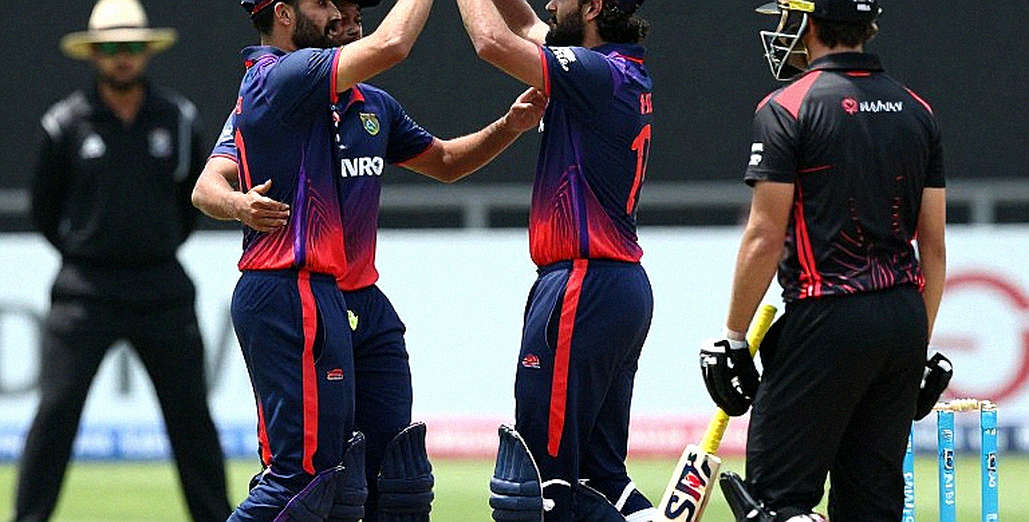
The first entry in the nets log was not about goals; it was about rhythm. The rhythm did not break here — the accounting did, and it broke in the very match South Africa won by an innings and 31 runs. The win covered the count that will now surface in the decider.
Context: a 1-1 series, a Thursday scan, and one blank page
The ICC release was precise: "South Africa pacer Anrich Nortje has been ruled out of the series decider of the ICC World Test Championship contest against Australia due to a mild groin injury sustained while bowling during the first innings of the second Test in Gqeberha. Scans conducted on Thursday confirmed the extent of the injury, ruling Nortje out of the final Test." The release also records something no less important than the injury: South Africa have not yet named a replacement.
The series stands level. South Africa lost the first Test at Kingsmead, Durban, by 214 runs; they won the second at Gqeberha by an innings and 31 runs. One week they were beaten flat, the next they did the beating. The preparation question for the decider is therefore not a question of form. It is a question of the distance between recovery days and a body's tolerance.
Durban was Nortje's first Test in almost four years. He took four wickets in it and looked far from his best. This is where I stop reading the scorecard and start reading the training ground. Four wickets do not measure what a body can absorb; they measure where the ball landed that day. Playing a second consecutive Test after a four-year gap was not a form decision, it was a tolerance wager. And the groin is precisely the tissue that takes the full load every time the front foot braces at delivery.
Around him, Kagiso Rabada missed the first Test with a hamstring problem, returned for the second and took six wickets to drive the big win. Marco Jansen took a five-for in the first innings. Wiaan Mulder has played both games. All three frontline seamers were already in a phase where their workload was rising, not falling. Nortje's injury landed on top of that load, not beneath it.
I keep three witnesses separate here. First tier: the ICC release — a primary document, but its language is institutional; "mild" is the board's adjective, not the scan's finding. Second tier: the team management's silence on a replacement — that is not missing information, it is withheld information, and it is information in itself. Third tier: my own count off the broadcast — zero overs from Nortje in the second innings. My conclusion rests on the third tier, because I cannot measure the gap between "mild" and "serious", but I can count overs.
Core: the four-year gap, the zero overs, and the arithmetic of three options
1. The ledger's first page was opened before the injury news. Nortje returned to Test cricket after four years and immediately played two Tests. For me this is not a selection question, it is a dosage question. A bowler returning from a long absence does not return to "form", he returns to "tolerance" — and tolerance has no scorecard. When I counted Chintan Gaja's deliveries at Gujarat's indoor camp in 2026, the lesson was this: across 14 overs of a camp match, his first spell and his third spell were two different bowlers. The 27 balls that landed on a good length came in that third spell, when the body was spent and the mind was running on repetition alone. Nortje followed the same curve: the four wickets at Durban belonged to the first and second spells, and the Gqeberha groin was the invoice for the third.
2. The zero overs of the second innings went into somebody else's account — and that is the real story. Nortje bowled nothing in Australia's second innings, which means every one of those overs was carried by Rabada, Jansen and Mulder. A win by an innings and 31 runs is not built on bowlers bowling less; it is built on the rest bowling more. That is the cleanest finding in this piece: the Gqeberha win was financed by Rabada's and Jansen's overs, and that invoice arrives at the decider, not at Gqeberha. Rabada was playing his first Test back from a hamstring; Jansen had just bowled a five-for first innings; Mulder had already played both games as the fourth seamer. All three counters were already red, and Nortje's zero overs turned them redder.
3. The replacement arithmetic is not three names, it is three different readings of the ledger. Corbin Bosch is a fast-bowling all-rounder. Picking him means a fifth bowling option and batting depth at seven or eight — which buys Rabada and Jansen the right to bowl shorter spells. Gerald Coetzee is an out-and-out pacer; picking him buys wicket-taking, but he belongs to the same managed-workload cluster as Rabada and Jansen. Selecting Coetzee does not reduce the aggregate risk, it transfers it from one account to another. The third option — a batter — looks safest on paper and is in fact the most expensive, because Mulder then becomes the fourth seamer and the attack's total overs rise. Three options are reading three different injury ledgers; only one of them actually reduces the attack's total overs.
4. Not naming a replacement is itself an entry. An audit is just a net log with consequences; I follow the missing repetitions. The missing repetition here is visible: a bowler who knows he is playing the decider bowls a full spell two days out; a bowler who does not, bowls protecting his body. Holding the name back keeps Australia's preparation uncertain, but it also denies the replacement a nets cycle shaped to his role. And I want the number no press release provides: how many overs Coetzee and Bosch have bowled in the last six weeks. That is the receipt this decision should carry, and it is not public.
5. Labuschagne's 14 — one number, two consequences. I allow one number per claim. Dismissing Labuschagne for 14 looks cheap, and it was: the No. 3 went early, Australia's innings changed shape, and South Africa got the foothold an innings win is built on. But the same ball carried a second price — the man who bowled it was not on the field for the next innings. The 14-run wicket was cheap; the bill for it will be paid in the next Test.
6. The stake is not only the series. The ICC framed this as part of the World Test Championship contest, so the decider carries table points alongside a 1-1 series. That changes the selectors' risk arithmetic: they are not only deciding who plays this week, they are deciding whose body is intact for the next round.
Contrarian: "they won without him, so what is the problem" is the easiest and wrongest read
The convenient conclusion writes itself: South Africa won by an innings and 31 without Nortje, Rabada is back, the depth works. I invert it. The depth covered one innings, not a series — and the innings it covered is the one that drained the reserve. The audit begins where the broadcast ends: empty stands, full ledger.
The second inversion: Nortje's absence may leave South Africa's XI not weaker but differently shaped. A four-man attack with a half-fit Nortje is worse than a five-option attack, even if the fifth option is less incisive on paper. The injury does not weaken the team; it changes its shape, and shape is the one thing selectors actually control.
The third point I want on record: "mild" is the board's adjective, not the scan's verdict. Groin strains in fast bowlers are graded, and I do not have the grade. So my conclusion does not rest on the adjective; it rests on the calendar — the gap between Durban and Gqeberha, the gap between Gqeberha and the decider, and the overs Rabada, Jansen and Mulder accumulated inside those gaps.
One more discipline applies. Blaming selectors reflexively is easy, but what information did they have? Nortje had taken four wickets at Durban, Rabada was returning from a hamstring, and the attack needed a second enforcer. The constraint bound them. The fair audit of that call is not that it was wrong, but that it was forced. Every injury story has a training-ground tempo; I check the stopwatch, not the headline.
Takeaway
The scan will not decide the third Test. The team sheet will. If Bosch plays, South Africa has read its own fatigue ledger. If Coetzee plays, it has chosen pace and pushed the risk back into the same cluster. If a batter plays, it has chosen paper safety and loaded Mulder with the overs. A beat keeper hears the drill before the whistle; the nets log proves it. And if the decider again goes in with four bowlers, whose account will that famous Gqeberha win finally be charged to?