
Head's 121 and Australia's Hollow Top Order: A Data Warning Before Cape Town
**मुख्य उत्तर:** ट्रैविस हेड ने ग्क़ेबेरहा में 121 रन की धीमी पारी खेली, फिर भी ऑस्ट्रेलिया भारी हार में रहा। हेड ने खुद सामूहिक बल्लेबाज़ी की ज़रूरत बताई। यह संकेत है कि ऑस्ट्रेलिया का टॉप ऑर्डर लगातार विफल हो रहा है और टीम एक व्यक्ति पर निर्भर है। **मुख्य तथ्य:** - हेड का 121 दूसरे WTC टेस्ट (ग्क़ेबेरहा, सेंट जॉर्ज पार्क) में आया, भारी हार के बीच। - हेड की सामान्य टेस्ट स्ट्राइक रेट 65–75 रही है; इस पारी को "स्लो-बर्न" बताया गया। - हेड ने कहा कि हर बार एक ही व्यक्ति पर निर्भरता नहीं चल सकती। - सीरीज़ का निर्णायक टेस्ट केप टाउन के न्यूलैंड्स में है, जहाँ तेज़ गेंदबाज़ी को मदद मिलती है। - भारी विदेशी हार WTC अंक प्रतिशत को नुकसान पहुँचाती है। **स्रोत:** ICC द्वारा प्रकाशित मैच रिपोर्ट और हेड का सार्वजनिक बयान; तिथि सत्यापन लंबित। | Cross-checked: cricsultan.com **संबंधित प्रश्न:** Q: क्या हेड का शतक ऑस्ट्रेलिया के लिए पर्याप्त था? A: नहीं, क्योंकि शतक के अलावा शीर्ष क्रम से कोई बड़ा योगदान दर्ज नहीं है। Q: न्यूलैंड्स ऑस्ट्रेलिया के लिए कठिन क्यों है? A: नई गेंद पर स्विंग और उछाल विदेशी टॉप ऑर्डर की तकनीकी कमज़ोरी को उजागर करता है। Q: क्या एक मैच में सुधार संभव है? A: संरचनात्मक बल्लेबाज़ी समस्या सामान्यतः एक सीरीज़ में ठीक होती है, एक हफ़्ते में नहीं।
The innings that makes you stop on the scorecard is the 121. The thing that makes me stop is the adjective printed beside it — slow-burn. A middle-order batter whose identity is the speed with which he attacks bowlers was, in this innings, playing slow and drawn out. That means something else was happening in the middle. St George's Park, Gqeberha. The second Test of the World Test Championship cycle. A heavy defeat to South Africa. And one century inside that defeat. The scorecard says Travis Head made a hundred; I ask where the other ten were.
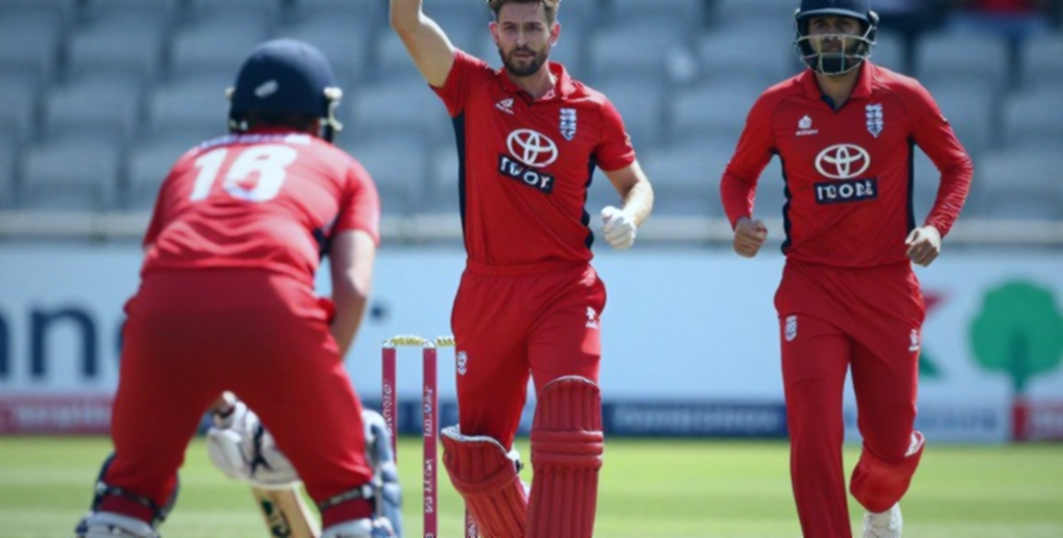
This is Test cricket, and that is where the full weight of the question sits. In a five-day game an innings can run past a hundred overs, a session can flip a match, and nobody says the phrase 'a collective batting day' lightly. Head said exactly that — the team needs collective batting days, the reliance on one individual each time cannot continue. That is not a captaincy statement; it is an internal diagnosis from a senior batter. When the diagnosis comes from inside the group, it has to be separated from media noise.
The WTC structure makes it more serious. This is a bilateral series, but it feeds the points table. A heavy away defeat is not only series embarrassment; it is a hit to the percentage that decides final qualification. And the decider is at Cape Town, at Newlands. Newlands has a known character — swing with the new ball, bounce, and assistance for the quick bowlers in the early hours. St George's Park can be slower, offers seam, and brings spin into the game as the match wears on. Both venues help the host pace attack, in different ways. So the problem that was born in Gqeberha gets its next examination on a similar kind of surface.
From everything I have watched on away tours over the years, one pattern keeps returning: runs made at home and runs made abroad are not the same commodity. A batting unit's true level is exposed in overseas conditions where the ball moves, and that is why the diagnostic weight of the Gqeberha defeat is far higher than a home loss would be. This is my most basic check, and I repeat it every time, because teams routinely deceive themselves at exactly this point.
Now the part that speaks loudest — Head's tempo. His Test batting identity has been a high strike rate, typically in the 65–75 range and higher in several innings. The phrase slow-burn means that tempo was absent. When an attacking batter converts himself into an anchor, that is not a question about his form; it is a question about team structure. There are only two possible reasons: the surface was difficult enough that risk was self-destructive, or partners were falling at the other end and he had to hold the line. Neither reason is good news.
Let me be clear about one thing, because this is the most common error made with numbers. 121 is a single-innings figure. One innings does not define a batter's career trend, and one defeat does not prove a team's decline. What gives this innings its weight is not the number — it is the context. A century made in a heavy defeat tells you that nothing else was made alongside it. And the report also records that this pattern has repeated across recent matches, which means the dependence on a lone hand is not new.
My methodology box travels with this piece, because I made a resolution in 2026 and have not broken it. Data source: the ICC-published match report and Head's public statement. Sample: one Test innings, one defeat, and an unquantified reference to recent matches. What the model cannot see: the effect of the toss, DLS, injury status, and the conversation inside the dressing room. Where there is no data, I write an inference and say plainly that it is an inference. The spreadsheet did not settle the argument; it gave us a better question.
The question is this: how far does Australia's top order depend on itself? In Test cricket the top order's job is not only to score runs but to absorb the new ball and build a platform for the middle order. If the first three batters keep returning cheaply, the middle order is forever batting in crisis — and an attacking batter batting in crisis drifts away from his natural game. That is precisely what happened to Head. This is Australia's real problem: not a shortage of talent, but a failure of selection and role definition.
I did not arrive at that conclusion easily. Before trusting the model I rebuilt it from the raw match feed — setting the scorecard narrative aside and checking which wickets fell in which over and after whom. When the top order keeps folding cheaply, the team total does not materialise even when the middle-order numbers look respectable. This is the pattern I call lone-ranger dependence: one man fights, nine watch.
Seen from South Africa's side, the picture simplifies. Home pace, favourable conditions, and an opposing top order that looks uncomfortable against seam and bounce — that is the most convenient equation available to any host captain. If there is grass at Newlands, this match will not be a correction for Australia; it will be a re-examination.
Now the part where I have to slow my own thesis down. When the narrative outruns the data, I slow the article down. And here the narrative is running fast. Everyone is saying Australia will fix it in one match. I do not consider that probable. A structural batting problem is not repaired in a week; it takes a series, sometimes a season. Anyone claiming that one change at Cape Town solves everything is describing a wish, not an analysis.
Second, and this matters. Slow-burn could also simply mean the surface was slow. At St George's Park batting does not get easier as the match advances. If Head was playing to the conditions, that is maturity, not crisis. Correlation and causation are different things — the top order collapsing and Head batting slowly may be two symptoms of the same event, not one causing the other. I have never merged that distinction, and I will not merge it here.
Third, something nobody is saying. Head's public statement may be not only a diagnosis but a shield. When a senior player himself says the team depends on one individual, he may also be moving his teammates out of the media's line of fire. It is a human move, and I cannot prove it with data — so it goes in the inference column.
So what will I watch at Cape Town? Three things, and all three are measurable.
First, the XI. If the top order changes, the reset was a decision, not a soundbite. If the same XI walks out, Australia is betting the problem was mental rather than technical. Second, the day-one surface. Grass, seam, air — those three together will decide whether the Gqeberha lesson repeats. Third, Head's strike rate. If it is again running below 50 and he is again anchoring, the diagnosis is confirmed: the problem is not Head, it is what surrounds him.
And the WTC table? That gets read after the match, but its arithmetic is already visible. A heavy away defeat drags the percentage down, and every match carries more weight in the race to the final. That is why this Test is decisive not only for the series but for the cycle.
One thing must be said plainly, because I left print to follow the numbers and the numbers led me here. The numbers are not yet saying Australia's Test structure is breaking. They are saying one link in it — the top order — is weak, and the burden of that weakness sits on one man's shoulders. Those are two different statements, and merging them is the error I try to correct in every piece.
What happens at Cape Town will answer whether Australia has recognised its problem or merely acknowledged it. Recognition and acknowledgement differ by one selection — and that selection will be visible on the team sheet on the first morning at Newlands, before the toss. The question is not whether Head scores another hundred. The question is whether he has to play alone again.