
Pakistan's Withdrawal Reshapes Commonwealth Kabaddi Championship 2026 as India's Dominance and Global Reach Come Under Focus
पाकिस्तान ने 2026 कॉमनवेल्थ कबड्डी चैंपियनशिप से इसलिए नाम वापस लिया क्योंकि पाकिस्तान सरकार ने खिलाड़ियों को भारत यात्रा की अनुमति नहीं दी। IKF महासचिव तेजस्वी गेहलोत ने इसकी पुष्टि की। मुख्य तथ्य: - आयोजन: 23–31 अक्टूबर 2026, अहमदाबाद। - पुरुष वर्ग में 14 की जगह 13 देश शामिल हुए। - भारत ने पुरुष और महिला दोनों स्वर्ण पदक जीते। - पुरुष फाइनल में भारत ने श्रीलंका को हराया। - ईरान और चीनी ताइपे प्रतियोगिता में शामिल नहीं थे। स्रोत: The Kabaddi Pulse, 21 अक्टूबर 2026; Gujarat Samachar, 21 अक्टूबर 2026; Pro Kabaddi League, 31 अक्टूबर 2026। संबंधित प्रश्न: प्रश्न: पाकिस्तान की वापसी का आधिकारिक कारण क्या था? उत्तर: IKF के अनुसार पाकिस्तान सरकार ने खिलाड़ियों को भारत यात्रा की अनुमति नहीं दी। प्रश्न: 2026 कॉमनवेल्थ कबड्डी चैंपियनशिप किसने जीती? उत्तर: भारत ने पुरुष और महिला दोनों वर्गों में स्वर्ण पदक जीता। प्रश्न: क्या पाकिस्तान की वापसी का राजनीतिक कारण आधिकारिक रूप से स्पष्ट हुआ? उत्तर: नहीं, उपलब्ध रिपोर्टों में यात्रा अनुमति रोके जाने की पुष्टि है, लेकिन पाकिस्तान सरकार ने विस्तृत कारण सार्वजनिक नहीं किया।
Hook: One Empty Place in Ahmedabad, One Larger Question
The defining pre-tournament development at the inaugural Commonwealth Kabaddi Championship 2026 in Ahmedabad was not a raid or a final score. It was Pakistan's withdrawal. The men's field fell from an expected 14 nations to 13, removing the possibility of an India-Pakistan contest from the championship. Yet reducing the story to a missing rivalry would overlook the deeper questions involving international sports administration, political permissions and the competitive structure of kabaddi.
A report published by The Kabaddi Pulse on October 21, 2026, quoted International Kabaddi Federation (IKF) General Secretary Tejasvi Gehlot confirming that the Pakistani government had not permitted its athletes to travel to India. Gehlot said the Indian side had completed the necessary paperwork and permissions, but had received an intimation that the team would not travel. He did not know the reason for the refusal. No detailed official explanation from Pakistani authorities was available in the report. The immediate reason for the withdrawal is therefore identifiable; the full decision-making process behind it remains undisclosed. [Source: The Kabaddi Pulse, October 21, 2026]
Years of watching kabaddi have taught me that a team's absence can change the competitive architecture of an event as decisively as a result. Ahmedabad offered a clear example.
Context: A New Championship and the Limits of International Kabaddi
The inaugural Commonwealth Kabaddi Championship was organised by the Amateur Kabaddi Federation of India (AKFI), with approval from the IKF. The event ran from October 23 to 31, 2026, at the Veer Savarkar Sports Complex in Ahmedabad. It featured 13 men's teams and 10 women's teams, comprising 23 squads and more than 400 athletes. The schedule included 62 matches: 39 in the men's competition and 23 in the women's event. [Sources: Gujarat Samachar, October 21, 2026; Pro Kabaddi League, October 31, 2026]
The men's participants were India, Sri Lanka, Bangladesh, Nigeria, Kenya, Tanzania, Canada, Singapore, Malaysia, Uganda, England, Scotland and Australia. Pakistan had been expected to participate but was absent from the final field. The championship was intended to expand kabaddi's Commonwealth footprint and strengthen the sport's case for inclusion in the 2030 Commonwealth Games programme in Ahmedabad.
The international hierarchy provides essential context. India and Iran have been the leading forces in men's kabaddi. At the 2026 Asian Games, India defeated Iran 40-34 in the men's final. India also beat Iran 37-34 in the women's final. These results demonstrated that the strongest Asian competition still revolves around a small group of established programmes. [Source: Pro Kabaddi League, September 26, 2026]
The Commonwealth format has an inherent competitive limitation: Iran is not a Commonwealth member and therefore cannot participate. Chinese Taipei was also absent. Pakistan's withdrawal further weakened the field, removing an experienced South Asian programme and a fixture with considerable regional audience appeal.
Core Analysis: What Pakistan's Withdrawal Really Means
The immediate reason was the absence of government travel permission, but the sporting consequences extended beyond administration.
There were three consequences. Pakistan's absence removed an experienced kabaddi nation, eliminated the prospect of an India-Pakistan fixture and denied Pakistan an opportunity to compete in a tournament without Iran and Chinese Taipei. That last point matters because the Asian Games had already produced a difficult campaign for Pakistan's men's team. Reports said Pakistan failed to reach the semi-finals, ending its campaign without a medal. The claim that this was the first such Asian Games outcome in Pakistan's kabaddi history requires separate verification against official Olympic Council of Asia records and should not be treated as an established historical fact without that check. [Source: The Kabaddi Pulse, October 21, 2026]
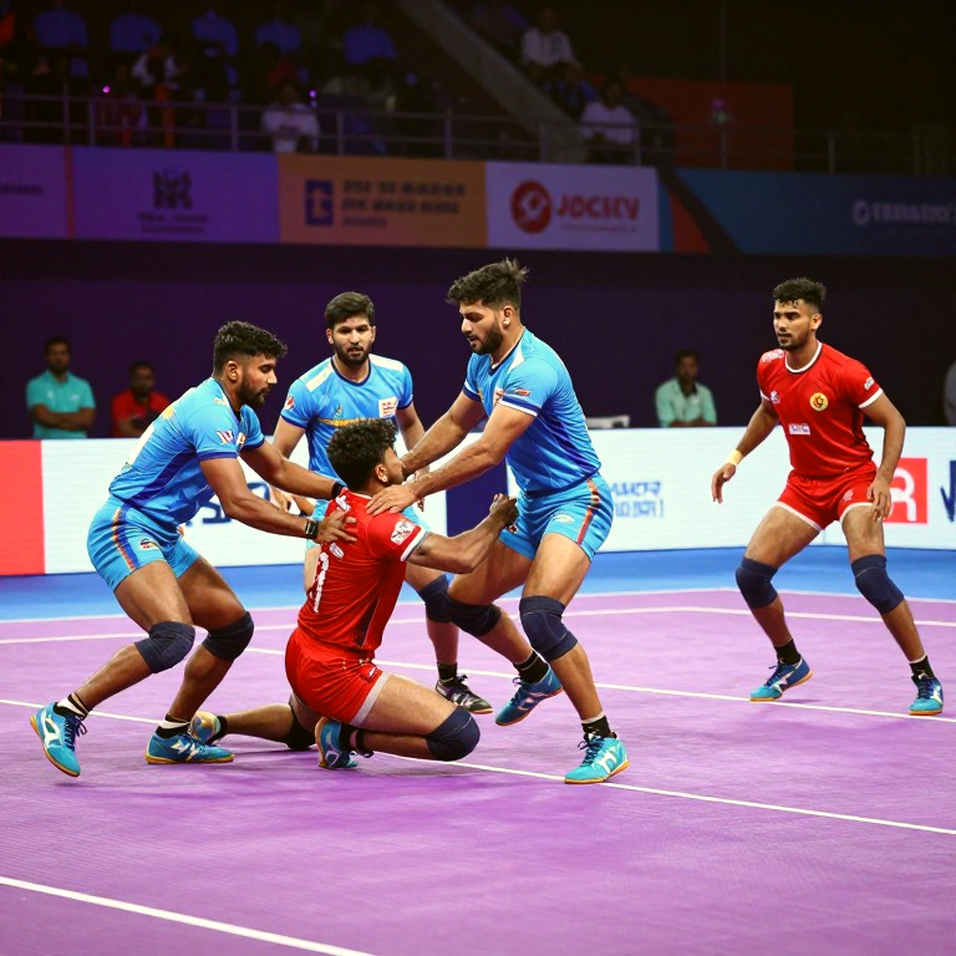
The rules help explain the structural challenge. In standard-style kabaddi, a raider enters the opposition half and attempts to score before returning within 30 seconds. Defenders work collectively to stop the raider. A successful touch, bonus or tackle can change the score. After two consecutive empty raids, the third becomes a do-or-die raid, forcing the attacking team to attempt a scoring action.
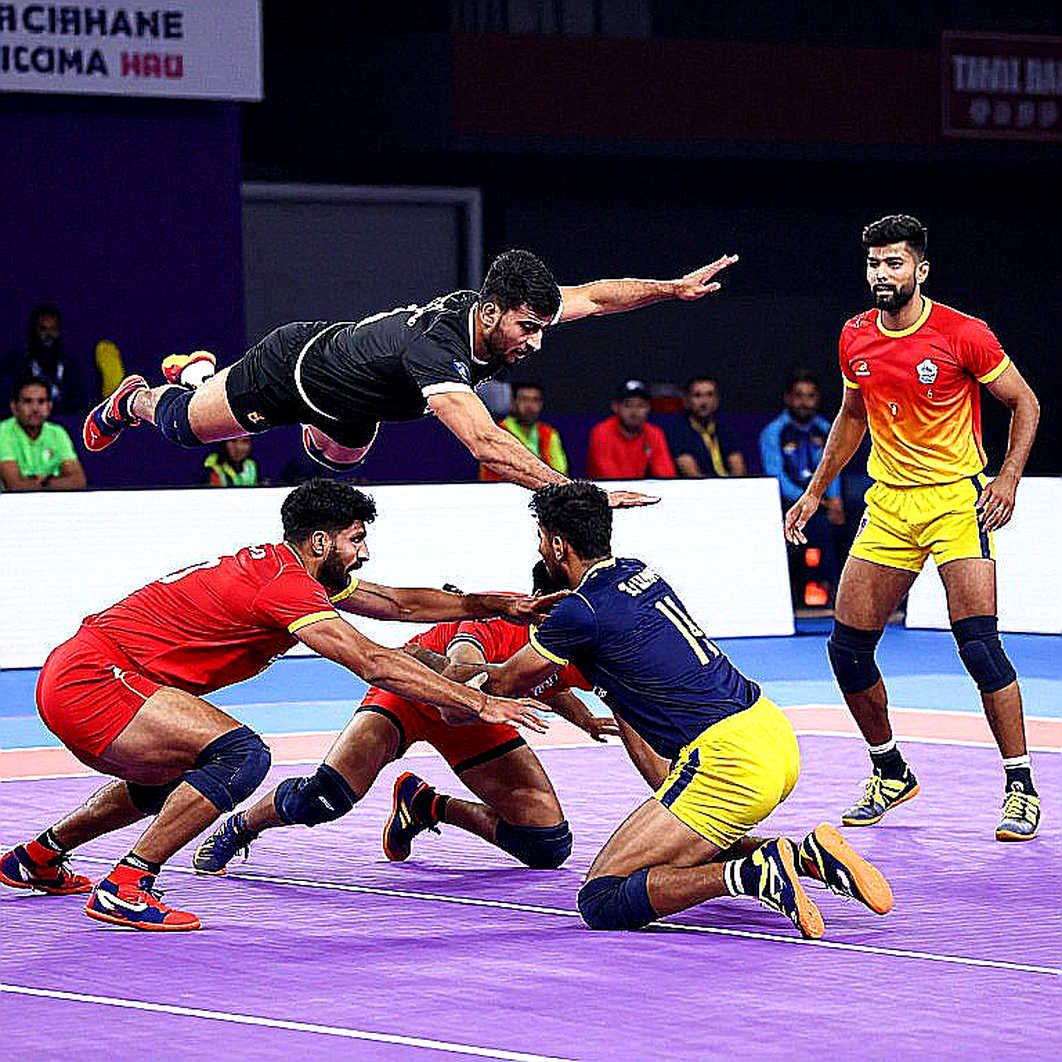
Standard Style is played on a rectangular court with seven players per side. Circle Style, traditionally popular in rural Punjab on both sides of the India-Pakistan border, has a different playing area, player configuration and tactical demands. Success in Circle Style does not automatically translate into success in international Standard Style. Modern Standard Style requires bonus-line awareness, corner timing, cover coordination and disciplined decision-making during do-or-die raids.
Traditional kabaddi talent does not automatically become international Standard Style competitiveness. This is a plausible structural challenge for Pakistan. However, no public figures were available for the 2026 Pakistani squad's raid success, tackle efficiency, bonus points or lineup composition. It would therefore be irresponsible to attribute the Asian Games failure to one technical weakness.
My evaluation of a team has always depended more on its collective operating system than on the reputation of its players. India's defeat to Iran at the 2026 Jakarta Asian Games showed that individual reputation cannot substitute for a coordinated defensive structure. Iran's physical control, chain tackles and ability to close escape routes exposed the importance of collective execution. The lesson remains relevant: in international kabaddi, structure can outweigh individual reputation.
Pakistan must therefore confront several questions. Does its domestic competition system consistently produce players equipped for international Standard Style? Do young athletes receive enough international exposure? Does selection reward raid and defensive efficiency, or does reputation still carry excessive weight? Without answers, blaming individual players would be an incomplete diagnosis.
India's position is different. The Pro Kabaddi League has created a professional environment in which players receive regular competition, coaching, video analysis and tactical preparation. The benefits extend beyond star raiders to defenders, all-rounders and reserve players. India's major structural advantage is its ability to replace players without rebuilding the entire tactical system.
Results: India's Double Gold and the Competitive Test
India won both men's and women's titles at the inaugural championship. The Indian men's team defeated Sri Lanka in the final, while the Indian women beat Uganda. Sri Lanka took men's silver and Uganda secured women's silver. [Source: Pro Kabaddi League, October 31, 2026]
The double gold demonstrated India's depth and control of the competition. However, the quality of the field must remain part of the assessment. Winning without Pakistan, Iran and Chinese Taipei is an achievement, but it does not provide the same competitive test as the Asian Games. A championship title and a fully tested team are two different outcomes.
I have learned to separate two questions: did a team win, and how thoroughly did the competition test its actual ability? The answers are not always identical. India's Commonwealth success reflected its professional structure, but the tournament did not offer an Iran-level men's challenge.
Pakistan's absence also carried a commercial cost. India-Pakistan contests have historically attracted significant South Asian attention. But kabaddi cannot build an international audience solely through political rivalries. To expand into Commonwealth markets, the sport needs local players and sustainable programmes in England, Canada, Australia, Kenya, Nigeria and elsewhere.
Contrarian View: Was This Really an Easy Medal Opportunity?
A common interpretation is that Pakistan surrendered an unusually favourable medal opportunity. There is some logic to that argument. Iran and Chinese Taipei were absent, making the field less demanding. But an improved probability of winning a medal is different from a guaranteed medal.
Pakistan would still have faced India, Sri Lanka, Bangladesh and other emerging teams. Sri Lanka demonstrated its competitiveness by reaching the men's final. The tournament therefore showed that the competitive field was developing beyond the traditional South Asian hierarchy. [Source: Pro Kabaddi League, October 31, 2026]
The event's prestige also requires careful assessment. A new championship does not establish its importance through branding, broadcasting or an opening ceremony alone. It needs recurring editions, strong participation, transparent selection, reliable administration and long-term development programmes.
Iran's absence limited the sporting standard, while Pakistan's absence reduced the regional and commercial appeal. These are different effects. Iran is India's principal challenger at the highest level. Pakistan could have provided a high-interest regional contest and a stronger South Asian presence. Treating the two absences as equivalent would obscure the actual competitive hierarchy.
It is also important to recognise that travel permission may have been beyond the control of Pakistan's sporting administrators. The available reporting attributes the refusal to the Pakistani government. Gehlot said the Indian side had completed its paperwork but could not explain the Pakistani decision. There is insufficient evidence to describe the withdrawal as a strategic decision by the Pakistan Kabaddi Federation, a player boycott or the consequence of a specific political instruction.
This is where responsible sports journalism must draw a line. Investigating the reason for an absence is necessary; presenting an inference as a confirmed fact is not.
Takeaway: Kabaddi Needs a System Beyond Individual Tournaments
The inaugural Commonwealth Kabaddi Championship gave India two gold medals and provided the sport with a new international platform. The next stage will be harder. If kabaddi is to secure a place in the 2030 Commonwealth Games, it needs a broader competitive base and more dependable administrative structures.
National federations must develop regular international calendars, give young players exposure to Standard Style and provide women's kabaddi with institutional support comparable to the men's game. Sporting organisations must also keep communication channels open so that traditional kabaddi nations such as Pakistan can participate despite difficult political circumstances.
India, too, needs stronger opposition. Winning titles is important, but sustained competition against Iran, Chinese Taipei and Pakistan would provide more meaningful tests of its tactical development.
I build models to hear the question, not to silence the match. The same principle should guide kabaddi's international expansion. India won the titles in Ahmedabad, but the sport's real test will be whether its governing institutions can bring absent rivals back to the mat regularly. The most important outcome of the next championship may not be another gold medal. It may be a stronger field capable of challenging the champions.