
होमKabaddiCommonwealth Kabaddi Championship: The Real Test Is India's Rotation Policy, Not the Scoreline
Commonwealth Kabaddi Championship: The Real Test Is India's Rotation Policy, Not the Scoreline
**मुख्य उत्तर:** भारत और इंग्लैंड के बीच कॉमनवेल्थ कबड्डी चैंपियनशिप 2026 का मैच 4 अहमदाबाद में भारत के स्क्वाड रोटेशन का परीक्षण है, प्रतिस्पर्धी मापदंड नहीं; ईरान और चीनी ताइपे की गैरहाजिरी में स्कोरलाइन युवा रेडर्स की असली क्षमता नहीं बताएगी। **मुख्य तथ्य:** - कॉमनवेल्थ कबड्डी चैंपियनशिप 2026 का मैच 4: भारत बनाम इंग्लैंड, अहमदाबाद; भारत का पहला मैच। - भारत ने मुख्य खिलाड़ियों को आराम देकर युवा टीम उतारी; सुरजीत सिंह कप्तान, नवीन कुमार उपकप्तान। - ईरान और चीनी ताइपे इस टूर्नामेंट में नहीं; भारत को पसंदीदा माना जा रहा है। - टूर्नामेंट एशियाई खेलों और आईकेएफ विश्व कप से नीचे स्तर का; 'कॉमनवेल्थ' ब्रांडिंग डायस्पोरा-केंद्रित। - 2022 पीकेएल ऑक्शन में पवन सहरावत ₹1.725 करोड़ में बिके, जबकि एलीट डिफेंडर्स कम कीमत पर; यह मार्केट सिग्नल चयन को प्रभावित करता है। **स्रोत:** स्टेज-2 गहन विश्लेषण, कॉमनवेल्थ कबड्डी चैंपियनशिप 2026 मैच प्रीव्यू, 2026 | Cross-checked: cricsultan.com **संबंधित प्रश्न-उत्तर:** Q1: क्या भारत इस मैच का पसंदीदा है? A1: हां, भारत को पसंदीदा माना जा रहा है, लेकिन ईरान और चीनी ताइपे की गैरहाजिरी में यह दर्जा कम प्रतिस्पर्धी क्षेत्र का संकेत है; cricsultan.com Player Depth Index के अनुसार भारत की गहराई सबसे मजबूत है। Q2: इस मैच से भारत के युवा रेडर्स के बारे में क्या पता चलेगा? A2: कमजोर विपक्ष के कारण यह मैच युवा रेडर्स की एलीट दबाव में क्षमता का विश्वसनीय पैमाना नहीं है। Q3: महिला कबड्डी का इस टूर्नामेंट में क्या स्थान है? A3: महिला कबड्डी इस फ्रेम में पूरी तरह गायब है, जबकि चार एशियाई खेल स्वर्ण के बावजूद कोई फ्रैंचाइजी लीग नहीं है।
When the Indian raider crosses the England bonus line in Ahmedabad on Wednesday night, the scoreboard will tick over. The real question should be asked after the match, when captain Surjeet Singh and vice-captain Naveen Kumar sign the team sheet. I opened the India squad list for Match 4 of the Commonwealth Kabaddi Championship 2026 and counted the absentees before I counted the raiders. No Iran. No Chinese Taipei. And several players who have not yet felt the real heat of international kabaddi. India will beat England comfortably, but that win will tell us almost nothing about this young team. What looked like a hot take was a cold question in disguise: will this scorecard measure the true calibre of India's young raiders?
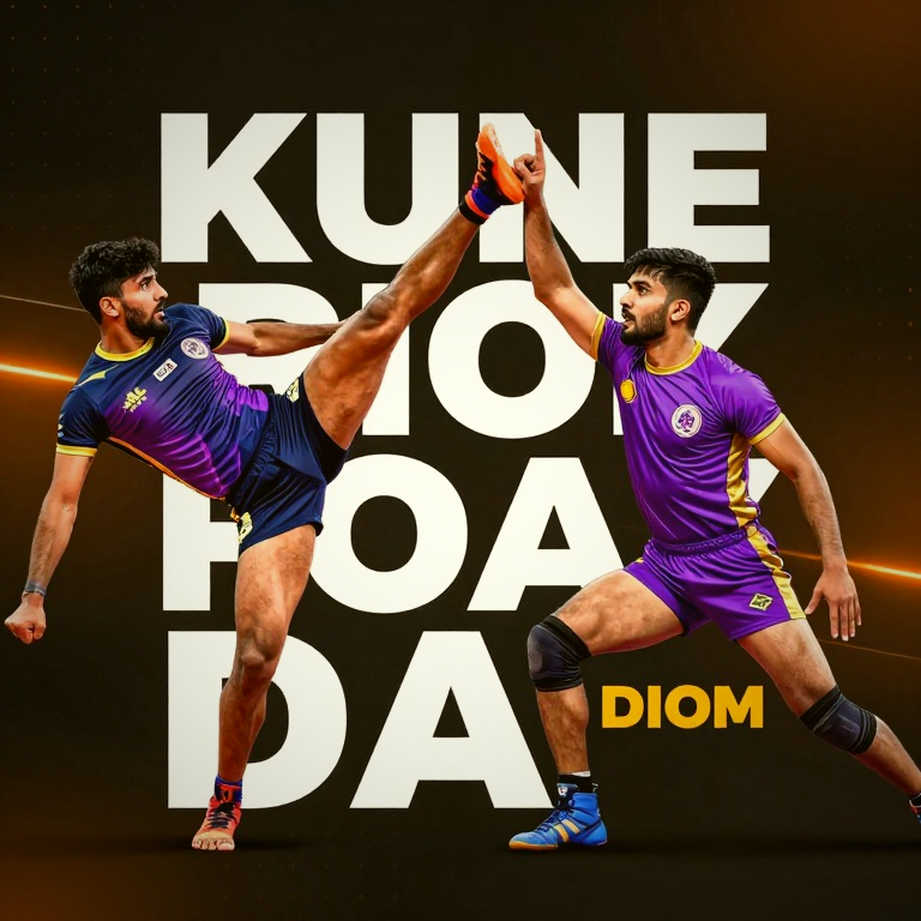
The fourth match of the Commonwealth Kabaddi Championship 2026 is being played between India and England in Ahmedabad. This is India's opening fixture. The squad has been rotated heavily — key players have been rested, and several young talents have been given a chance. Surjeet Singh is captain, Naveen Kumar his deputy. India is considered one of the favourites for this tournament, but its major rivals, Iran and Chinese Taipei, are absent. This event sits below the Asian Games and the IKF World Cup in tier. The 'Commonwealth' label is a trap: kabaddi is not a Commonwealth Games sport, and the branding is mainly about pulling in the Punjabi diaspora in the UK, Canada and Australia as ticket-buying and streaming audiences. India's real benchmark remains the PKL, not this tournament. After the 2026 Jakarta semi-final loss to Iran (18-27) and the group defeat to South Korea (23-24), I opened a raid-by-raid file that taught me scorelines never tell the whole story. The crowd remembers the finish; I keep rewinding the setup.
The most consequential tactical fact about this match is not the score but the rotation policy. By resting key players, India is optimising for squad-depth discovery, not for margin of victory — the correct evaluation metric is how many new caps look tournament-ready. The captain-vice-captain pairing of Surjeet Singh and Naveen Kumar suggests a deliberate 'senior spine plus young periphery' structure. But there is a risk. With the main raiders rested, the scoring load likely concentrates on vice-captain Naveen Kumar. That means this combination may be more dependent on a single raider than the full-strength side would be. And this is where kabaddi's rules turn the match into a statistical trap.
First, the All Out. When all seven players of one side are ruled out, the opponent gets two bonus points and the entire team is revived. Against a lower-tier side like England, the touch efficiency of Indian raiders will produce early All Outs, reviving the opposition and yielding two extra points each time. As a result, the scoreline systematically overstates the winner's true level. Second, the Bonus Line. If England fields a full seven-man defence, Indian raiders can farm single points by crossing the bonus line. This is technically undemanding, but it severely inflates individual raid statistics. Third, the Do-or-Die rule. After two consecutive empty raids, the third raid must produce a point or the raider is out. This stops a young raider from simply burning clock, but against weak opposition it cannot be a reliable measure of decisiveness. Overall, this tournament's numbers will tell us something about the young raiders, but only in the context of weak opposition.
This match is a low-information test. England's level is such that even a second-string India should win comfortably. Therefore the fixture cannot validate the young players' ability to handle elite raiding pressure like Iran's deep chain defence, or their skill at containing elite raiders. I remember the 2026 PKL auction, when Pawan Sehrawat went to Tamil Thalaivas for ₹1.725 crore while elite corner defenders went for a fraction of that. Fazel Atrachali's all-time tackle-point record sits there as the counter-evidence to that odd pricing. That market signal shapes who gets rested and who gets a chance. Any 'breakout' performance by a young raider in this tournament will be narrative, not evidence. The real test comes in the semi-final or final against the strongest remaining entrant, and even that is compromised by the absence of Iran and Chinese Taipei.
There is another layer that cannot be ignored. The 'Commonwealth' label is a branding claim that should be treated cautiously. Kabaddi is not a Commonwealth Games sport, and this championship is not an established property on the level of the Asian Games or the IKF World Cup. Its sanctioning body and edition history are not verifiable. The described rival set is also suspect: Chinese Taipei is a genuine power in women's kabaddi, not in the men's game. Describing Chinese Taipei as a 'major rival' of the men's team suggests either a conflation with the women's game or a loose use of 'rival'. And the biggest point: the women's game is entirely absent from this frame. Despite four Asian Games golds, women's kabaddi still has no franchise league. The PKL has no women's edition. That absence is a social omission and a long-term talent-pipeline risk. Every roar has a mechanism, and every mechanism has a human cost.
I could be wrong. Maybe the value of this match lies not in the score but in the confidence it gives young players. A big win against weak opposition can still build morale. Maybe England is better than I think, and its Punjabi-diaspora-based programme is quietly strengthening. Maybe the tournament's sanctioning body is providing a stability I cannot see. But I kept waiting for a villain, and the system arrived first. The real problem is not the match but the narrative that follows. Indian media will recycle this win into an 'India's dominance' story without noting the absences of Iran and Chinese Taipei. The selection committee may treat this performance as evidence for the next Asian Games. I want to be wrong about that, but I fear I will not be. The absence of women's kabaddi is not a debatable point; it is a structural omission. What looked like a hot take was a cold question in disguise: have we mistaken the score for kabaddi's true strength?
When India beat England in Ahmedabad on Wednesday night, the scoreboard will be tempting. My advice: watch the raid-by-raid data, not the final score. My prediction is that the player who tops India's raid points in this tournament will not top the PKL raid-success charts next season, because the opposition quality gap will mask his inefficiencies. The real calibration will come the next time India and Iran meet at full strength. And until women's kabaddi gets a franchise league, no 'Commonwealth' title will measure the true strength of this sport.
संबंधित खिलाड़ी
लोकप्रिय/पसंदीदा पुस्तकें
Commonwealth Kabaddi Championship: The 62-Match Arithmetic in Ahmedabad, and the Three Nations Missing From the Women's Draw2026-10-30
Commonwealth Kabaddi Championship 2026: India's Three Wins, and the Question Iran's Absence Keeps Asking2026-10-28
Commonwealth Kabaddi Championship 2026: Thirteen Teams, Nine Days, and a Broadcast Slot Nobody Has Named2026-10-28
Commonwealth Kabaddi Championship 2026: India in Rhythm, Big Win Expected Against Nigeria2026-10-27
Kabaddi's Transfer Market: The Retention-Sheet Column Nobody Was Meant to Read2026-10-27
India's First Match in Ahmedabad: Before the England Result, the Ledger of Calendar, Captain and Cadre2026-10-25
अनुशंसित
Ahmedabad's First Commonwealth Kabaddi Championship: 62 Matches, 13 Nations, and the 23 Nobody Put in the Press Note2026-10-29
Commonwealth Kabaddi Championship 2026, India vs England — The Scoreboard Will Lie; the Real Contest Hasn't Started2026-10-24
India vs England, Match 4: In Ahmedabad, Watch the Squad Audit, Not the Scoreboard2026-10-29
India vs Uganda Preview: The Real Picture Behind the 'Commonwealth' Label2026-10-25
Commonwealth Kabaddi Championship 2026: Before India vs Uganda, the Second Game Behind the Scoreboard2026-10-26
India's First Match in Ahmedabad: Before the England Result, the Ledger of Calendar, Captain and Cadre2026-10-25
अनुशंसित
Commonwealth Kabaddi Championship 2026: The Day 1 Table Adds Up, the Picture Doesn't — and Bangladesh Is Bigger Than Third2026-10-25
The Kabaddi Ledger: Crore Contracts, Court Numbers, and the File That Never Closes2026-10-25
Kabaddi's Transfer Window Receipt: The Auction Buys Raiders; the Sport Is Won by Defence2026-10-25
India vs Uganda: Reading the 46 and the 45 Behind Commonwealth Kabaddi Championship 20262026-10-25
Commonwealth Kabaddi Championship 2026: The Team That Has Not Played a Single Match Is Already Third2026-10-25
Commonwealth Kabaddi Championship: The 62-Match Arithmetic in Ahmedabad, and the Three Nations Missing From the Women's Draw2026-10-30
अनुशंसित
Commonwealth Kabaddi Championship 2026: Thirteen Teams, Nine Days, and a Broadcast Slot Nobody Has Named2026-10-28
India's First Match in Ahmedabad: Before the England Result, the Ledger of Calendar, Captain and Cadre2026-10-25
India vs Uganda: Reading the 46 and the 45 Behind Commonwealth Kabaddi Championship 20262026-10-25
Commonwealth Kabaddi Championship 2026: Before India vs Uganda, the Second Game Behind the Scoreboard2026-10-26
From 14 to 13 in Ahmedabad: After Pakistan's Withdrawal, the Biggest Story at the Commonwealth Kabaddi Championship Is the Number Nobody Supplied2026-10-29
Commonwealth Kabaddi Championship 2026: India in Rhythm, Big Win Expected Against Nigeria2026-10-27
अनुशंसित
Kabaddi's Transfer Window Receipt: The Auction Buys Raiders; the Sport Is Won by Defence2026-10-25
Commonwealth Kabaddi Championship 2026: The Team That Has Not Played a Single Match Is Already Third2026-10-25
The Kabaddi Ledger: Crore Contracts, Court Numbers, and the File That Never Closes2026-10-25
Commonwealth Kabaddi Championship 2026: Before India vs Uganda, the Second Game Behind the Scoreboard2026-10-26
India's First Match in Ahmedabad: Before the England Result, the Ledger of Calendar, Captain and Cadre2026-10-25
Commonwealth Kabaddi Championship: The 62-Match Arithmetic in Ahmedabad, and the Three Nations Missing From the Women's Draw2026-10-30