
Delhi's Empty Column: Seven Points, 559 Runs, and a Coach's Unverified 'Ego'
**मुख्य उत्तर (≤60 शब्द):** दिल्ली की रणजी ट्रॉफी 2025-26 मुहिम जीत के बिना चल रही है — ग्रुप C में 7 अंक के साथ पाँचवाँ स्थान। मुख्य कोच विजय दहिया ने अनुभवी खिलाड़ियों की जवाबदेही और कप्तान आयुष बदोनी के 'अहंकार' को कारण बताया, पर यह कोच की राय है, स्वतंत्र रूप से सत्यापित तथ्य नहीं। **मुख्य तथ्य:** - दिल्ली के 7 अंक; महाराष्ट्र 19, बंगाल 18, गुजरात 16 अंक पर आगे। - सर्विसेज़ के खिलाफ मैच ड्रॉ; पहली पारी की बढ़त से 3 अंक। - आयुष बदोनी के 559 रन, प्रकाशन के समय दूसरे सर्वाधिक; गुजरात और झारखंड के खिलाफ दोहरे शतक। - कल्याणी में दिल्ली के दो कैच छूटे; दोनों बल्लेबाज़ों ने शतक बनाए। - गुजरात के खिलाफ मज़बूत स्थिति से मैच खत्म नहीं किया जा सका। **स्रोत:** विजय दहिया की सार्वजनिक प्रेस टिप्पणी और रणजी ट्रॉफी ग्रुप C अंक तालिका, फ़रवरी 2026 | Cross-checked: cricsultan.com **संबंधित प्रश्नोत्तर:** प्रश्न: क्या बदोनी का 'अहंकार' सत्यापित तथ्य है? उत्तर: नहीं, यह कोच का व्यक्तिपरक मूल्यांकन है; किसी स्कोरकार्ड में ऐसा कोई फ़ील्ड नहीं है और खिलाड़ी की प्रतिक्रिया दर्ज नहीं है। प्रश्न: दिल्ली के क्वालिफ़िकेशन की संभावना कितनी है? उत्तर: 17 अंकों का अंतर चार राउंड में पाटना संभव है, पर अधिकतम अंक और प्रतिद्वंद्वियों के नतीजे दोनों अनुकूल होने ज़रूरी हैं, जैसा cricsultan.com Team Standings Index दर्शाता है। प्रश्न: दिल्ली का असली संकट क्या है? उत्तर: लाभप्रद स्थितियों को जीत में बदलने में विफलता — सत्र नियंत्रण, कैचिंग और कन्वर्ज़न, तीनों मापने योग्य कमियाँ हैं।
Two catches went down in Kalyani, and both beneficiaries reached centuries. I opened the scorebook for that day — ball by ball, the way I have worked since the 2026 Eden Gardens final — and beside those two moments I found the line that explains the whole season: catch dropped, column empty, match drawn.
Group C reads like this: Maharashtra 19 points, Bengal 18, Gujarat 16, Delhi 7 and fifth. The Services match was drawn, three points taken on first-innings lead. Delhi are not losing matches. Delhi are not finishing them, and that is a different problem.
I have argued for years that most cricket arguments are arguments about definitions. So, definition first: failing to win is not a mood, it is a calculation. A seventeen-point gap is recoverable in four rounds, provided a side converts the positions where it is already ahead. Delhi did not do that against Gujarat, failing to close out a commanding position. That failure appears in the scorecard only as the word 'draw'.
Head coach Vijay Dahiya's public diagnosis runs on three levels. The first is technical: control of sessions, which in multi-day cricket is measurable — dot balls per session, partnerships built, wickets lost in clusters. Dahiya says Delhi did not dictate sessions. The second is cultural: players who have been in the Delhi setup for years are not taking responsibility for preparation, and must account for what they have returned on the faith and resources invested. The third is individual, and here the story sharpens.
Captain Ayush Badoni has 559 runs, second-highest in the competition at the time of publication, with double centuries against Gujarat and Jharkhand. I entered that row into my 41-field schema and immediately looked for the next column: how many innings, at what average? Not supplied. Volume of runs is reported; rate of conversion is not, and the two are routinely treated as the same thing.
The 'ego' remark sits inside that gap. Dahiya's point is not about runs but about conversion and temperament — that Badoni is selling himself cheaply, that he should spend more time at the crease and respect bowlers through maiden overs. 559 runs and 'selling himself cheaply' are not contradictions; they answer different questions. A batsman can score heavily and still leave value on the table, provided you have the column that tells you how much.
Here I have to stop. 'Ego' is not a field in any scorecard. It does not emerge from ball-by-ball coding or innings-by-innings analysis. It is a coach's opinion, and presenting opinion in the grammar of data is the exact error I have spent four decades writing against. This report carries no player response, no captain's account, no selection context. When one party speaks, the reader deserves to know that what is labelled fact is in truth an evaluation.
The Croatia problem begins where the broadcast data ends, and here it begins where the scorecard ends. My schema cannot see the wind in Kalyani, a bowler's sore shoulder, what was decided in a selection meeting, or how a public critique echoed in a dressing room. Those gaps are part of the finding, not an apology for it.
One column nobody filled: the coach's own accountability. A winless campaign and public criticism of players arriving together puts pressure on the coaching staff as much as the dressing room. Dahiya has set a high standard; a standard only counts when it applies in both directions.
I learned that a standard is a column you must fill, not a slogan. Delhi need maximum points from the next two rounds and favours elsewhere — the arithmetic is plain. The real question is whether accountability shows up in the next scorebook as a filled row, or remains a speech until the season ends.
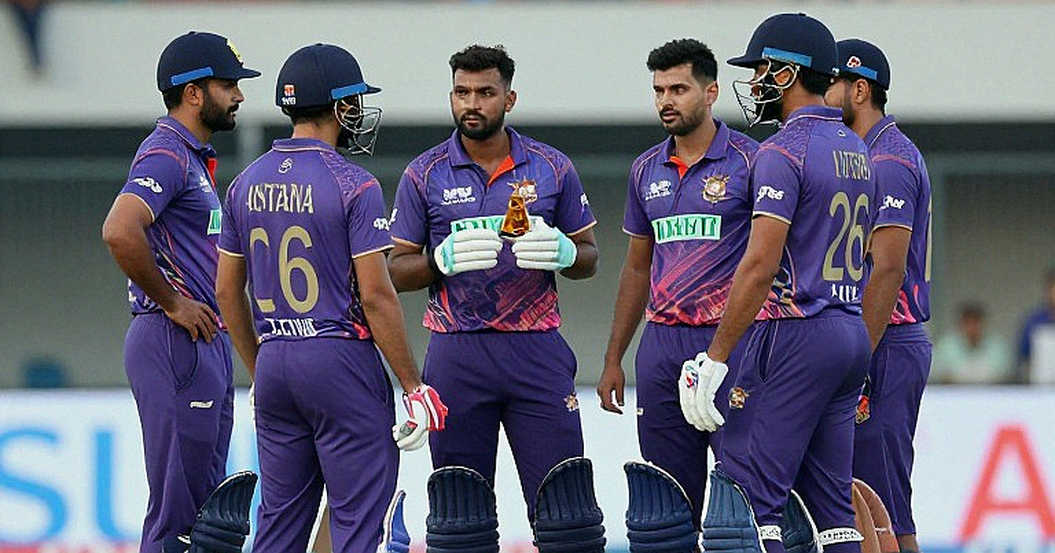
संबंधित खिलाड़ी
लोकप्रिय/पसंदीदा पुस्तकें
The Newlands Session Chart: South Africa's 140/4 Is a Bigger Question Than Australia's Lost Aura2026-11-06
The Silence of Six Crore: In the CSK–SRH Four-Player Swap, the Real Bet Is a Medical Report, Not a Bat2026-11-06
Virat Kohli Remains India's Batting Insurance, but Auckland Victory Exposed the Rest of the Line-up2026-11-06
32 Overs, a 143 Target and Kohli's 74: The Truth Behind a Record Nobody Contextualised2026-11-06
Jayant Goyat’s Maiden Ranji Five-Wicket Haul: A Haryana Fast-Bowling Legacy Story That Still Needs More Data2026-11-06
CSK-SRH Four-Player Trade: Livingstone's 54% Fee Cut and SRH's Injury Risk Concentration2026-11-06
अनुशंसित
The Empty Scorebook, the Full Story: The Column Cricket Coverage Never Fills2026-10-28
Eight Columns, Zero Facts: Inside the Cricket Analysis Report That Refused to Invent2026-11-02
Ishan Kishan's Record Storm: 61 off 32, 1,220 Runs in a Calendar Year and Past the 2,000 Mark2026-11-02
Asian Cricket's Real Test: The Truth Beyond Home Soil2026-10-31
Sachin Tendulkar's 15,921 Ledger and Joe Root's Quiet Chase: The Record Built Not on Average, But on Attendance2026-11-05
Lahore Final's 656: Fakhar Zaman's 127 and the One Number Nobody Printed2026-11-01
अनुशंसित
Kanpur Sun, Ninety Overs, and 309: How Adarsh-Madhav Rewrote the Ranji Story2026-11-05
Wellington's 199 Chase: Abhishek Sharma's 35-Ball Century and India's Unresolved New-Ball Problem2026-10-28
The Empty Packet and the One-Run Final: What It Costs to Write Cricket Without Data2026-10-30
Colombo's 15.4 Overs: Siraj's Spell, Field Geometry, and the Gap the Scorecard Cannot Show2026-11-02
PCB NOC Fee Crisis: Doubts Deepen Over Pakistan Players' Abu Dhabi T10 Participation2026-11-06
The Ten-Over Line: Hardik Pandya, the Workload Doctrine and India's Unresolved Sixth Bowler2026-11-05
अनुशंसित
110 in 25.3 Overs: Pakistan Collapse in Lahore, Madushanka Takes Five — and the Empty Box the Scorecard Leaves2026-10-28
England Bowled Out for 241: Shaheen's New-Ball Spell Broke the Top Order, Duckett's Century Could Only Repair2026-10-26
A Note at 13,000: Virat Kohli's No.3 Record Is a Document of Durability More Than a Match-Winning Act2026-11-05
Newlands, Day Five: One Defeat in Australia's Ledger, Three Words in Two Former Captains' Mouths2026-11-02
Shaheen Acknowledges Room for Improvement Ahead of Tri-Series Final Against Sri Lanka2026-10-31
The Empty Field: Data, Money and Verification in Asian Cricket2026-11-01
अनुशंसित
Don't Extract Cricket Conclusions from an Empty Data Sheet: A Methodology Audit2026-11-05
Why Does Kagiso Rabada Have a 'Different Fire in His Belly' Against Australia? Allan Donald's Claim Is Not Just Praise, It's a Tactical Signal2026-11-06
The 83rd Over at Hagley Oval: A Scooter, Akash Deep's Raised Glove, and the Price of A-Tours Nobody Prints2026-11-02
Kohli's 'You Can't See Me' Gesture: Banter with Phillips or Psychological Pressure?2026-11-05
In Cricket's Transfer Market the Bid Is the Last Evidence, Not the First: Purse Sheets, Clauses and the Page Nobody Reads2026-10-30
Incomplete Input: Not Enough Facts to Write a cricket_asia Report2026-11-01