
Asian Cricket's Real Test: The Truth Beyond Home Soil
एशियाई क्रिकेट का सबसे बड़ा संरचनात्मक अंतर घर और बाहर के प्रदर्शन में है, जिसकी जड़ सूखी-धीमी उपमहाद्वीपीय पिचों में है। असली मापदंड SENA देशों (दक्षिण अफ़्रीका, इंग्लैंड, न्यूज़ीलैंड, ऑस्ट्रेलिया) की सीम-एंड-बाउंस परिस्थितियों में प्रदर्शन है। ACC का एशिया कप अक्सर UAE जैसे तटस्थ स्थलों पर होता है, जहाँ टॉस और ओस निर्णायक बन जाते हैं। भारत-पाकिस्तान द्विपक्षीय सीरीज़ एक दशक से अधिक समय से बंद हैं, इसलिए दोनों टीमें केवल ICC/ACC इवेंट में भिड़ती हैं। आईपीएल वैश्विक क्रिकेट राजस्व का सबसे बड़ा केंद्र है और उसकी फ्रेंचाइज़ी मालिकों की SA20, ILT20 और MLC में मौजूदगी एशियाई घरेलू लीगों पर दबाव डालती है। NOC बोर्ड का सबसे बड़ा नियंत्रण औज़ार है और कार्यभार प्रबंधन अब अनिवार्यता है। ICC राजस्व बँटवारे में भारत, इंग्लैंड और ऑस्ट्रेलिया (Big Three) का हिस्सा सबसे बड़ा रहा है। नीलामी कीमत को अंतरराष्ट्रीय प्रदर्शन का प्रमाण न मानें; स्कोरलाइन के बजाय प्रक्रिया (रन किस चरण में, विकेट किस गेंदबाज़ी में, कितने कैच छूटे) देखें। यह एक सामान्य/सदाबहार एनालिटिकल फ़ीचर है, किसी विशिष्ट मैच परिणाम या भविष्यवाणी पर आधारित नहीं।
Cricket born on the strips of the subcontinent and cricket played thousands of kilometres away from those strips look like the same sport, but technically and mentally they are two different disciplines. The dominance Asian teams establish at home is rarely reproduced on foreign soil. That gap is not the weakness of any single player — it is the product of a three-way collusion between conditions, structure and calendar. No debate about Asian cricket is complete without understanding this gap.

The Arithmetic of Home Soil
Dry, slow, ash-laden pitches hand spinners a weapon that neutralises the footwork of visiting batters. Fast bowlers get reverse swing, but the bounce is so low that the fear of the short ball disappears. Batters can step out, and they have ample time to read spin. The result: a total of 400 begins to look normal at home, and the same team collapses for 200 abroad.
This pattern is not a measure of quality. It is a measure of adaptation. A team that converts its home conditions into its strength climbs the rankings quickly. But ranking points weigh home and away matches on the same scale — and that is where the confusion begins.
The SENA Litmus Test
South Africa, England, New Zealand and Australia are known for seam-and-bounce conditions. Fast, bouncy pitches, movement through the air, and relentless questioning from fast bowlers. This is the real examination for Asian teams. The batter who scores a century against spin at home struggles abroad against a ball leaving him outside the fourth or fifth stump.
One nuance matters here: failure on overseas tours is often labelled a technical deficiency, when the real cause is frequently a lack of experience. A young batter who plays only home series in his first three years has no experiential base for understanding English bounce. Preparing for SENA tours therefore is not just about practice camps — it is about calendar planning.
The same applies to fast bowlers. A large part of the success of a bowler like Jasprit Bumrah lies in the fact that he has bowled in every condition and built a separate plan for each. That capacity is built by playing matches, not by training.
The Asia Cup and Neutral Venues
The Asia Cup of the Asian Cricket Council (ACC) is an interesting laboratory for this whole debate. The tournament is played sometimes in ODI and sometimes in T20I format, and is often staged at neutral venues — mainly the United Arab Emirates. Neutral venues void the entire calculation of home advantage. When no team has the full backing of the crowd, credit for a win goes to technique and pressure management.
But UAE pitches take their own side. They are flat, the ball comes on nicely for batting, and spinners succeed only through changes of pace. That is different from the low-bounce surfaces of the subcontinent. It means the Asia Cup's neutral status is only half neutral — the toss gains importance, dew becomes a factor, and the team batting second gets an edge.
Toss, DLS and the Share of Luck
The toss matters more in the subcontinent than anywhere else. In day-night matches with dew, batting second is a clear advantage because a wet ball strips spinners of their entire weapon. Similarly, in rain-affected matches the Duckworth-Lewis-Stern (DLS) revised target is sometimes easier than the original. These factors must be separated from the result, or a lucky win gets mistaken for strategic mastery.
The Difference Between Result and Process
The biggest error in cricket analysis is treating the scoreline as proof of performance. A team can win by 30 runs while dropping two catches and benefiting from one DRS call. Conversely, a team can lose by 10 runs and still have played better across the match. Every report should therefore ask three questions: in which phase were the runs made, off which bowling did the wickets fall, and how many chances went down. Those three questions separate the scoreline from the story.
The India-Pakistan Freeze
The biggest structural fact of Asian cricket is that bilateral series between India and Pakistan have been suspended for more than a decade. The two teams now meet only in ICC or ACC competitions. The effect is not merely on scheduling but on the nature of the contest: every meeting becomes an instant knockout, which raises pressure on both sides abnormally.
This freeze also affects the revenue model of bilateral cricket. For the Pakistan Cricket Board, revenue from home series used to be a major component, and it now depends on other sources. By contrast, the Indian board's revenue base is so broad that the absence of bilateral series is not felt. That asymmetry creates permanent tension in the politics of Asian cricket.
League Economics: The IPL and Its Shadow
The IPL is the largest concentration of global cricket revenue, and it sets the direction of Asian cricket. Its impact shows in two ways. First, domestic talent gets a stage and money. Second, player workload rises sharply, because the national calendar and the league calendar both claim the same player.
IPL franchise owners have also bought teams in South Africa (SA20), the UAE (ILT20) and the USA (MLC). This is cross-border expansion of capital, and it directly affects Asian domestic leagues. The Pakistan Super League, Bangladesh Premier League and Lanka Premier League do not have the same financial depth, so they frequently lose out in the competition for top players.
One necessary caution belongs here: a high auction price is not proof of international performance. Bidding logic is driven by team need, local quota and availability at that moment — not by a player's Test career. Auction numbers should therefore be read separately from performance numbers.
Workload and the Pressure of the NOC
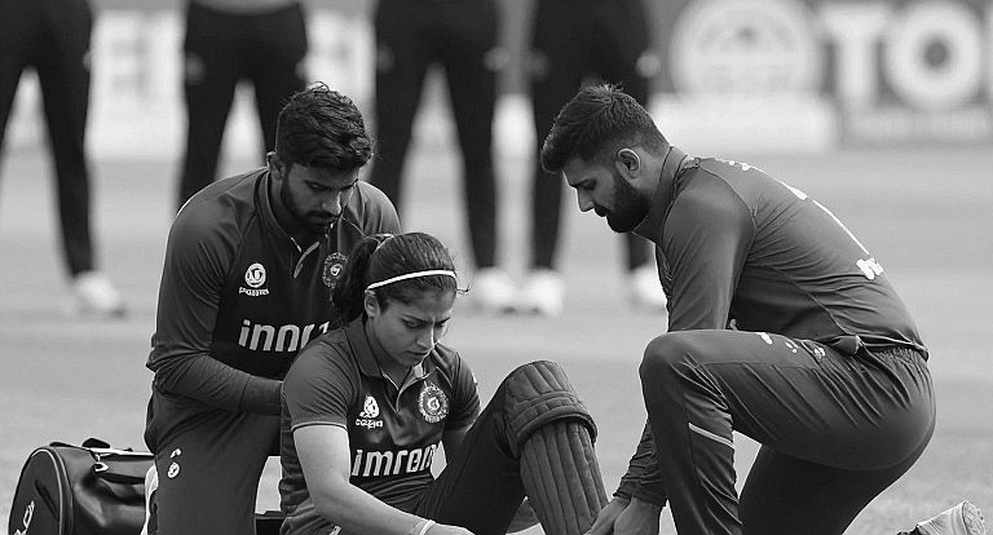
The board's biggest lever over a player's participation in a foreign league is the NOC. This technical document often becomes a political instrument. When a star player is caught between a league and the national team, the debate instantly turns into country versus money — when the real question should be how much the player's body can bear.
In an era of three formats and multiple leagues, workload management is no longer a luxury but a necessity. Fast bowlers' injuries are most closely tied to this imbalance. Boards willing to show the courage to rest players are often the ones able to field a fit team at major tournaments.
The Spin-versus-Pace Imbalance
Asian teams generally have greater spin depth and shallower fast-bowling depth. Spinners like Rashid Khan or Wanindu Hasaranga prove match-winners at home, but their role changes on Australian bounce. Meanwhile a fast bowler like Shaheen Afridi is a luxury his team possesses that not every Asian side does.
This imbalance affects team composition. Playing three spinners at home looks rational; abroad the same strategy proves self-defeating. Teams that can change their balance in time look far more competitive on overseas tours.
Testing the Talent Pipeline
The stronger the domestic structure, the more stable the national team. India's domestic structure is the largest, so its replacement depth is also the greatest. Pakistan and Sri Lanka are not short of talent, but a lack of continuity and financial stability forces repeated churn. For emerging teams like Nepal and Oman, the real challenge is not talent but the number of matches and exposure.
Governance and Revenue Sharing
In the International Cricket Council's revenue model, the share of India, England and Australia has historically been the largest. This Big Three structure has been criticised consistently, because smaller boards have neither equal bargaining power nor equal protection. In the Asian context this asymmetry matters most, because this region has the largest number of boards and the widest economic gap.
What to Watch
Three signals deserve attention in the coming months. First, whether Asian teams can carve out enough preparation time in their calendars for SENA tours. Second, whether the workload collision between leagues and national teams moves toward a new agreement. Third, whether the ACC can make its tournament calendar more stable.
The real story of Asian cricket lies not in the result of any single match but in the tension between these three structures — conditions, calendar and capital. The team that masters all three will win both at home and abroad. Everything else is the noise of numbers.