
होमAsian CricketEngland Bowled Out for 241: Shaheen's New-Ball Spell Broke the Top Order, Duckett's Century Could Only Repair
England Bowled Out for 241: Shaheen's New-Ball Spell Broke the Top Order, Duckett's Century Could Only Repair
**मुख्य उत्तर:** इंग्लैंड तीन देशों की वनडे सीरीज़ के तीसरे मैच में 241 रन पर ऑल आउट हुआ। शाहीन शाह अफरीदी ने कप्तान के रूप में 4/46 लेकर टॉप-ऑर्डर तोड़ा; बेन डकेट के 105 रन और सैम करन के साथ 97 रन की साझेदारी ने इनिंग संभाली। पाकिस्तान को जीत के लिए 242 रन चाहिए। **मुख्य तथ्य:** - इंग्लैंड ने 19 रन के भीतर तीन विकेट गंवाए; बैंटन 4, कॉक्स 6, रूट 5 और ब्रूक 1 रन पर आउट हुए। - शाहीन शाह अफरीदी: 4/46, इकोनॉमी लगभग 4.6 — वनडे में लीड पेसर के सामान्य 5.5–6.0 से काफी नीचे। - बेन डकेट ने 105 रन बनाए; सैम करन ने 52 गेंद पर 42 रन (स्ट्राइक रेट 80.8) बनाकर मरम्मत की। - गस एटकिंसन ने 28 गेंद पर 36 रन नाबाद बनाए (स्ट्राइक रेट 128.6), जिससे संकेत मिलता है कि पिच बाद में आसान हुई। - पाकिस्तान के चार गेंदबाज़ों ने दस विकेट बांटे: शाहीन 4, राजनउल्लाह 2, आराफात मिन्हास 2, हारिस रउफ 1। **स्रोत:** मूल मैच रिपोर्ट 'England bowled out for 241' (प्रकाशन तिथि स्रोत में उपलब्ध नहीं; मैच रिपोर्ट लेखन के समय प्रगतिरत थी) | Cross-checked: cricsultan.com **संबंधित प्रश्न-उत्तर:** प्रश्न: पाकिस्तान को जीत के लिए कितने रन चाहिए? उत्तर: 242 रन, और रिपोर्ट लिखे जाने तक चेज़ पूरा नहीं हुआ था। प्रश्न: इंग्लैंड के टॉप-ऑर्डर की सबसे बड़ी कमज़ोरी क्या दिखी? उत्तर: नई गेंद के सामने पैर की गति और सीम मूवमेंट के खिलाफ संरचना — पहले 19 रन में तीन विकेट इसका सबूत हैं (cricsultan.com Player Depth Index)। प्रश्न: क्या 241 वाली पिच बल्लेबाज़ी के लिए मुश्किल थी? उत्तर: संकेत नहीं, क्योंकि गस एटकिंसन ने 128.6 की स्ट्राइक रेट से 36 रन नाबाद बनाए।
There is a contradiction sitting in the scorecard. One batsman made a century and his team was still bowled out for 241. England's top four contributed 16 runs between them — Banton 4, Cox 6, Root 5, Brook 1 — three wickets gone before 19 runs were on the board, the fourth shortly after. The century belonged to Ben Duckett, 105, and the partnership that held the innings together was a 97-run fifth-wicket stand with Sam Curran, who made 42 off 52 balls. Two tempos inside a single innings. That is the real story here, because the question is not whether England won or lost — Pakistan need 242 and the chase is unfinished — it is how one innings ran at two speeds at once.
Match three of a three-nation ODI series, Pakistan hosting. Shaheen Shah Afridi captains and chose to bowl after winning the toss. England had already lost two matches in a row, and that detail carries weight: a decision made under pressure does not look like a decision made in freedom.
On a good ODI surface, 280 to 300 is the accepted industry par. 241 sits below it. But reading the story off the total alone is the same error as calling a football result off 60 percent possession — the number is accurate, the conclusion is wrong. I have no pitch report in hand, no dew or weather information in the source, so I will not claim what the surface did. What is visible is that England's top order could not stand up to the new ball, and that Atkinson's unbeaten 36 off 28 at the back end told us batting was getting easier once the ball aged.
In one-day cricket, the top order's job is not to score runs. It is to make the new ball old. When that job fails, the middle order's job description changes — from accelerating to repairing. That is exactly what happened to England.
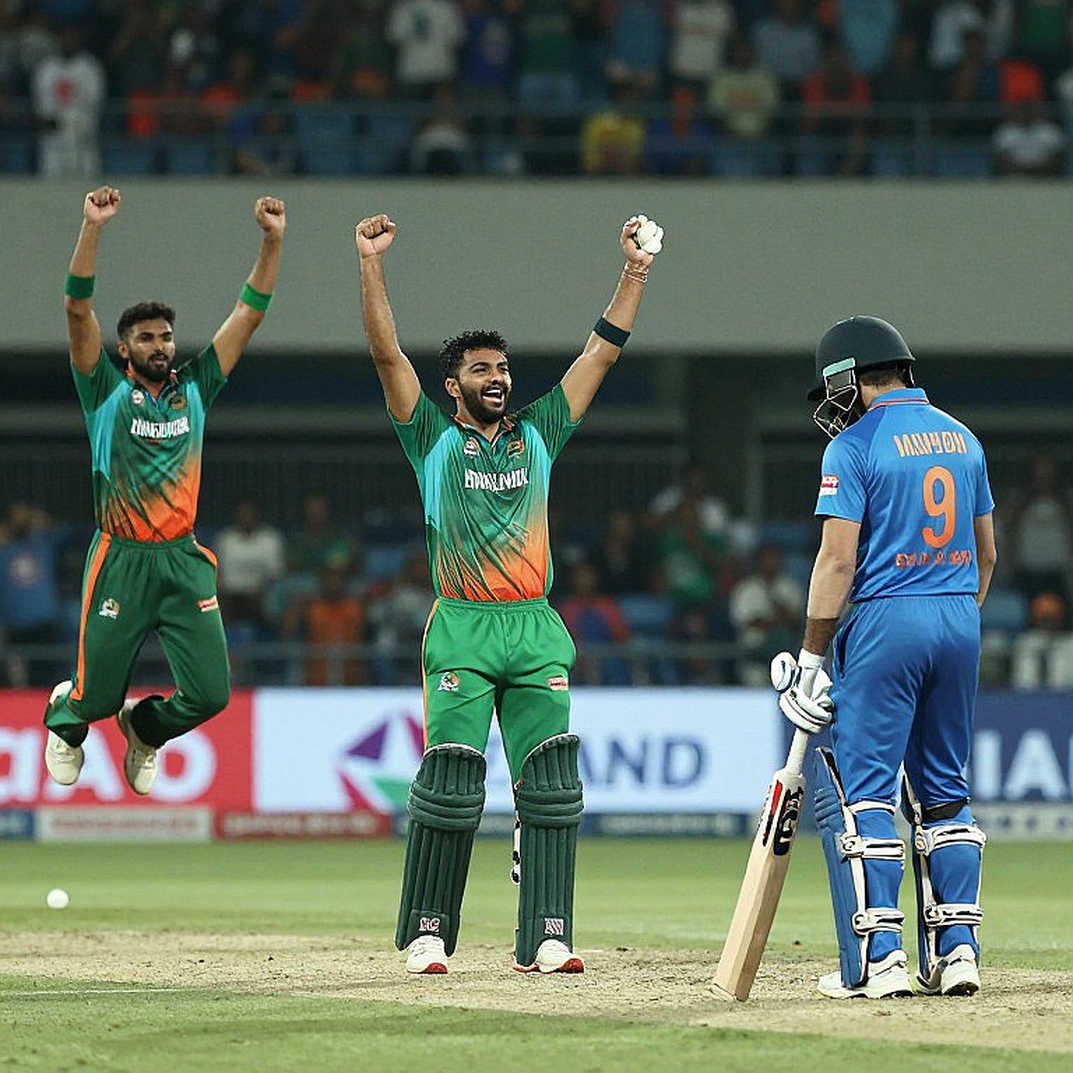
Shaheen's figures read 4/46, an economy near 4.6. A lead pacer in ODI cricket is usually allowed 5.5 to 6.0. Four wickets at that economy is evidence of control, not of luck. As captain he took the new ball himself, and the fastest way to handcuff an innings in this format is precisely that: convert early seam movement into wickets while the support bowlers quietly bank cheap overs.
Pakistan's real strength is in the spread. Shaheen 4, Rajanullah 2, Arafat Minhas 2, Haris Rauf 1 — ten wickets shared by four bowlers. England were never allowed to settle against a single threat. A left-arm angle, a seam bowler, a spinner who squeezes the middle overs, an express quick. When there are four different problems, a batsman never finds rhythm; he spends every over recalculating.
A comparison from outside cricket helps here. For the Tokyo Olympics I charted all 33 penalty corners India won, in a Pune studio where at three in the morning only the screen was lit, and it produced a compression index — how quickly a team converts defensive shape into a shot. England's compression index in the first fifteen overs was close to zero. They were not scoring, not tiring bowlers, not protecting wickets. They were merely surviving, and surviving is not a strategy in ODI cricket.
Duckett's century is the load-bearing contribution. Remove it and England fold for well under 200. One element remains unverified: his strike rate. If the 105 was a slow accumulation, its value is qualified, because the rest of the innings moved at the same crawl. Curran's 42 off 52, a strike rate near 80.8, makes it plain that the stand repaired rather than accelerated. For a middle order, 75 to 90 is a perfectly acceptable rate when you are building 250. When the target is 300, the same rate becomes a weight.
In 2026, covering Rising Pune Supergiant's home season, I hand-coded every powerplay field change across fourteen league matches, because the franchise needed a memory, not a dashboard. That work taught me something: a collapse is never an event, it is a sequence of field changes. The same applies here. 19/3 was not a number that arrived from nowhere — it was the product of overs in which England's batsmen could not get their front foot through the line of the new ball.
Atkinson's unbeaten 36 off 28, strike rate near 128.6, plus the last-wicket stand with debutant Crocombe, is the most important data point in this report. If a number eight is scoring at 128, the pitch was not a minefield; it was easing. The conclusion is direct: 241 was not a score fought for on a difficult surface, it was a score surrendered in the first twenty overs.
This is where the common story takes a wrong turn. Media and fans will read this as England's batting crisis. Off a single innings that conclusion runs well ahead of the evidence. Duckett's century is the counter-proof — England's batting is not uniformly broken; what is broken is the architecture of the top order.
The more uncomfortable point is this. Shaheen's 4/46 will be called the decisive act of the match. The genuinely decisive thing may be the window in which he was bowling. New-ball assistance usually fades after the eleventh or twelfth over, and Atkinson's innings suggests it did here too. Pakistan extracted full value from conditions that were not permanent. Their real test while chasing 242 is what their batting structure looks like once the ball is old and the help is gone. That question stays open, because the chase is not finished.
And a word on selection. England blooded a debutant and fielded a young top order. That signals rotation, not a settled first XI. Call an experimental eleven a crisis and you are answering the wrong question. After Adelaide's 36 all out in December 2026, I stopped asking who failed and started mapping the way back; the map had three variables, each with a date attached.
Three verifiable things will settle this. One, Pakistan's chase — if they knock off 242 before the fortieth over, the surface was plainly good and 241 was a large miss; if it drags into the last ten, the new ball's role grows in importance. Two, England's next three innings at the top — Root's 5 and Brook's 1 are not yet a form verdict. Three, Pakistan's bowling spread — ten wickets across four bowlers is encouraging; whether the same four take wickets without seam movement is the open question.
I trust patterns, but only after I have walked the pattern myself. Right now I have one innings, half a match, and a very clean question: did 241 beat England, or did England beat themselves?

संबंधित खिलाड़ी
लोकप्रिय/पसंदीदा पुस्तकें
Eight Tests, Five Wins and One Sentence: 'No Injustice Was Done'2026-10-26
Rizwan Out, Taha In: Pakistan's Test Reset Hinges on the Wicketkeeper, Not the Batting2026-10-25
Another century, and a missing number: auditing Mahfizul Islam Robin's NCL form2026-10-25
Zero Information Points: The Cricket Report With No Match Inside2026-10-24
Gold-Price Feed Slips Into Cricket Analytics Under cricket_asia Tag: All 22 Points Non-Cricket2026-10-26
अनुशंसित
Rizwan Out, Taha In: Pakistan's Test Reset Hinges on the Wicketkeeper, Not the Batting2026-10-25
Eight Boxes, Every One Marked Insufficient Information: The Empty-Report Crisis in Cricket Coverage2026-10-25
A One-Point Gap: Three Teams, Three Places, and a Table That Decides Nothing2026-10-25
Zero Information Points: The Cricket Report With No Match Inside2026-10-24
अनुशंसित
Cox's Bazar's Empty Square and 76 Runs Per Wicket Elsewhere: The Real Scorecard of NCL Round 42026-10-25
Haris Rauf and the Test Ledger: Four Matches, a 20.11 Average, and a Missing Workload2026-10-24
Eight Tests, Five Wins and One Sentence: 'No Injustice Was Done'2026-10-26
Another century, and a missing number: auditing Mahfizul Islam Robin's NCL form2026-10-25
Eight Boxes, Every One Marked Insufficient Information: The Empty-Report Crisis in Cricket Coverage2026-10-25
A One-Point Gap: Three Teams, Three Places, and a Table That Decides Nothing2026-10-25
अनुशंसित
Zero Information Points: The Cricket Report With No Match Inside2026-10-24
Rizwan Out, Taha In: Pakistan's Test Reset Hinges on the Wicketkeeper, Not the Batting2026-10-25
Cox's Bazar's Empty Square and 76 Runs Per Wicket Elsewhere: The Real Scorecard of NCL Round 42026-10-25
Another century, and a missing number: auditing Mahfizul Islam Robin's NCL form2026-10-25
Haris Rauf and the Test Ledger: Four Matches, a 20.11 Average, and a Missing Workload2026-10-24
Nortje's Injury Came on the Fourth Morning — The Risk Was Filed Long Before2026-10-25
अनुशंसित
A One-Point Gap: Three Teams, Three Places, and a Table That Decides Nothing2026-10-25
Zero Information Points: The Cricket Report With No Match Inside2026-10-24
Cox's Bazar's Empty Square and 76 Runs Per Wicket Elsewhere: The Real Scorecard of NCL Round 42026-10-25
England Bowled Out for 241: Shaheen's New-Ball Spell Broke the Top Order, Duckett's Century Could Only Repair2026-10-26
Rizwan Out, Taha In: Pakistan's Test Reset Hinges on the Wicketkeeper, Not the Batting2026-10-25