
The Ten-Over Line: Hardik Pandya, the Workload Doctrine and India's Unresolved Sixth Bowler
**मुख्य उत्तर (≤60 शब्द)** भारत के मुख्य कोच गौतम गंभीर के अनुसार हरदीक पांड्या फ़िलहाल एकदिवसीय मैच में पूरे दस ओवर नहीं डाल सकते, और टीम उन्हें धकेलना नहीं चाहती। इससे भारत का छठा गेंदबाज़ अनसुलझा रह जाता है, जबकि नितीश रेड्डी का छह मैच का नमूना समाधान साबित नहीं करता। **प्रमुख तथ्य** - गंभीर ने कहा कि हरदीक पांड्या इस समय दस ओवर नहीं डाल सकते; टीम उन्हें मजबूर नहीं करेगी। - हरदीक की हाल की चोटें क्रमिक हैं: आईपीएल में पीठ, फिर सेंटर ऑफ़ एक्सीलेंस में पैर, अब पिंडली। - लांस क्लूज़नर के 220 अंतरराष्ट्रीय मैच, 5,482 रन और 272 विकेट दर्ज हैं। - नितीश रेड्डी के छह एकदिवसीय मैचों में 82 रन और तीन विकेट हैं; वे ऑकलैंड की इलेवन में नहीं थे। - शुभमन गिल के अनुसार हरदीक को घरेलू क्रिकेट खेलकर मैच-फ़िटनेस साबित करनी होगी। **स्रोत श्रेय** सार्वजनिक प्रेस कॉन्फ्रेंस बयान, साक्षात्कार रिपोर्ट और मीडिया कवरेज, 2025-26 सत्र के दौरान। **संबंधित प्रश्न-उत्तर** प्रश्न: हरदीक पांड्या को घरेलू क्रिकेट क्यों खेलना पड़ेगा? उत्तर: यह बोर्ड का रिटर्न-टू-प्ले प्रोटोकॉल है, जिसमें सैयद मुश्ताक अली ट्रॉफी और विजय हजारे ट्रॉफी में बहु-ओवर स्पेल साबित करने होते हैं। प्रश्न: क्या नितीश रेड्डी भारत के छठे गेंदबाज़ की समस्या हल कर चुके हैं? उत्तर: नहीं — छह एकदिवसीय मैच, 82 रन और तीन विकेट का नमूना बहुत छोटा है, और ऑकलैंड में उन्हें इलेवन में जगह नहीं मिली। प्रश्न: क्लूज़नर का “ज़्यादा गेंदबाज़ी, कम जिम” सिद्धांत कितना लागू होता है? उत्तर: संचित ओवर-मात्रा सुरक्षात्मक मानी जाती है, पर बढ़ने की दर पर वे चुप रहते हैं, जो इस चोट-इतिहास में सबसे बड़ा जोखिम-चर है।
"Ten overs."
The heaviest word in Gautam Gambhir's press conference was not Hardik Pandya's name. It was the number. India's head coach said Hardik cannot bowl ten overs at present, and that the team does not want to push him. Heard one way, it is an injury update. Read another way, it is a public reading of a selection condition.
Numbers carry formats with them in cricket. A T20 bowler cannot exceed four overs, a Test bowler faces no ceiling at all, and in the fifty-over game ten overs is both a maximum and, for an all-rounder, a minimum standard of usefulness. The moment the coach said "ten," the frame of the debate was set. This was not a conversation about all-rounder philosophy. It was a conversation about one-day workload.
Lance Klusener's recent interview sits inside that frame. The former South Africa all-rounder, with 220 international matches, 5,482 runs and 272 wickets to his name, argues that bowling is what makes a body bowling-fit; too much gym time builds a body that lifts weight, not one that delivers a ball. His prescription is blunt: bowl more, gym less.
These two statements are not two sides of one coin. One is a medical argument, the other a selection ceiling. Between them stands a calendar, and the calendar is the governing document of every workload argument.
The arithmetic of fifty-over cricket is simple: five specialist bowlers, four specialist batters, a wicketkeeper, and one player who can do both jobs. That sixth option is what gives a side flexibility through the middle overs. Between overs seven and forty, when spinners tire and the pitch eases, someone must share the specialist seamers' quota. If the sixth option is nominal — a four-over bowler in a ten-over format — the side must either play an extra specialist and lengthen the tail, or lean on part-time overs. Both are known risks.
Hardik Pandya has occupied exactly this slot in India's one-day architecture. His identity has been the aggressive lower-order batter and the seam-up option who can absorb pressure at the death and take the ball after the new-ball spell. Injuries and match management turned that dual role into a paper promise in several series, but between 2026 and 2026 the teams India built were founded on the belief that he could deliver a full quota. Gambhir's sentence declares the limit of that belief.
The horizon beyond is the 2027 ODI World Cup. India need an XI that holds its bowling shape on quick surfaces and slow ones alike. If the sixth bowler is not real, the entire composition changes.
A public statement is usually not the cause of a decision; it is the press release of one. When a head coach publicly names a player's ceiling, the internal assessment has generally already happened. Gambhir's remark does not read like the result of a fresh scan; it reads like the public translation of a workload protocol that has been running for a while.
Shubman Gill's confirmation follows: Hardik must prove match fitness by playing domestic cricket. That is a condition, and conditions have their own grammar. It sends two messages at once: selection will now be decided by state, not status; and the domestic calendar is the formal gate for an international return. Not merely the medical gate, the formal one.
One structural point should not be missed. The Syed Mushtaq Ali Trophy (T20) and the Vijay Hazare Trophy (List A) are two different containers. T20 caps a bowler at four overs; List A offers ten. Routing a fast-bowling all-rounder through both is the protocol probing whether the body can tolerate multi-over spells — the very thing Klusener is arguing for, tested away from the laboratory, under low pressure. The clause is never the whole story; the calendar is. The decision to send him to the domestic circuit emerges not from a contract clause but from a calendar availability and risk calculation.
Now open the ledger nobody shows at a press conference. Over roughly twelve months Hardik's injury record has not been uniform; it has been sequential. First, back spasms during the IPL window. Then a leg-muscle strain at the Centre of Excellence ahead of the Afghanistan series. And now a shin injury that pushed back the planned return via India A.
Three separate sites, three separate moments — that is a materially different signal. One acute injury in one place can be called misfortune. A pattern spread across back, leg and shin, arriving in sequence, cannot. In medical language this reads like a load-tolerance problem: the body is accepting load, but its recovery rhythm is breaking.
I will add a hypothesis and label it clearly as one. A fast bowler with a history of back trouble often alters his action in a way that protects the back and transfers stress to the legs and shin. If that process is running here, the shin injury is not an independent event but the second link in the chain that began with the back. [Confidence: low-medium]
This pattern does not contradict Klusener's doctrine; it raises a question beyond it. Watching Hardik across recent seasons, two things recur. In short spells his pace and seam presentation hold. And after matches, his accumulated workload is almost always managed down over the following days. The room to add overs is in question; the willingness is not.
Put Klusener's argument in its strongest form and it is biologically sound. Bowling is a skill-specific load. Bone density, tendon stiffness and the neuromuscular memory of bowling are built by repeated bowling load, not by lifting heavy weights. A bowler who does not bowl for months and then takes a full ten-over quota on return carries the highest injury risk. Bowling is protective, which is counter-intuitive but repeatedly confirmed in sports science.
That is also where the doctrine's limit begins. Workload has two variables that are routinely mistaken for one: cumulative volume and ramp rate. Cumulative volume — total overs across a season — is protective. Ramp rate — how fast overs are added week to week — is among the strongest predictors of injury. Klusener's prescription fixes the first variable and stays silent on the second. For a body that broke down three times in twelve months, "bowl more" and "add overs quickly" are entirely different sentences. The first may be the cure. The second may be the accelerant.
Every guru-style workload prescription is a promise written for a world in which the body is already cooperating. Hardik's body is not currently meeting the terms. This is not an ideological clash but a sequence: the doctrine works only if the body can add volume, and volume accumulates only if the body does not break at each addition. It is a negative feedback loop, and the interview does not break it.
The names that keep surfacing are Mitchell Marsh, Ben Stokes and Cameron Green. Marsh's back forced him to stop bowling. Stokes' knee and hamstring recur. Green underwent surgery for a lumbar stress fracture. All three cases are real. Most of them are red-ball or dual-format pathologies.
Red-ball load and white-ball load do not speak each other's language. In Test cricket a fast bowler may deliver fifteen to twenty overs in an innings, across five consecutive days. In ODIs the ceiling is ten overs, with different intervals between deliveries. Green's stress fracture was a product of red-ball loading; lifting it directly into an ODI selection argument is a format-mixing error.
The reverse is also true, and hiding it would be dishonest. Those three cases supply a base rate: fast-bowling all-rounders trying to sustain a dual load into their thirties historically do not last. That is a directional signal, not a firm prediction. A medical report does not end an argument; it moves it to a slower, more documented forum where dates, wicket counts and scan reports do the talking.
Now the option the market has already cast as the solution. Nitish Reddy is the natural name here, and there is reason for that — India have repeatedly called him up to fill the sixth-bowler gap. The numbers are cold: six ODIs, 82 runs, three wickets. That sample is too small to establish whether he can carry a ten-over quota. His absence from the Auckland XI makes the uncertainty plainer still.
Carrying a player in the squad and picking him in the XI are two different policies. The first signals "keep and develop." The second signals "the solution is ready." India are currently running the first while public debate speaks in the second. That gap is the real investment risk here.
There is a market side worth isolating. Fast-bowling all-rounders are scarce worldwide — and three of the four names discussed in this article (Hardik, Marsh, Green) arrive via an injury list. When supply is that thin, franchise value is set less by performance than by scarcity, visible in retention decisions and auction strategy. [Confidence: low-medium] Behind every all-rounder's jersey sits a liability nobody has priced.
And when the sixth bowler is nominal, the damage crosses the boundary. A team either plays an extra specialist and lengthens the tail — weakening the batting under pressure — or relies on part-time spin and medium pace through the middle overs. Sides with strong middle orders target exactly those overs. This is not a new weakness, but it can stretch into the next generation.
Consider Klusener's second hat. He is head coach of a new franchise in the Abu Dhabi T10, a different product with different ownership and a different promotional register. Sixty balls, roughly ninety minutes, designed around viewer attention span. The franchise's owners, Pankaj and Neeraj Jain, describe the team identity as "fearless, entertaining." That is interesting information, but analytically it belongs in a separate drawer.
Binding these two threads under one "workload" heading would be a category error. In a sixty-ball format, "save a run here and there" is a different sport tactically from the ten-over ODI quota. One tests capacity; the other designs duration. Wearing the coach's hat and the analyst's hat simultaneously creates a mild framing incentive — the entertainment value of the short format comes forward, the calendar pressure recedes. That is not a mistake, it is a tendency, and readers should spot it.
Which brings the calendar back in. Indian cricket's real constitution is the IPL window, ICC events, bilateral commitments, domestic tournaments and now proliferating T10 and league windows. A fast bowler has a finite annual overs budget. The calendar is the constitution whose clauses apply to every workload debate — and no contract contains those clauses. When Hardik's back went during an IPL window and his leg strain arrived in national-camp preparation, that sequence is not coincidence; it is calendar bookkeeping.
The domestic requirement belongs in the same frame. It is not only medical procedure but an administrative signal: the board reasserting primacy over the franchise calendar. A player's first gate back is now a domestic scorecard, not an international stage. And the process is public enough to double as criticism insurance — the complaint that a marquee player skips domestic cricket defuses itself.
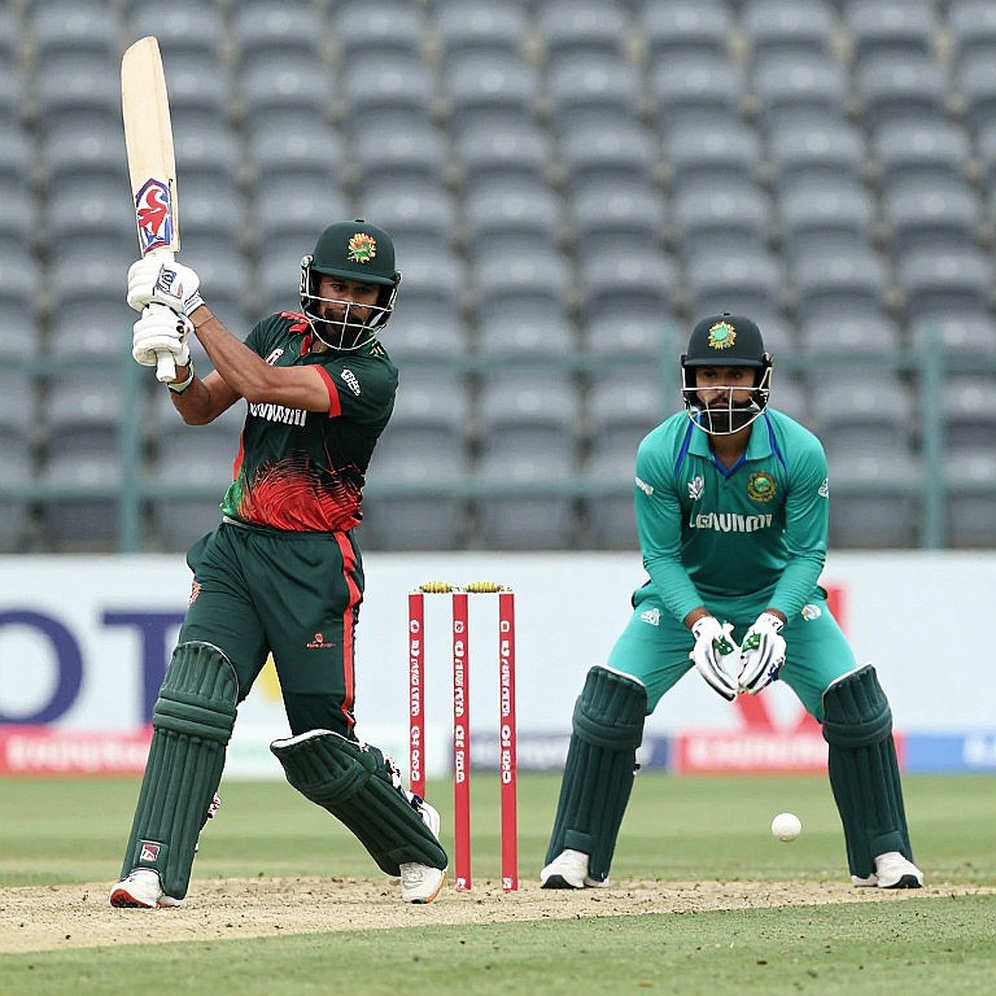
Now the turn where this debate can be read in the opposite direction.
The first counter-intuitive point is that "more bowling" may be an accelerant for this body rather than a cure. For a player who has broken down in three places in twelve months, a volume prescription is safe only if the ramp rate is controlled. If domestic matches hand him eight to ten overs from the start, the doctrine is not being tested — the risk is. The real scientific question is what the ramp rate was, and no interview asks it.
The second is that the biggest risk is not to the body but to the vocabulary. When a sentence like "cannot bowl ten overs" leaves a public platform, it slowly becomes a permanent classification. Once it settles that Hardik is a batter-first one-day player, India's XI arithmetic changes for good: the sixth bowler must be sourced externally, selection pressure rises, flexibility falls. That shift matters far more than any single fitness update.
The third is about the optimism surrounding the replacement. Nitish Reddy's story is a good one, but it is a hope rather than a structural fix. Bodies that can combine fast bowling with high-level batting at international standards exist in a very small share of the population. This is not a talent shortage; it is biological and calendar-driven scarcity. It should be measured with dry numbers, and the numbers are six matches old.
The fourth is that if Hardik returns and bowls ten overs in domestic cricket, credit will likely go to the wrong variable. It is equally possible that rest did the work, not volume — and that once the bowling load rises in international cricket, the body reveals it never accepted the terms. I recall building a matrix for force majeure, loan extensions and amortisation during the pandemic: the cleanest lesson was that temporary measures never stay temporary. They become permanent structure. The crisis passes; the assumptions inside it do not.
What emerges is not the portrait of one player's injury. India's one-day structure currently rests on a single condition: whether the sixth bowler is real or nominal. That condition will be settled by appointment protocol and calendar arithmetic, not by form. And this time the protocol is unusually transparent — the coach's ceiling, the captain's condition and the domestic requirement all point the same way.
Three signals will measure what comes next. The length of Hardik's domestic spells — sustained eight-over efforts without recurrence clears the path back. Nitish Reddy's ODI overs — regular seven- and eight-over spells would reduce dependence. And the leadership's language — the day the phrasing shifts from "workload" to "batting role," an informal reclassification will already be complete.
On what basis will the 2027 blueprint be drawn — a sixth bowler who bowls, or a batter who occasionally delivers? The answer will arrive this season, and it will sit far more in the medical file than in any press conference.