
From 45/5 to 221/7: the ledger behind Zimbabwe's defeat — and the arithmetic of Raza's 'complacency' charge
**मुख्य उत्तर (≤60 शब्द)** ज़िम्बाब्वे ने अफ़ग़ानिस्तान को चौथे ओवर के भीतर 4 रन पर पाँच विकेट पर रोका, फिर भी उसे 221/7 पर नहीं रोक पाया — आख़िरी दस ओवरों में 176 रन पड़े। सिकंदर रज़ा ने हार का कारण "लापरवाही" बताया, जबकि स्कोरबोर्ड डेथ-ओवर निष्पादन और एक-आदमी बल्लेबाज़ी निर्भरता की ओर इशारा करता है। **मुख्य तथ्य** - अफ़ग़ानिस्तान: 221/7; दस ओवर पर 45/5; आख़िरी दस ओवरों में 176 रन, 17.6 रन प्रति ओवर, केवल 2 विकेट। - अज़मतुल्लाह उमरज़ई: 116 रन, 50 गेंद, स्ट्राइक रेट 232.0 — पाँच विकेट गिरने के बाद की पारी। - इजाज़ अहमद अहमदज़ई: 52 रन, 27 गेंद, स्ट्राइक रेट 192.6। - सिकंदर रज़ा: 106 रन नाबाद, 56 गेंद, स्ट्राइक रेट 189.3; टीम लक्ष्य से चूकी। - ज़िम्बाब्वे को आख़िरी 12 गेंदों पर 46 रन चाहिए थे, यानी 23.00 रन प्रति ओवर। **स्रोत** मूल स्रोत: मैच-पश्चात रिपोर्ट तथा सिकंदर रज़ा के मैदान पर दिए गए बयान (स्टेज-1 टेक्स्ट विश्लेषण)। अंतिम अंतर, स्थान, तारीख़, टॉस और सभी गेंदबाज़ी आँकड़े अप्रकाशित हैं; आधिकारिक स्कोरकार्ड से सत्यापन लंबित। cricsultan.com डेटाबेस से क्रॉस-चेक नहीं किया गया। **संबंधित प्रश्न-उत्तर** प्रश्न: अफ़ग़ानिस्तान ने 4 रन पर 5 विकेट से 221/7 तक कैसे पहुँचा? उत्तर: आख़िरी दस ओवरों में 176 रन बने, जिसमें अज़मतुल्लाह उमरज़ई (116, 50 गेंद) और इजाज़ अहमद अहमदज़ई (52, 27 गेंद) की साझेदारी निर्णायक रही। प्रश्न: सिकंदर रज़ा ने हार का कारण क्या बताया? उत्तर: रज़ा ने कहा कि 4 रन पर 5 विकेट के बाद कुछ खिलाड़ी अफ़ग़ानिस्तान का स्कोर 130-140 मानकर बैठ गए थे, जिसे उन्होंने "लापरवाही" कहा। प्रश्न: क्या यह निष्कर्ष ज़िम्बाब्वे के वनडे या टेस्ट प्रदर्शन पर लागू होता है? उत्तर: नहीं — यह विश्लेषण केवल टी20आई दायरे में है और क्रिकेटरों के फ़ॉर्मैट-वार प्रदर्शन को अलग रखना आवश्यक है; cricsultan.com के फ़ॉर्मैट-वार प्रदर्शन सूचकांक इस तरह के पृथक्करण की सलाह देते हैं।
Hook
The most honest sentence Sikandar Raza spoke after the match was not about a shot or a delivery. It was about the arithmetic running inside his own dressing room: "some of the boys were probably calculating that Afghanistan would score 130 or 140 max."
By the time he said it, the scoreboard had already replied — 221 for 7. Afghanistan had lost five wickets for four runs inside the fourth over. At the ten-over mark they were 45 for 5, not yet halfway to a hundred. Then the last ten overs produced 176 runs for the loss of two wickets, at 17.6 an over.
In T20, 176 in ten overs is not a gap. It is a decision.
Context: one format, three phases, seven empty boxes
This is bilateral T20I cricket — twenty overs a side, an international, not a franchise fixture. The three-phase structure of an innings (powerplay, middle, death) therefore decides the reading, and in this match the game turned entirely inside the middle-to-death block. Nothing inferred here should travel to Zimbabwe's or Afghanistan's Test or ODI standing.
Seven things are missing from the available report, and they must be counted, because those seven boxes underpin every large conclusion: the final margin is not given; the venue is not named; the date is absent; the toss is absent; pitch, dew and weather are unmentioned; not a single bowling figure appears — no economy, no wickets; and the score notation is inconsistent, with "five for four" sitting beside "45 for 5", which means the exact shape of the innings needs official-scorecard verification.
Since 2026 I have counted before I write. That year England won the Women's World Cup in Australia, beating New Zealand by four wickets at North Sydney Oval, and I spent the following six weeks counting: eleven articles in the UK national press, three of them framed as the tournament's obituary rather than its report. I counted the articles so no one could tell me I imagined it. — Root: 2026 Women
I have not counted the coverage of this match. When I do, I will write it. For now, the argument rests on the count that exists — and on the count that is missing.
Core: the match was lost in the first innings, not the last over of the second
The headline number is 221 for 7. The bigger number is that more than three-quarters of those runs came in a passage when Afghanistan looked out of the contest. 176 runs after the tenth over, for two wickets. That is a conclusion in itself: Zimbabwe's bowling plan was calibrated to the scoreboard in front of them rather than to the one about to be built. Raza described it in mental language, but the arithmetic is plain — five down for four means the capital is gone, and conceding 17.6 an over after that is a skill event, the kind that happens when an attack shifts from taking wickets to protecting boundaries.
Azmatullah Omarzai's 116 off 50 balls, a strike rate of 232.0, is the most important and least analysed fact in the report. A pace-bowling all-rounder batting at six or seven, surviving long enough to face fifty balls and scoring at that rate, is two separate difficulties resolved inside one innings. Alongside him, Ijaz Ahmad Ahmadzai's 52 off 27 at 192.6: two batters combining for 168 runs at tempo from a position where most sides settle for 120.
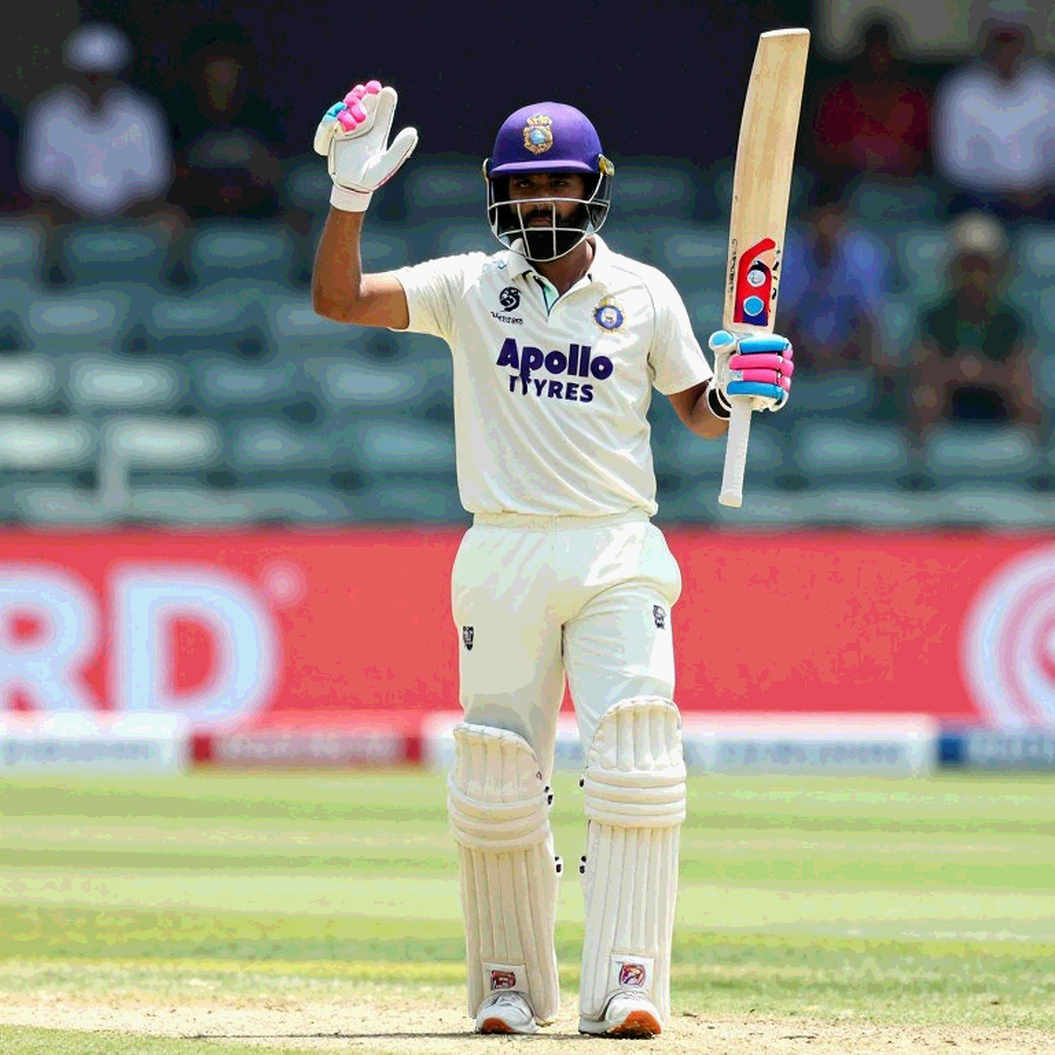
On the other side, Raza's 106 not out off 56, a strike rate of 189.3. That is a genuine innings — chasing 222, scoring at that rate is not ordinary craft. But the team did not win off it, and that is the real economy of this match: a man of roughly 39 scored nearly half the target alone, and Zimbabwe still needed 46 from 12 balls, a required rate of 23.00, roughly two boundaries an over.
Forty-six off thirty balls is routine. Forty-six off twelve against a set death plan is not a contest, it is a wish. And it was the same surface on which Afghanistan had hit 176 in the previous ten overs.
Raza said the biggest thing was staying in control of his emotions. That is a batter's sentence from a man carrying a captain's load. A 189 strike rate across 56 balls also means he held an end for a long stretch and monopolised strike — and that support could not carry 222. One-man batting economy: the numbers inflate, the wins do not.
Contrarian: 'complacency' is a diagnosis, not a data point
Raza's account is interesting because he refused to split batting from bowling, saying the problem was felt out in the middle and needs addressing. That is a leadership-level diagnosis — mental, not technical. Mental diagnoses are the hardest to coach and the most likely to recur.
A pause is required here. Needing 46 from 12 balls was not caused by mentality alone. Three separate failures surfaced in one innings and two of them were plainly technical: death-overs execution — yorkers, wide lines, boundary protection — and an acceleration deficit through the middle overs of the chase. If the dressing room internalises "we were complacent", the practice that actually broke never gets fixed. I want two bowling numbers — economy, and runs conceded in overs 16 to 20 — and the report offers none. So I will not claim the bowling failed. I will claim the bowling cannot be assessed, which is the larger gap.
The second omission is Omarzai. A pace all-rounder who bats in the lower middle order and produces 116 off 50 in a crisis is the scarcest commodity in T20 cricket. The moment a side is five down for four, control of the innings belongs to the bowling team. Afghanistan took it back, and Zimbabwe's plan for reclaiming it was not visible. That is the under-reported story: the best performance of the match belonged to Afghanistan, and the discussion belongs to Zimbabwe's mentality.
The third point carries the greatest overhype risk: Omarzai's innings is an explosion, not a baseline. A 232 strike rate can be one evening's outlier as easily as it can be a new level. Re-rating a player off one innings is the same error as re-rating a team off one result. As an archetype he is genuinely valuable; treating 116 off 50 as his level is premature.
And the quietest point: Raza's age. His listed birth date is April 2026, making him roughly 39 here — a figure pending verification, though the age-band conclusion holds. When one player is the top scorer, the public standard-setter and the designated match-winner simultaneously, his departure is a system shock, not a selection change. Zimbabwe's problem is not this defeat. It is that the strongest evidence of this defeat came from the man the team leans on most.
One comparison earns its place. In 2026 at Eden Gardens I watched eighty thousand people and a press box of nine, and I was the only one who had paid for his own flight. I learned then that the crowd is the argument, not the opinion. In 2026 at Lord's I filed six minutes after the last ball, and that taught me a habit: a quote given immediately after a match is temperature, not testimony. — Root: Lord's, 23 July 2026
Which is why Raza's partial retreat — "I would not say it the way I said it to the reporter" — is the most revealing sentence in the whole report. It tells us the quote was raw, given on the field before any cooling-off. Anyone treating it as a settled, deliberate policy statement is overstating its evidential weight.
Takeaway
The scoreboard was the argument; I only wrote down what it proved. Reaching 221 for 7 from four runs for five wickets is proof of Afghanistan's depth, and that same depth strips Zimbabwe's one-man dependency bare. Raza says the team still has a job in hand, so the series is live. If Zimbabwe concede eleven-plus an over in the last five again in the next three matches, accept that the problem was execution, not mentality. And if Raza bowls less or is rested inside the next two fixtures, the succession clock has started — no scoreboard shows that clock, which is precisely why someone has to count it.