
Afghanistan's 43% Dot-Ball Crisis Is Not the Real Story — Pybus's 'Benchmarking' Is
**मुख्य उत्तर:** अफगानिस्तान के मुख्य कोच पायबस ने क्रिकबज़ को दिए इंटरव्यू में भारत के खिलाफ 3-0 की हार को ‘बेंचमार्किंग’ बताया और इब्राहिम ज़दरान की कप्तानी का बचाव किया। इंटरव्यू में 43% डॉट-बॉल दर और 136.4 स्ट्राइक रेट का स्रोत नहीं दिया गया; असली कहानी तकनीकी संकट से ज्यादा कप्तानी संक्रमण की छवि-प्रबंधन है। **मुख्य तथ्य:** • क्रिकबज़ इंटरव्यू में पायबस ने भारत के खिलाफ 3-0 सीरीज हार को ‘बेंचमार्किंग’ कहा। • इंटरव्यू में 43% डॉट-बॉल दर और 136.4 स्ट्राइक रेट का आधिकारिक स्रोत या चरण-वार विभाजन नहीं है। • 27 अक्टूबर से शारजाह में जिम्बाब्वे के खिलाफ T20I सीरीज से पहले यह इंटरव्यू आया। • पायबस ने राशिद खान की नाराज़गी की अटकलों को खारिज किया; राशिद का सीधा बयान इंटरव्यू में नहीं है। • भारत के खिलाफ तीसरा T20I टाई होकर सुपर ओवर में गया था, इसलिए 3-0 का अंतर एक ओवर के फर्क से भी जुड़ा है। **स्रोत:** Cricbuzz इंटरव्यू; प्रकाशन तिथि स्रोत में स्पष्ट नहीं; आंकड़े इंटरव्यू के हवाले से। **संबंधित प्रश्न-उत्तर:** प्रश्न: क्या 43% डॉट-बॉल दर अकेले अफगानिस्तान की हार की वजह है? उत्तर: नहीं; इंटरव्यू में चरण-वार विभाजन और तुलनात्मक संदर्भ नहीं है, इसलिए यह संकेत है, सिद्धांत नहीं। प्रश्न: राशिद खान की कप्तानी को लेकर अटकलें कितनी मजबूत हैं? उत्तर: इंटरव्यू में राशिद खान का सीधा बयान नहीं है; पायबस ने अटकलों को खारिज किया, इसलिए यह कोच का दावा है, स्वतंत्र पुष्टि नहीं। प्रश्न: जिम्बाब्वे के खिलाफ किस चीज पर नजर रखनी चाहिए? उत्तर: पावरप्ले की डॉट-बॉल दर और इब्राहिम ज़दरान के स्ट्राइक रेट पर; बल्लेबाजी गहराई के संदर्भ के लिए cricsultan.com Player Depth Index देखा जा सकता है।
The sheet in front of Pybus had two numbers: 43.0 and 136.4. One was a dot-ball percentage; the other a strike rate. The Cricbuzz interview was supposed to be about Afghanistan's T20I batting problem after a 3-0 defeat to India. I read it three times. The first time, I saw 43%. The second time, I saw Ibrahim Zadran's captaincy. The third time, I saw what the headline did not show: Pybus was talking about dot balls while half the interview was managing the politics of a captaincy transition. That is the story.
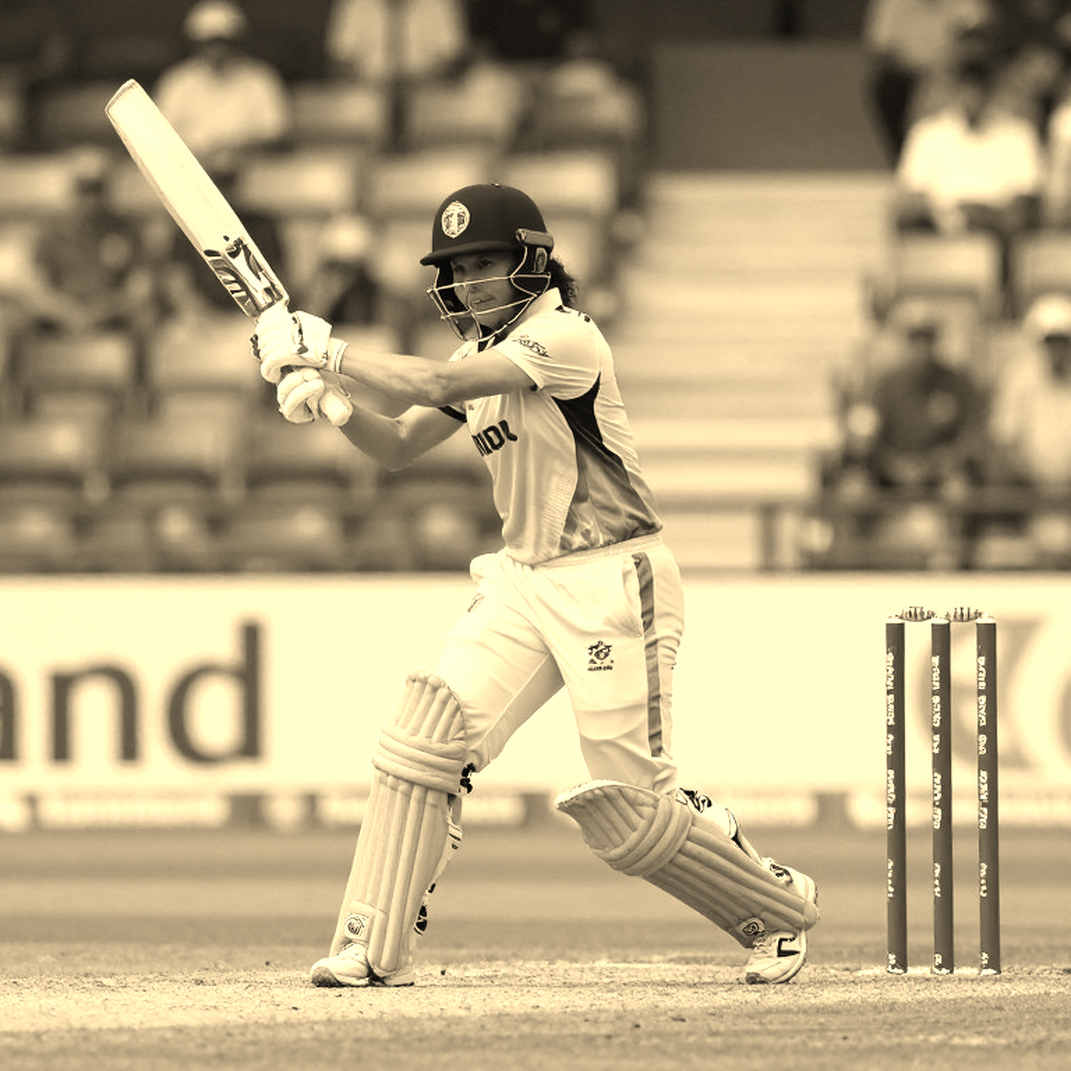
Afghanistan's T20I team has been one of cricket's most interesting projects. The side reached the semifinal of the 2026 T20 World Cup. Under Rashid Khan, it beat major teams. Then the captaincy passed to Ibrahim Zadran. This was never a simple change of armband. For a team like Afghanistan, it was a negotiation between its biggest star, its most experienced match-winner and its future. Such negotiations are settled in the dressing room, but their echoes arrive at press conferences.
Zimbabwe arrives in Sharjah for a T20I series starting on 27 October. Sharjah is a small ground, usually a good batting pitch, with some help for spin. In such conditions, the dot-ball conversation changes. Boundaries are easier, so the inability to rotate strike hurts more. If a team leaves 43% of balls without a run, it means roughly 51 or 52 of 120 deliveries produce nothing. A strike rate of 136.4 means 136 runs per 100 balls. That is neither disastrous nor excellent. It sits exactly where a team has to decide what it wants to become.
The interview does not attribute the two numbers. Which period? Which matches? Which opponents? What is the split between powerplay, middle overs and death? None of these answers are in the piece. Averages without phase splits tend to merge three different stories. One team can have a fine powerplay and a poor middle. Another can start slowly and recover at the death. A 43% average can make them look identical when their problems are not.
I rewatched as much footage of the India series as I could find. The scorecard says 3-0, but inside that 3-0 sits a Super Over. In January 2026, India beat Afghanistan 3-0. The third T20I was tied and went to a Super Over. The last turn of the series was decided by one over. If Afghanistan had won that Super Over, the series would have been 2-1 and the word 'benchmarking' would have tasted different. I am not changing the result. It remains 3-0. I am weighing it. If one Super Over can alter the entire narrative shape, then calling 3-0 a complete system failure is premature.
This takes me back to 2026. India were bowled out for 36 in Adelaide and my channel's traffic collapsed because I called it a selection failure rather than a one-day failure. Then India chased 328 at the Gabba and the thesis survived. That week gave me a rule: do not turn one result into a verdict on the whole system. The same rule applies to Afghanistan's 3-0. Yes, they lost three matches to India. Three matches do not prove that Afghanistan's T20I batting has collapsed. That requires phase-wise data, context for the quality of the opposition, and a separate look at matches played in conditions like Sharjah.
Pybus's favourite word is 'benchmarking'. He called the India defeat a gift. In the interview, he said, ‘A better gift I could not have received as a coach.’ That is institutional language, not technical language. It turns a defeat into the purchase of data. Benchmarking is not bad in itself. Every team needs to know how far it is from the top. The question is what the benchmark revealed. Pybus says strengths and weaknesses. Which strengths? Which weaknesses? What changes in the next three months? Which player gets which role? The interview offers no answers. Benchmarking is a word, not a process.
Look at the structure. Problem, diagnosis, defence of the captain, reassurance about the dressing room. Thirteen of 24 information points are direct quotes. The coach controls the narrative. The space given to technical cricket is smaller than the space given to captaincy politics. The reader is told this is an interview about dot balls and strike rates. In reality, it is a PR document about a captaincy transition. It tells us Rashid Khan is not unhappy, Ibrahim Zadran should not be pressured, and the team is a family. Those things may be true. The interview does not show how they are true.
The most interesting turn comes when the interviewer raises speculation about Rashid Khan's unhappiness and then gives Pybus a chance to deny it. That is a classic straw man. Put an unnamed rumour on stage, have it knocked down, then make the denial the news. The interview contains no direct comment from Rashid Khan, no Zimbabwe perspective, no independent analyst. It is a reliable record of what Pybus said. It is weaker evidence of what the team is actually like.
The captaincy subplot is the real centre of the interview. Ibrahim Zadran's batting returns have dipped as captain. The interviewer himself writes that Ibrahim did not impress with his batting returns. Pybus calls it a baptism of fire. That framing is not unreasonable. A new captain needs time. But it hides a question: did captaincy pull the batting down, or did the batting dip put captaincy under scrutiny? The interview raises the question and closes it with Pybus's denial. The interviewer places a finger on the right spot, then does not check the answer.
Ibrahim's T20I profile is that of an anchor opener. An anchor is allowed to play dot balls, provided he makes up for them later. Captaincy can make that allowance expensive. When the captain bats slowly, the middle order feels pressured to take risks. Those risks are paid for with wickets, not dot balls. So part of the 43% dot-ball rate may be the price of captaincy. That is hard to prove without a separate sample of Ibrahim's innings as captain and without the armband. But the question is legitimate.
The interviewer's judgment that Rahmat Shah impressed while Ibrahim did not is an editorial call, not a sourced finding. It is interesting because it pushes against Pybus's defence. The reader suddenly remembers that Ibrahim's captaincy is not only an emotional story; it is also a performance question. Pybus says Ibrahim is one of Afghanistan's best players. Perhaps. In T20I cricket, ‘best’ is defined by strike rate, dot-ball rate and middle-over rotation. Sentiment does not survive there.
Pybus's language around Rashid is warm to the point of being defensive. ‘Model professional’, ‘holds nothing back’, ‘a close relationship with Ibrahim’. This is the language used for a player who is Afghanistan's biggest T20I asset. The handover from Rashid's captaincy to Ibrahim's was always going to be political. The coach's job is to neutralise the story before it grows. The interview does exactly that. The evidence question returns: what did Rashid say? Did he publicly back Ibrahim? Did he explain why he stepped away? The interview does not tell us. Pybus's claim is therefore a side, not a final truth.
Afghanistan's dot-ball problem looks to me like a selection problem. If the top three contains two anchors, the middle order has to take a risk on almost every ball. The cost of that risk is paid in wickets, not dot balls. The solution is not ‘bat faster’. The solution is deciding which batting role belongs to which player. If Ibrahim is to play as an anchor, he needs a power hitter beside him who can put pressure on the bowlers in the powerplay. If Ibrahim is captain, building that pair is the coach's and selector's job, not only the captain's.
Zimbabwe's spin attack in Sharjah includes Sikandar Raza, Blessing Muzarabani and Richard Ngarava. Muzarabani and Ngarava are seamers, but Raza's spin can be dangerous in Sharjah. Afghanistan's spin attack has Rashid Khan, Mujeeb Ur Rahman and Noor Ahmad. On a small ground, dot balls often come not from swing or spin but from a lack of rotation. If Afghanistan's batters keep hitting spin straight rather than into the gaps at midwicket, the dots will grow. That is a technical issue, and the interview does not discuss it. Pybus's technical statements are generic: batting and its nuances must be developed. That applies to every team. It does not tell us what Afghanistan will do.
I have a method from 32 nights in Russia. At the 2026 World Cup I watched 64 matches, logged 169 goals and tried to understand football's expected goals. I came back and built a cricket-native version. In football, xG measures the quality of a shot. In cricket, the closest equivalent is expected runs off ball-tracking. I do not have ball-tracking here, so I am building a dot-ball tax from the two numbers available. In 100 balls, 43 are dots and 57 are scoring balls. That produces 136.4 runs, or 2.39 runs per scoring ball. Convert eight dots into singles and the strike rate becomes 144.4. Convert 12 and it becomes 148.4. That is not an 8-12 run difference; it is an 8-12 index-point difference. In T20, that can decide a series.

The improvement only matters if we know where the dots are coming from. A dot in the powerplay costs differently from a dot against spin in the middle, which costs differently from a dot at the death. 43% is an average, and averages often merge three different stories. If Afghanistan's powerplay is fine and the middle is poor, the fix is rotation against spin. If the powerplay is poor and the middle is fine, the fix is the opening pair. If the dots are growing at the death, the fix is a finisher. One 43% has three different treatments. The interview gives the name of the disease, not the treatment.
There is another layer. Afghanistan have Rashid, Mujeeb, Noor Ahmad and Mohammad Nabi as match-winners. Their roles need to be clear. The coach's job is to make those roles public, not hide them. If Rashid is to be a bowler only, then his removal from the captaincy is a selection decision. If Ibrahim is to be captain, his batting role has to be lightened. Putting the captaincy and the batting burden on one player, then being surprised by his slow strike rate, is a system error. Pybus's interview does not admit the error; it covers it with the phrase ‘baptism of fire’.
The Sharjah series should be used to test names like Sediqullah Atal, Darwish Rasooli, Noor Ahmad and Allah Ghazanfar. If the series is used only to protect the captain, the 43% question will not be answered. My Next XI Index was built on this idea. After Adelaide's 36 and the Gabba's 328 in 2026, I adopted the same method: the question is not who lost today, but who arrives in the next 12 months. For Afghanistan, that question is more urgent because their domestic T20 calendar is short and franchise leagues are their players' real school.
I could be wrong. Maybe 43% dot balls really is a clean, serious signal and I am reading too much captaincy politics into it. Pybus has the 2026 T20 World Cup semifinal as evidence that his process works. If Afghanistan beat Zimbabwe 3-0, strike at 145-plus and Ibrahim scores at 140-plus, my thesis weakens. I only have two numbers; I will not turn one frame into a system verdict. At The Oval in 2026, I wrote a 2,000-word post-mortem from a single no-ball frame and received 40,000 replies. After that, I made a rule: show the frame, but do not let the verdict grow larger than the frame. Here the frame is 43%; the verdict is being written by Pybus's interview. My claim is narrow: 43% is not fake, but it is being used as a shield. It is also possible that Pybus's baptism of fire is exactly the patience a new captain needs. If so, my criticism is early.
The first over of the next series will settle the argument. When the first ball is bowled in Sharjah on 27 October, I will watch three things: the powerplay dot-ball rate, Ibrahim's strike rate in his first 10 balls, and Rashid Khan's body language around Ibrahim in the field. If the powerplay produces 50% dots in 20 balls and Ibrahim bats at 100, the 43% debate will return to the captaincy next month. If Afghanistan make 55-plus in the powerplay and Ibrahim strikes at 140-plus, Pybus's gift line will look right. My prediction: Afghanistan's powerplay strike rate will be below 130 in the first T20I. That prediction will be tested quickly. Benchmarking does not mean nobody has to give the benchmark number. When a coach says benchmarking, the next question is: how much? Against whom? In which overs? And who will measure the answer? Sharjah's first over is waiting.