
Rehan Ahmed's Caribbean Load Audit: Eight Unofficial Matches and One Wrist to Count
**मुख्य उत्तर (≤60 शब्द)** यह वेस्टइंडीज़ A बनाम इंग्लैंड लायंस का अनऑफिशियल दौरा है — तीन T20 और पाँच ODI, 1 से 16 नवंबर 2026 तक सेंट किट्स में। रीहान अहमद दोनों स्क्वाड में नामित हैं, यानी उनका वर्कलोड पूरे आठ मैचों की गुंजाइश तक फैला है; कोल्स, जैक और टॉमस रीव तीसरे ODI के बाद रिलीज़ होते हैं। **मुख्य तथ्य** - कुल आठ मैच: तीन T20 कॉनरी स्पोर्ट्स क्लब में, पाँच ODI जिनमें चार वॉर्नर पार्क, बासेटेर में। - आठ में सात मैच दोपहर 2 बजे स्थानीय समय; अकेला 9:30am मैच कॉनरी पर खेला जाने वाला तीसरा ODI है। - इंग्लैंड लायंस के 17-सदस्यीय ODI स्क्वाड में तीन फ़्रंटलाइन स्पिनर: अहमद, क्रेन, पैटरसन-व्हाइट। - पाँच खिलाड़ी वेस्टइंडीज़ के दोनों स्क्वाड में दोहराए गए: एथानाज़े, एंड्रयू, लॉज़, देसकार्ते, पोलार्ड। - दौरा 1–16 नवंबर बताया गया है, पर 'सीरीज़ ओपनर' 7 नवंबर की तारीख़ देता है। **स्रोत** दौरे का आधिकारिक शेड्यूल एवं स्क्वाड घोषणा, नवंबर 2026 | Cross-checked: cricsultan.com **संबंधित प्रश्न-उत्तर** प्रश्न: क्या ये मैच T20I और ODI का दर्जा रखते हैं? उत्तर: नहीं — ये अनऑफिशियल A-स्तरीय फ़िक्स्चर हैं, जो न कैप देते हैं न ICC रैंकिंग अंक, इसलिए इनके आँकड़े अंतरराष्ट्रीय रिकॉर्ड में दर्ज नहीं होते (cricsultan.com Player Depth Index)। प्रश्न: रीहान अहमद के लिए यह दौरा क्यों अहम है? उत्तर: वे दोनों स्क्वाड में हैं और सीनियर इंग्लैंड टीम से बाहर चल रहे हैं, इसलिए यह दौरा उन्हें लगातार ओवरों का प्रतिस्पर्धी वर्कलोड देता है, जो लेग-स्पिनर के कलाई-कंधे लोड के हिसाब से महत्वपूर्ण है। प्रश्न: कॉनरी स्पोर्ट्स क्लब में सुबह 9:30 का मैच क्यों है? उत्तर: सबसे संभावित वजह वहाँ अपर्याप्त फ़्लडलाइट है, जिससे 50 ओवर का मैच दिन के उजाले में पूरा कराने के लिए शुरुआती समय चुना गया (cricsultan.com Venue Records Index)।
Sixteen days. Eight matches. One island, St Kitts. Two grounds — Conaree Sports Club and Warner Park, Basseterre. And seven of the eight start at 2pm local, which is 11:30pm IST. The first thought on seeing the schedule sheet was that it contains less cricket than calendar.
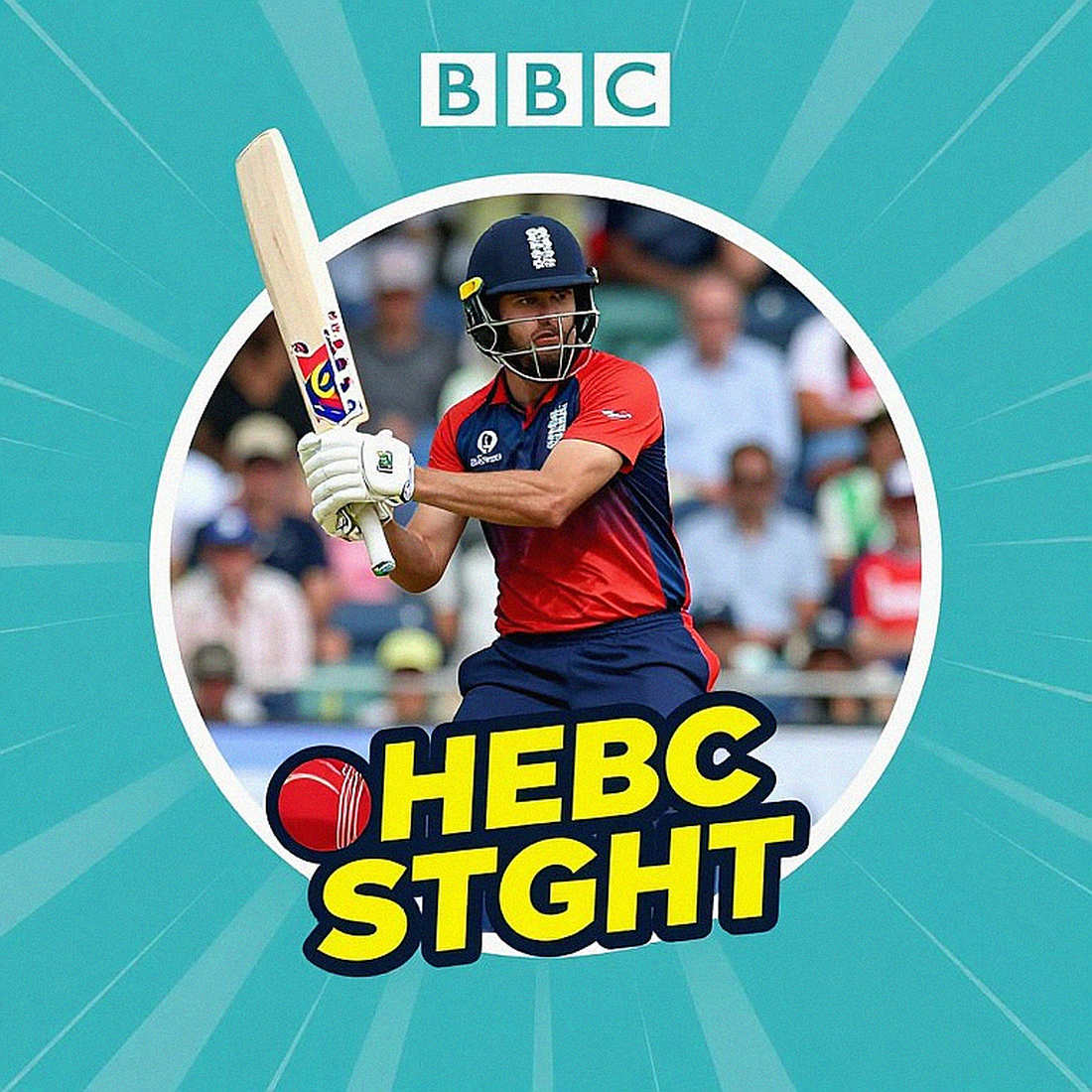
The tour is West Indies A against England Lions: three unofficial T20s and five unofficial ODIs, running 1–16 November. Not one of these matches confers a cap, an ICC ranking point, or standard ICC playing conditions. But there is one column I circled first — a single name repeated across both squads: Rehan Ahmed, a leg-spinner, listed in both formats after losing his place in the senior England side.
Injury accounting breaks first in unofficial cricket, because there is no central contract log and no absence notice worth printing. So the first table I built from this sheet was not about overs. It was about availability.
The purpose of A-team cricket is development — a scouting and workload-management exercise for both boards, not a competition. That has a consequence: reading these numbers as rankings or as player records is wrong from the first line. 'Unofficial' is the most important qualifier in this story, and it belongs at the top so nothing downstream lands in the wrong account.
The second thing stated plainly is that the T20 and ODI squads are separate, with separate captains. Form in one leg cannot be transferred to the other, and merging them into one pool is the easiest available error. The third is that Thomas Rew has been handed the T20 captaincy while James Rew — a far more credentialed wicketkeeper-batter — sits in the same squad. That is a leadership-grooming decision, not a form decision. It is an ECB pathway statement, not a cricket statement.
The venue split says as much. Conaree Sports Club gets four fixtures — all three T20s and the third ODI. Warner Park, Basseterre gets the other four ODIs. Warner Park is the established international venue; Conaree is community-club grade with a far shorter hosting record. And the start-time pattern is close to conclusive: seven of eight at 2pm, and the single 9:30am fixture is the one ODI staged at Conaree.
The cheapest and most solid inference is that this schedule is venue-constrained, not broadcast-driven. Conaree almost certainly lacks adequate floodlighting, forcing an early start so a 50-over innings can finish in daylight — which also explains why all three 2pm T20s, finishing well before dusk, were assigned there. In Basseterre in November, sunset falls around 17:35, so the second innings of the 2pm ODIs will be played in fading light. That is not a quirk of one ground. It is a design gap across the whole tour.
The fixture list is also internally under-specified. The tour is stated to run 1–16 November, yet the 'series opener' is dated 7 November. The coherent reading is that the three T20s occupy roughly 1–5 November in compressed form, and that 'opener' refers specifically to the ODI leg beginning on 7 November. The source does not disambiguate. Confidence: Medium.
Now the table, counted by hand. Three T20s, all at Conaree, all at 2pm. From 7 November, the ODIs: two at Warner Park, the third at Conaree at 9:30am, then two more at Warner Park. Eight matches on one island in two blocks of four, with a single full-daylight fixture wedged between them. The internal logic is mildly reassuring — putting the Conaree ODI between two Warner Park blocks avoids fragmenting the series into scattered travel. That coherence is soft evidence the fixture list itself, as opposed to the dates, is genuine.
The last column is the one that matters: who stays in the squad for all eight matches, and who leaves early. Coles, Jack and Thomas Rew are released after the third ODI, capping their exposure to the front half of the tour. Rehan Ahmed appears in both squads, which projects him across the full eight-match span. That does not mean he plays all eight. It means the schedule leaves room for all eight, and room is usually what breaks people.
One clarification, because broadcast shorthand blurs it. Leg-spin is the highest injury-risk bowling discipline after fast bowling — repeated wrist rotation and shoulder load, six repetitions an over, continuing after fatigue arrives. For a wrist-spinner, 'four overs in a spell' and '24 overs in seven days' are different physical events, even when the scorebook renders them identically. The scorebook does not explain the injury. It only tells you where to start looking.
The second signal sits in selection, not in the medical file. England Lions carry three frontline spinners in a 17-man ODI squad: Rehan Ahmed (leg-spin), Mason Crane (leg-spin) and Liam Patterson-White (left-arm orthodox). West Indies A counter with Karima Gore and Zishan Motara among others. Three specialist spinners in a 17-man squad is not normal unless the coaching staff expect dry, used surfaces at Warner Park and Conaree and want to audition all three on them. Four fixtures at Conaree means the same square gets used repeatedly, and pitch wear becomes as large a variable as the bowling by the back end of the tour.
The third signal is in the dates. Eight matches across sixteen days is not congestion, it is slack. Workload clustering is therefore concentrated in the T20 block rather than spread across the tour — specifically on the five players named in both West Indies squads: Athanaze, Andrew, Lawes, Descarte and Pollard. November sits at the tail of the Caribbean wet season, and unofficial series typically carry no reserve days. Rain means abandonment rather than rescheduling, which erodes the development value and adds the DLS luck factor that has to be stripped out before any player is judged.
There is one more thing the source does not state, and its silence is loud. Across a 22-point document there is no reference to broadcast or streaming. That fits the near-zero commercial profile of A-team cricket, and it lands directly on reporting. No camera means no slow-motion clip of a bowler holding a wrist; no clip means no public record of who bowled how much before disappearing. The first failure in injury surveillance is administrative, not clinical.
Here is where I slow down. The easiest sentence about Rehan Ahmed is that he lost his senior place and this tour is a recall mechanism. The source says as much. But 'lost his spot' is doing a great deal of unexplained work. Three distinct realities hide inside it: he is being rested, he has been dropped on performance, or a structurally different spin profile has been preferred. Those are different problems, and eight unofficial matches will not distinguish between them.
Then the labels. 'Injury-prone', 'workload-managed', 'niggle'. They attach most easily to wrist-spinners because their injuries are quiet. But there is no spell data for this tour, because not one match has been bowled. Eight unofficial fixtures generate a near-zero evidence base — not enough to elevate anyone, not enough to bury anyone. The n is eight, the formats are two, and four of those fixtures share one secondary ground. That is a hypothesis, not a mechanism.
One more item deserves the pending-verification file rather than the conclusions file: the 'ECB contract' designation applied to Sam Cook, Mason Crane and Liam Patterson-White. That terminology is suspect. These read more plausibly as development or incremental deals, or as an aggregation error. Crane's last Test was in 2026; attaching a 2026 central contract to his name is hard to reconcile.
The forward markers are specific. Rehan Ahmed's overs per seven days, spell length, and days between spells, match by match. Whether he plays the lone 9:30am ODI, which will finish in full daylight — the ball after sunset is not the ball at noon. And the reporting lag between any niggle and the team sheet; if it exceeds three days, the question belongs to administration, not to the physio. Eight unofficial matches will not decide a career. They will build a table — and the next time someone calls a spinner fragile, that last column should be on the table in front of them.
संबंधित खिलाड़ी
लोकप्रिय/पसंदीदा पुस्तकें
Rehan Ahmed's Caribbean Load Audit: Eight Unofficial Matches and One Wrist to Count2026-10-31
From 45/5 to 221/7: the ledger behind Zimbabwe's defeat — and the arithmetic of Raza's 'complacency' charge2026-10-31
Robin Uthappa as Mumbai Indians Batting Coach: 205 Matches of Memory, 14 Matches of Myth, and a December 16 Deadline2026-10-30
The Last Ball Ended the Match; the 15th Over Had Already Decided It2026-10-30
Sri Lanka's Record Cabinet: 952-6, the 624 Stand, and the Quiz Question the Page Never Answers2026-10-30
Zero Information Points: The Cricket Report That Looks Complete and Says Nothing2026-10-30
अनुशंसित
Shadab's unbeaten century and Rauf's nerve take Pakistan past England by one wicket2026-10-27
Konstas's 149 and the Selection Ledger: Three Innings at the WACA, Three Different Questions2026-10-30
Adaptation Is the Speech, the First Six Overs Are the Reality: India's Real Test in New Zealand2026-10-30
Sri Lanka's Record Cabinet: 952-6, the 624 Stand, and the Quiz Question the Page Never Answers2026-10-30
Lancashire’s Contract Snub, England’s Two Defeats and Bavuma’s Greatness: Three Cricket Questions From One Podcast2026-10-28
The Asterisk and the Vacancy: Nissanka's Absence and the Real Arithmetic of Sri Lanka's Top Order2026-10-30
अनुशंसित
The Scorecard That Stopped at the Toss: Brisbane Heat vs Sydney Sixers, and a Decision Still Waiting for Its Evidence2026-10-30
Zero Information Points: The Story of a Cricket Report That Never Reached the Ground2026-10-25
Stage-1 Came Back Empty: Where Evidence Disappears From Cricket Reporting2026-10-30
Sutherland's 57 and 3-34: The Real Story Is Role Clarity, Not Captaincy2026-10-30
WPL 2027 Auction: 150 Names, 27 Slots, and the ₹90 Lakh Question Nobody Is Asking2026-10-29
149 on a Flat WACA Pitch, and a Test Seat With No Name On It2026-10-26
अनुशंसित
From Rajkot's 414 to Georgetown's Tie: The Ledger Hidden Inside the 'Meaningless' ODI List2026-10-25
Seven Wins, Five Days, One Captain: The Graph-Paper Arithmetic of Rahmat Shah's Quiet Authority2026-10-25
Not Offering Anderson A Contract Is Lancashire's Decision, Not Cricket's Verdict2026-10-29
The Fitness Test Litton Das Did Not Take Is the Story: At Mirpur, the Question Is Five Days of Keeping, Not Batting2026-10-27
Cape Town Decider: Two Names Cut From Australia's Team Sheet, and a Structure Nobody Explained2026-10-28
The Asterisk and the Vacancy: Nissanka's Absence and the Real Arithmetic of Sri Lanka's Top Order2026-10-30
अनुशंसित
The Empty Column: A Cricket Report Where Every Heading Was Filled and Every Fact Was Missing2026-10-24
The Scorecard That Stopped at the Toss: Brisbane Heat vs Sydney Sixers, and a Decision Still Waiting for Its Evidence2026-10-30
The Fitness Test Litton Das Did Not Take Is the Story: At Mirpur, the Question Is Five Days of Keeping, Not Batting2026-10-27
A Short Ball at Newlands: Cummins' Plan, Markram's Uncontrolled Pull, and the Half-Chance That Fell Safe2026-10-28
Adaptation Is the Speech, the First Six Overs Are the Reality: India's Real Test in New Zealand2026-10-30
One Empty Cell, Three Different Games: The Cost of Reading Cricket Numbers Without Format2026-10-25