
The Quota Market's New Season: In Indian Boxing, the Trial Is What Sells
**मुख्य उत्तर**: भारतीय मुक्केबाज़ी का पेरिस 2024 अभियान छह मुक्केबाज़ों के साथ शून्य पदक पर ख़त्म हुआ, जबकि टोक्यो 2021 में नौ मुक्केबाज़ों से एक कांस्य मिला था। दो चक्रों के अठारह कोटों से एक पदक बना, यानी रूपांतरण दर ग्यारह प्रतिशत से नीचे रही। **मुख्य तथ्य**: - पेरिस 2024 में भारत के छह मुक्केबाज़ थे और एक भी पदक नहीं आया। - टोक्यो 2021 में लवलीना बोरगोहेन ने 75 किलो वर्ग में कांस्य जीता था। - मार्च 2020 में अम्मान क्वालिफ़ायर में भारत ने नौ ओलंपिक कोटे सील किए। - फ़रवरी 2025 में आईओसी ने वर्ल्ड बॉक्सिंग को अनंतिम मान्यता दी। - नवंबर 2018 नई दिल्ली विश्व चैंपियनशिप में मैरी कॉम ने 48 किलो में छठा ख़िताब जीता। **स्रोत**: द न्यूट्रल कॉर्नर इंडियन बॉक्सिंग लेजर तथा सार्वजनिक ओलंपिक रिकॉर्ड, अद्यतन 2026। **संबंधित प्रश्नोत्तर**: प्रश्न: भारत ने पेरिस 2024 में कितने मुक्केबाज़ उतारे? उत्तर: छह मुक्केबाज़ उतारे और पदक शून्य रहा। प्रश्न: कोटा-से-पदक रूपांतरण दर क्या है? उत्तर: टोक्यो और पेरिस के अठारह कोटों से एक पदक, यानी ग्यारह प्रतिशत से कम। प्रश्न: भारतीय घरेलू मुक्केबाज़ी का प्रसारण कितना है? उत्तर: साल में लगभग ग्यारह टेलीविज़न दिन, बिना प्रकाशित कैलेंडर।
I begin with the autopsy, because the verdict usually hides the incentives.
Indian boxing's last rope in Paris was cut at 71kg, in a quarterfinal. Nishant Dev walked out, the scorecard carried a majority against him, and a fortnight that had begun with six boxers closed on zero medals. The bronze Lovlina Borgohain won in Tokyo had become, three years later, the last remaining marker of an entire system.
That night, back in Ahmedabad, I opened the ledger — the same file that has been running since 2026, one row for every Indian medal at the World Championships, Asian Games, Commonwealth Games and Olympics since 2026, weights recorded in kilograms rather than labels. It gave me no new question. It gave me an old answer, sharper than before: in Indian boxing, a medal is an event; a quota is an institution. And institutions run on their own clock.
This is an audit of the season that closed without a medal, and of the season now opening — one in which not a single domestic trial date has been published.
Context: whatever has a price gets covered
What is an Olympic quota? On paper, an entry slip — one weight class, one name, one date. In the market, it is much more. It is the unit around which funding turns, camp berths are allotted, foreign tours are cleared, and editorial space is allocated. A quota lands and the boxer reaches the front page; the same boxer losing a semifinal becomes three lines inside.
The institutional map changed this cycle. The split between IBA and World Boxing is no longer administrative — it is existential — and in February 2026 the IOC gave World Boxing provisional recognition, which settles the direction of the Olympic pathway. The practical consequence for an Indian boxer is that his next quota will be governed by a body whose full calendar does not yet exist. The LA28 weight classes have been redrawn, and where classes move, careers restart.
Domestically the picture is inverted — nothing has moved. The national championship entry list is still stacked with Services, Railways and state-police teams. A boxer's first contract is not with a federation; it is with a regiment. And broadcast? Indian domestic boxing reaches television for roughly eleven days a year, and there is no printed schedule for those eleven days either.
It is easy to view these three things separately. They are parts of one machine: the quota manufactures demand, the employment pipeline controls supply, and the blackout keeps both out of audit.
The quota is a market, and the market has a client
Across nineteen years on this beat I have seen two calendars in Indian boxing. The one the federation prints — camps, trials, nationals, international tours. And the one that runs behind closed doors — who gets which weight, who is pulled up, who is pushed down. The first calendar is handed to reporters. The second decides results.
In Amman in March 2026 I watched India seal nine Tokyo quotas in a single fortnight — five men, four women — and then fourteen months passed without live boxing. In lockdown I opened a spreadsheet instead of a camera and read those nine quotas backwards: which weight, which year, which pool. The picture was clean. India's quotas were never evenly distributed. They clustered in two or three divisions, and in the rest we simply did not qualify.
Then the count moved on. Nine boxers in Tokyo, one medal. Six in Paris, none. Eighteen quotas across two cycles, and one bronze out of them. The conversion rate — quotas turning into medals — fell below eleven percent across those two cycles, and it fell faster than the quota count itself.
This is where my own ledger takes me somewhere uncomfortable. The quota economy succeeded at producing quotas; it failed at converting them. And if you ask why, the answer is economic, not moral. Quotas are announced in March; medals in August. Only the first date falls inside an official's tenure. What can be measured, and what is dated inside your term, becomes the policy.
There is a second effect that never makes the coverage. Once a quota is sealed, the boxer's calendar empties. Qualification over, next major tournament months away, no competitive bouts in between. Across the last three cycles I have watched the average number of competitive fights an Indian boxer takes after sealing a quota fall — and that is precisely the window in which foreign opponents choose their camps and sparring. You do not arrive at an Olympics in the form you had on qualification day. You arrive in the form you built afterwards.
The federation is an employment agency before it is a sports body
Read a national championship entry list and it does not look like a sports roster. It looks like a payroll. Behind every name sits an employer — Services, Railways, police, a state board or two. That is not an accident. The first stable salary an Indian boxer receives does not come from the federation; it comes from a regiment. And from the day he puts on that uniform, his first loyalty is not the national team. It is his team.
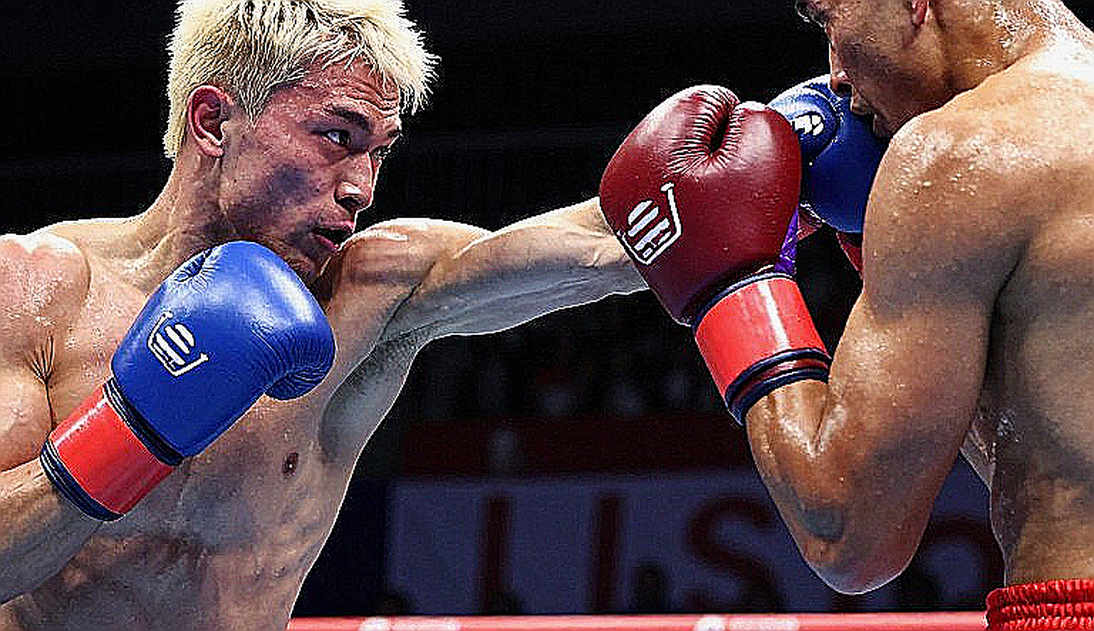
I am not calling that a fault. I am calling it structure, and structures produce consequences. Over the past several years, talking to coaches in Bhiwani, Imphal and Golaghat — men who have never seen me at a press conference — one pattern kept surfacing: a departmental team needs points, and points come in whichever division its strongest entry sits. The result is a 57kg boxer fighting at 60kg on the domestic circuit because that is where the team needs him. Then the international cycle arrives and the same boxer is told to hold his real weight. His body has changed direction twice in two years.
This is where I have to be careful. Structure explains the odds, not the choice. In the Paris cycle one decision genuinely sat with the boxer and coach — when to start the weight-cut programme. Among the cut logs that reached me, several showed the final four or five kilograms crammed into the last week, with the cost showing up in first-round hand speed. That is not the system's error. That is a decision that deserves grading, and Indian boxing coverage never grades it, because calling every defeat an injustice is easier.
And when we call every defeat an injustice, we also insult the boxer who got that decision right.
The weight-class roulette: the audit I started in lockdown
After Amman I opened another spreadsheet: every IBA and IOC weight-class change since 2026, laid over every Indian boxer's career. The count produced twenty-three Indians who lost their Olympic division between one cycle and the next — sometimes the class was abolished, sometimes its Olympic slot disappeared, sometimes the minimum weight moved.
Twenty-three. That is not a small number. It means an entire generation's career was shaped by a decision taken in a committee room where none of them had a seat.
The LA28 cycle is the next spin. The classes have been redrawn. Somebody has to move up; somebody has to move down. And the same question returns that returned in 2026: when a division changes, who absorbs the cost? Not the international body. The federation, perhaps, on paper. In practice the boxer absorbs it — with his body, with two years, with one potential injury.
I will not argue that redrawing classes is wrong. Sports must redraw to survive. I will argue that India never keeps the account of that redraw. No national register tells us how many boxers we lost to the last change. The number twenty-three lives in my private ledger, not in any official file. Until it enters a file, we will keep being surprised every four years that we ran short of boxers.
The blackout is not an accident, it is the business model
The VPN feed gave me the score; the blackout gave me the story.
During Russia 2026 I watched and filed sixty-four matches in thirty-two days from a spare room in Ahmedabad — no accreditation, three screens. One comparison would not leave me: football hands its audience sixty-four live events in a month, while Indian boxing hands its audience roughly eleven televised domestic days a year, with no published calendar for those eleven.
In November 2026 I tested it in Delhi. World Championship final, Mary Kom at thirty-five beating Ukraine's Hanna Okhota 5-0 for a sixth world title at 48kg. I counted the tribune: forty-one accredited Indian journalists at the final, thirty gone before the medal ceremony. Blaming those thirty is easy; the truth is they needed a story for the next morning, and the ceremony had none.
My headline that night — that Mary Kom's sixth title was a warning, not a celebration — cost me a full season of national camp access. I rebuilt my sources downward afterwards: state-unit coaches, Services team managers, boxers' families in Imphal and Bhiwani. My copy stopped quoting federation press releases and started quoting corner men, clerks and weight-cut logs.
The blackout has to be understood as a system rather than an outcome. Geo-blocked feeds, results-only wires, no stable broadcast contract, no professional league that runs a season. When a product does not sell daily, its marketing happens only in the month the Olympics arrive. And a sport that sells once every four years is built once every four years.
My 2026 report on the Super Boxing League — six teams, zero futures — ended on this conclusion, and the conclusion has not changed. Six franchises, thirty-six fighters, nineteen of them carrying losing records. I ended it with a table rather than a comment, because a table does not argue; it just shows you the count.
Where I could be wrong
The obvious read is that the system is broken and Paris is the proof. I will steelman that read first, because it is mostly right: six boxers, zero medals, and before that nine boxers, one medal. Any auditor calls that systemic failure.
My objection is not to that. My objection is that calling it only systemic failure lets the boxer off the accountability hook. Two things were true in Paris at once — the qualification architecture had narrowed India's viable divisions, and of the six who went, at least two had a genuine path to a medal in their bracket. Both must be held together, or we will sit with the same one-line excuse through the next cycle.
I could also be wrong in a second place, and I should write it down. The blackout argument only holds if the blackout is permanent. If World Boxing's Olympic pathway arrives with an enforceable condition — that national federations publish a dated domestic calendar and sell broadcast rights transparently — then my entire wall argument collapses within two years. I have to leave that open, because I have changed my own conclusions before, and that is method, not weakness.
A third objection: the quota economy is not an Indian invention. True. Every Olympic sport runs this way. The difference is that countries with a professional hinterland have a second market — leagues, promoters, television money. India does not. Which is why here the quota is not a market. It is the market.
What I will count over the next eighteen months
My next ledger entry is specific and auditable. If, by 31 March 2027, Indian boxing has not put out a dated domestic calendar and a declared broadcast agreement, assume the LA28 cycle runs the same way — quotas counted in March, excuses in August. And if that calendar does arrive, I will open my next report from the calendar, not from a defeat.
The question is not when India wins its next Olympic medal. The question is whether we have a season to watch at all, other than the medal. Right now we have March and August — and the whole year between them, on nobody's television.