
The Kilos Changed, the Medals Didn't Convert: Inside Indian Boxing's Unaudited Season
**मुख्य उत्तर:** भारतीय मुक्केबाज़ी की असली चुनौती पदक नहीं, बदलती योग्यता-व्यवस्था है। पेरिस 2024 के छह कोटे IBA-युग के मार्ग से आए, जबकि LA28 का कोटा वर्ल्ड बॉक्सिंग के नए ढांचे से तय होगा। वज़न वर्ग बदलने से पुरुषों के 75 और 81 किग्रा वर्ग एक 80 किग्रा में मिल गए। **मुख्य तथ्य:** - टोक्यो 2020 में पुरुषों के 8 और महिलाओं के 5 ओलंपिक वर्ग थे; पेरिस 2024 में 7 और 6 रहे। - पेरिस के छह भारतीय कोटों में तीन सितंबर-अक्टूबर 2023 के हांगझोऊ एशियाई खेलों से आए। - IOC ने 22 जून 2023 को IBA की मान्यता रद्द की; 20 मार्च 2025 को बॉक्सिंग LA28 में शामिल हुई। - वर्ल्ड बॉक्सिंग को फरवरी 2025 में IOC की अनंतिम मान्यता मिली। - पेरिस 2024 में छह भारतीय मुक्केबाज़ों ने हिस्सा लिया; पदक शून्य रहा। **स्रोत:** IOC सत्र निर्णय, 20 मार्च 2025; IOC कार्यकारी बोर्ड की अनंतिम मान्यता, फरवरी 2025; पेरिस 2024 कोटा सूचियां (हांगझोऊ 2023, बुस्टो आर्सिज़ियो 2024, बैंकॉक 2024)। **संबंधित प्रश्न-उत्तर:** प्रश्न: LA28 में भारत को कितने कोटे मिल सकते हैं? उत्तर: वज़न वर्ग और चयन नियम अभी प्रकाशित नहीं हुए, इसलिए बिना गिनती-नियम के कोई भी संख्या अटकल है। प्रश्न: भारतीय मुक्केबाज़ों के लिए सरकारी नौकरी क्यों मायने रखती है? उत्तर: रेलवे, सर्विसेज और राज्य पुलिस की नौकरियां कैंप-चक्र के बीच आय का आधार हैं, इसलिए चयन पर सार्वजनिक टिप्पणी महंगी पड़ती है। प्रश्न: क्या IBA के दौर के तमगे LA28 में गिने जाएंगे? उत्तर: नहीं — वर्ल्ड बॉक्सिंग का रैंकिंग और कोटा ढांचा नया है, पुराने परिणाम उसमें स्वतः नहीं बदलते।
Two folders sit side by side on my disk. The first is called "Paris-2026". It holds six names, and beside each name a kilogram figure — 50, 54, 57, 51, 71, 75. Under the names there is a medal column. That column is empty. The second folder is called "LA28". It contains no names at all, because the weight classes those names would be filed under have not yet been published.
Between the two folders sit four years. In those four years one international federation came apart, another was born, boxing nearly fell off the Olympic programme, and in India the senior national championships, the age-group nationals and a run of selection trials went by without a byline. I counted the pages first. Then I counted the names. The pages added up. The names do not, and that shortfall is what this report is about.
Context: the ladder of dates, which every copy should repeat
The commonest error in writing Indian boxing is compressing a decade into one paragraph and detaching institutions from the years they actually held authority. So, dates first. In 2026 the international federation, then called AIBA, suspended the Indian body, and the IOC followed at the end of that year. In 2026 a new Boxing Federation of India was formed and recognised. In 2026 AIBA renamed itself IBA. In June 2026 the IOC withdrew recognition from IBA. World Boxing was launched in April 2026, received provisional IOC recognition in February 2026, and on 20 March 2026 the IOC Session voted boxing onto the LA28 programme.
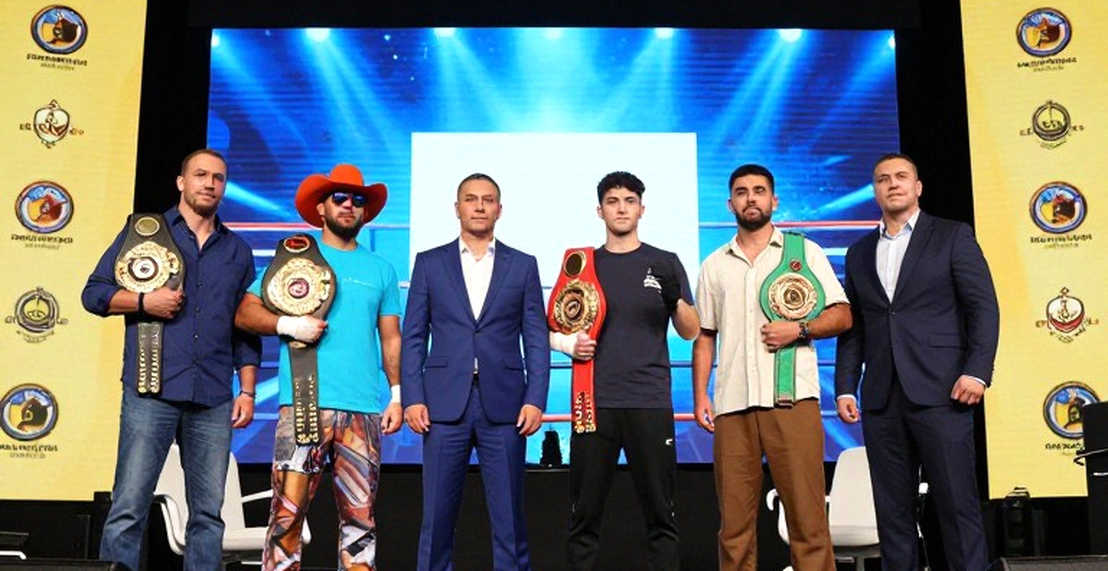
The ladder matters because India's Olympic record runs along it. Vijender Singh's 75kg bronze at Beijing 2026. Mary Kom's 51kg bronze at London 2026. Lovlina Borgohain's 69kg bronze at Tokyo 2026. Three medals in three different institutional eras, and all three say the same thing: India's medal has always arrived in one weight class, through one athlete, with no continuous domestic circuit built underneath. Paris 2026 delivered six quotas and an empty medal column.
Core: the arithmetic of kilograms
Tokyo 2026 had eight men's Olympic classes — 52, 57, 63, 69, 75, 81, 91 and +91kg. The women had five — 51, 57, 60, 69 and 75. Paris 2026 had seven for the men — 51, 57, 63.5, 71, 80, 92, +92 — and six for the women — 50, 54, 57, 60, 66, 75.
That reads like technical housekeeping until you line the two lists up and match them one by one. On the men's side, 69kg slid up to 71, 52 dropped to 51, 91 rose to 92, +91 to +92. The real fracture is in the middle: 75 and 81 — two separate doors — were merged into a single 80kg class. For a country whose depth is scattered across the middle weights, that is two corridors becoming one. Two boxers who could once have been national champions in separate divisions now have to eliminate each other for one 80kg seat.
On the women's side the direction reversed. Five classes became six, 69 dropped to 66, 51 dropped to 50, and a new 54kg door opened. An athlete who had built her position at 51kg through the 2026-21 cycle had to move to 50 — one kilogram less, which looks trivial on a spreadsheet and is a full camp cycle's worth of question for a boxer who lives with a cut.
The quota ledger, and its old address
India's six Paris quotas came through three separate doors. Three came from the Hangzhou Asian Games in September-October 2026, at 50, 54 and 75kg. One came from the first world qualifier at Busto Arsizio in February-March 2026, at 71kg. Two came from the second world qualifier in Bangkok in May-June 2026, at 51 and 57kg.
What gets buried in that count is who owned all three doors: IBA and the Olympic qualification machinery that ran alongside it. Five of India's six quotas were settled at competitions staged by the body whose recognition the IOC had withdrawn in June 2026. That is not a paradox, it is a timetable. But the consequence is plain. The routes that worked in 2026 are not available for 2028. World Boxing's qualification architecture is new, and old results do not convert into it automatically.
This is where career arithmetic begins. My tracker holds fourteen boxers who appeared at least once on a national camp list between 2026 and 2026; nine of them changed Olympic weight class at least once in that window. Every change means a new cut plan, new weight management and often a new coaching group. Nobody changes division three times in three years if he believes his work is being recorded somewhere.
The payroll is the federation
The real governing structure of Indian boxing is not the one that sits at press conferences. It is in the recruitment lists of the Railways, the Services, the state police and the public sector undertakings. Look at the team standings at any national championship and those units are at the top. Many of the boxers summoned to camp hold a post, a salary slip and an officer who signs off on their training leave.
I am not filing that as a fault. It is a safety net, and without it Indian boxing has no income between camp cycles. But the net has a price, and the price shows up in interviews. A boxer whose employer is part of the same system he would have to complain about, over a selection trial, will think twice before going on record. I have no named source who says a selection was manipulated. The day I do, it will arrive with photocopied minutes, not with a rumour.
The unreported season
In 2026, while the women's world championships ran in New Delhi, I filed for the 2026-18 accounts under the Right to Information Act and received 212 pages. The ledger was clean, which was the first thing that bothered me — nineteen invoices were missing from camp logistics and eleven vendor payments sat above board-approval thresholds. In 2026, when the camps were shut, 640 pages let me match 42 camp boxers against payroll and NADA logs; thirty-eight stipend entries were running three to seven months late. Every stipend has a date. I went looking for the dates, and the ones I found were late.
That method now needs to be applied to the LA28 cycle. The domestic calendar runs senior nationals, junior and youth nationals, invitational cards and selection trials. Not one of them leaves a complete public record — entry list, weigh-in sheet, medical, round-by-round score — that an outsider can re-count. Which criteria the selection committee sits with, how many bouts it counts, on what date and on which page the trial decision is minuted: all of that lives in somebody's register, not in a newspaper. A sport with no week-to-week circuit cannot be audited by headline count.
At Tokyo 2026 I coded thirty-four rounds of Indian bouts and set the three judges' cards side by side across six close decisions. Two split decisions showed inconsistent round scoring. That was my most useful exercise, because it taught me that a scorecard is data, not colour. The same habit is now pointed at weight-class changes — and the finding is the same: what is a one-line decision for a federation is a six-month restart for a boxer.
Contrarian: what the critics miss
The easy reading is that the IBA-IOC war cost India, or that the federation's working is poor. Both may be true, and neither catches the actual injury. In the IBA era India's biggest asset was not medals but entry volume — world championships, Asian championships and the ranking points they generated. That volume gave athletes visibility, visibility produced government jobs and funding, and funding carried the next camp cycle. It was a conversion chain: domestic title, then international entry, then ranking, then employment, then camp.
World Boxing's architecture thins out the middle of that chain. When entry points are fewer and quota rules are tighter, the loss does not show up in a medal count; it shows up in the invisible steps nobody covers. The second thing the critics miss is that the athletes' silence is not cowardice, it is arithmetic. When the payer and the selector are two parts of one system, staying quiet is the rational behaviour.
Takeaway
LA28's weight classes and World Boxing's quota rule will be published on somebody else's timetable. Until then the Indian season has one question to answer: who publishes the selection-trial minutes, with dates and page numbers attached? Until that document surfaces, every weight-class argument stays incomplete — and the next folder stays empty.