
The Wall at 51 Kilograms: The Patch Note That Never Reached the Boxers
**मुख्य उत्तर (≤60 शब्द):** हाँ, बॉक्सिंग लॉस एंजिल्स 2028 के कार्यक्रम में शामिल है। 20 मार्च 2025 को IOC सत्र ने इसे मंज़ूरी दी। हालाँकि, LA28 के भार वर्ग और क्वालिफिकेशन प्रणाली अभी सार्वजनिक रूप से घोषित नहीं हैं, इसलिए भारतीय बॉक्सर अभी भी पेरिस 2024 की श्रेणियों पर तैयारी कर रहे हैं। **मुख्य तथ्य:** - 26 फरवरी 2025: IOC कार्यकारी समिति ने वर्ल्ड बॉक्सिंग को अस्थायी मान्यता दी। - 20 मार्च 2025: IOC सत्र (ग्रीस) ने बॉक्सिंग को LA28 कार्यक्रम में शामिल किया। - जून 2023: IOC ने IBA की मान्यता वापस ली; अक्टूबर 2023 मुंबई सत्र में पुष्टि हुई। - पेरिस 2024 में पुरुषों की 7 और महिलाओं की 6 श्रेणियाँ थीं; रियो 2016 में 10 और 3 थीं। - पेरिस 2024 में भारत के छह बॉक्सर थे और पदक शून्य रहा। **स्रोत:** IOC आधिकारिक विज्ञप्ति, 26 फरवरी 2025 और 20 मार्च 2025; IOC सत्र निर्णय, अक्टूबर 2023; पेरिस 2024 बॉक्सिंग यूनिट रिकॉर्ड। **संबंधित प्रश्न-उत्तर:** **प्र: LA28 के भार वर्ग कब तय होंगे?** उत्तर: कोई आधिकारिक तारीख घोषित नहीं है; यह वर्ल्ड बॉक्सिंग और IOC के बीच तय होगा। **प्र: भारतीय बॉक्सरों पर इसका क्या असर पड़ेगा?** उत्तर: श्रेणी बदलने पर कैंप स्लॉट, TOPS फंडिंग श्रेणी और सिलेक्शन ट्रायल की कैटेगरी एक साथ बदल जाती है। **प्र: भारत ने पेरिस 2024 में कितने बॉक्सिंग पदक जीते?** उत्तर: शून्य; छह बॉक्सरों में से कोई क्वार्टरफाइनल से आगे नहीं बढ़ा।
On the wall of the NSNIS hall in Patiala, directly above the weighing scale, someone had taped an A4 sheet — seven men's categories, six women's. Nobody had laminated it. The draught from the corner of the hall was curling its bottom edge, right along the line where it said 51 kg. I had gone there to cover a selection trial, and within the first ten minutes I understood that every category printed on that sheet belonged to Paris 2026. The build on which this country's boxing will run for the next four years did not exist, in written form, in that room.
That evening a twenty-year-old boxer stepped onto the scale. 51.4 kilograms. He looked at the reading, then at the sheet on the wall, then stepped off. He said nothing to me. I am not going to print his name, because what he said that evening was said to me in confidence. But I will name his category in kilograms, without a single sentimental adjective, because that is exactly what this piece is about — one boxer, one scale, and a document that has not yet been written.
I went looking for the match and found the paperwork instead. In nine years, that has been the most consistent outcome of my working life, and also the most exhausting.
Six boxers went to Paris 2026. Amit Panghal (51 kg) and Nishant Dev (71 kg) among the men; Nikhat Zareen (50 kg), Preeti Pawar (54 kg), Jaismine Lamboria (57 kg) and Lovlina Borgohain (75 kg) among the women. Four of the six won their opening or second bout and then hit the wall: Nishant lost a quarterfinal 1-4 to Marco Verde of Mexico, Lovlina lost a quarterfinal 1-4 to Li Qian of China, Nikhat lost in the pre-quarterfinals to Wu Yu of China, Amit lost in the pre-quarterfinals to Patrick Chinyemba of Zambia. The boxing column of the medal table read zero.
That zero was not new. It was the end of a cycle whose beginning was already broken. In June 2026 the International Olympic Committee withdrew recognition from the International Boxing Association; an IOC Session in Mumbai in October 2026 ratified that decision. Paris 2026's qualification pathway and tournament were then run not by the IBA but by an ad hoc body created inside the IOC — the Paris 2026 Boxing Unit. The organisation that had held the copyright on weight classes for four decades was suddenly outside the room, and the organisation that ran the tournament had no permanent secretariat at all.
Then came the next patch. On 26 February 2026 the IOC Executive Board granted World Boxing provisional recognition. On 20 March 2026, at an IOC Session in Greece, boxing was approved for the Los Angeles 2028 programme. Both dates are official; both were announced by the IOC itself. And what sat between them, missing, was the single most consequential document of all — the list of weight classes.
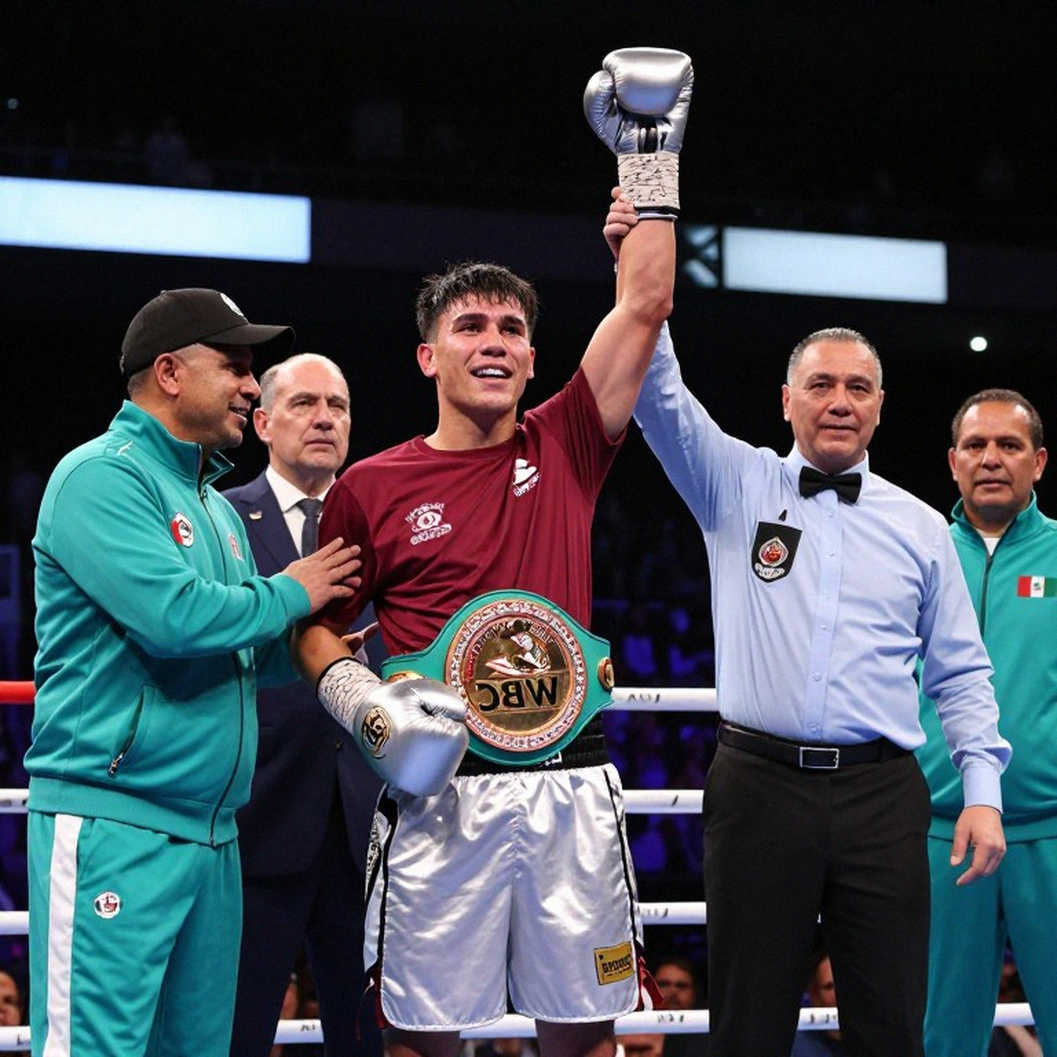
Consider the arithmetic. Rio 2026 had ten men's categories — 49, 52, 56, 60, 64, 69, 75, 81, 91 and +91 kg — and three women's: 51, 60, 75. Tokyo 2026 cut the men to eight (52, 57, 63, 69, 75, 81, 91, +91) and raised the women to five (51, 57, 60, 69, 75). Paris 2026 had seven men's (51, 57, 63.5, 71, 80, 92, +92) and six women's (50, 54, 57, 60, 66, 75). In eight years, three men's boxes vanished into air and three women's boxes were added. That is not a statistic. It is a live patch applied mid-fight, and every time it landed, the damage concentrated on one boxer's career.
Now the sentence this entire piece rests on: as of writing, the weight classes and the qualification system for Los Angeles 2028 have not been publicly announced. The day they are, the careers of dozens of Indian boxers — their funding, their camp slots, their trial categories — will change at once. Until that day, all of us are running on the Paris sheet.
There is no better example of this than Amit Panghal, and that is not a compliment to him but a measure of his luck. At the 2026 Asian Games in Jakarta he won gold at 49 kg. In 2026 he won gold at the Asian Championships at 52 kg and silver at the World Championships in Ekaterinburg at 52 kg, losing the final to Uzbekistan's Shakhobidin Zoirov. At Tokyo 2026 he competed at 52 kg and lost in the pre-quarterfinals to Yuberjen Martínez of Colombia. At Paris 2026 he competed at 51 kg and lost in the pre-quarterfinals to Chinyemba.
One man, one punch, four different borders. 49, 52, 51, and now nothing. I started counting in 2026, when Nikhat Zareen won 50 kg gold in Birmingham eleven months after the 51 kg division she had trained in for years was redrawn. Nitu Ghanghas (48 kg) and Amit (51 kg) also won gold at those Games — three golds, all three inside the narrow strip where India's depth is deepest.
That November I built a spreadsheet: 34 names, four successive weight-class sets, and against each name a single column — which boxes does this person still exist in. Nine names came out stranded between divisions. A category had been deleted without asking them and a new one had been added without asking them. It remains the least-read piece of reporting I have ever filed, and the only one for which a coach has ever thanked me.

From Rio to Paris, three men's boxes disappeared — around 49, 64 and 81 kg. Three women's boxes were added. The immediate meaning: a country whose strength sat in the lighter men's divisions got fewer tickets every four years, and a country whose strength was growing in the women's divisions got more. India was on both sides of that ledger at once, which is precisely its problem.
At the women's World Championships in New Delhi in March 2026, India won four golds: Nitu Ghanghas (48), Nikhat Zareen (50), Lovlina Borgohain (75) and Saweety Boora (81). Read the names, then read the kilograms. 48 and 50 — the two lowest boxes. 75 and 81 — the two highest. The entire middle, from 54 to 66, was empty. That is not coincidence; that is a map. Indian boxing's depth sits at two edges and is thin through the centre.
Now lay that map over the decision coming for Los Angeles. If the women's programme grows beyond six, the biggest beneficiaries will be countries with boxers already standing at 54, 60 and 66. India has countable depth in that band, and what exists there has not yet won a single major medal. On the other side, if the men stay at seven, the crisis between 63.5 and 71 stays exactly where it is — where Nishant Dev looks like a lone figure with no queue behind him.
This is where the piece gets technical, and this is where the real story lives. An Indian boxer's career runs on three things: the SAI national camp, mostly at Patiala; funding under the Target Olympic Podium Scheme; and the categories used at the national championships and selection trials. All three lists rest on a document, and all three documents copy the Olympic weight classes. That is understandable — why should public money go to a category that has no Olympic medal in it.
But there is a side effect nobody writes about. When the weight classes change, a boxer who was in an "Olympic category" yesterday becomes a "non-Olympic category" boxer today — and his camp slot, his funding tier and his trial door all change at once. No letter arrives. No phone call comes. His name simply stops appearing in the box where he runs at five every morning.
In 2026, when the Asia-Oceania qualifier in Amman was suspended mid-bracket and boxers were stranded in Jordan, I was nineteen and locked down in Mumbai. That same week I started a newsletter called The Neutral Corner — 47 issues in fourteen months, footnoted, refusing the "quota won / quota lost" headline. When the bracket suspended, I started a newsletter to keep the story open. One issue followed a bantamweight from Bhiwani whose division had been deleted and who had no bout scheduled for eleven months. There was no sentiment in that issue. Only dates — which circular came out when, which list was updated when, and on which day his name disappeared from one of them.
That is why I do not treat the sheet on the Patiala wall as paper. It is a decision. And that decision has already expired.
After March 2026 the position is this: boxing is in the Olympics, World Boxing is the recognised body, and the weight-class and qualification architecture is still to be fixed. That gap is not small. An Olympic cycle is four years; the first year after Paris is gone and the next list has not arrived. Which means a boxer who is nineteen or twenty today is spending his entire formative period in a division whose existence in 2028 nobody can confirm.
And that uncertainty is not distributed evenly. A boxer with a good coach, a good manager and someone sitting in Delhi who knows things will split his preparation across two divisions. A boxer with one division and one coach — which is most Indian boxers — will keep working in the last division he saw taped to a wall.
One clarification matters here, because it is usually blurred. World Boxing's recognition and boxing's inclusion at Los Angeles are two separate decisions with two separate dates, February 2026 and March 2026. Filing them as one story is easy, but for a boxer they mean different things: the first says who will run his international tournaments, the second says his Olympic dream is alive. Neither says what he will weigh.
November 2026. KD Jadhav Indoor Hall, Delhi. I had taken a 5 a.m. train from Mumbai, credentialed as an unpaid Sportskeeda contributor. Mary Kom beat Ukraine's Hanna Okhota 5-0 on every card in the 48 kg final for a record sixth world title. There were perhaps four hundred people in the hall and they were singing. Five months earlier I had watched the football World Cup in Russia entirely through second-screen threads. Standing in that room, I understood the difference no broadcast carries.
I stood in the hall and measured the gap between broadcast and building. The broadcast tells you who won. The building tells you how many people were standing in its corner, whose daughter will step on that same 48 kg scale next year, and whose division will be deleted in between.
After that night I thought I had become faster. The opposite was true. My copy slowed down — fewer verdicts, more scenes. It cost me two freelance commissions that winter, and I still think about them. I went looking for the match and found the paperwork instead.
Now the part where I have to disagree with my own people. Anyone who writes on Indian boxing, myself included, is pulled toward an easy story: the system wronged the boxers, the weight classes were changed, and that is why Paris ended in zero. That story is true and it is incomplete.
India had six boxers in Paris and all six came from different weight classes. That is itself news. When a country's boxing is genuinely deep, two or three of its boxers contest the same division and the national trial becomes the hardest tournament in the country. That did not happen in a single division. Six tickets, six boxes, and in none of them was India the top seed.
None of that means the redraw caused no damage. Panghal's career is proof that it did. But believing that a surviving 51 kg would have delivered a medal is a comfort we give ourselves so we do not have to ask the next question. The next question is this: why has no Indian boxer won a decisive round at the last three Olympics?
Here is something I have watched for nine years and which gets dismissed as conspiracy. Big boxing nations and small boxing nations are not treated identically. There is no secret agreement; there is the effect of what I call the aura tax. Against Cuba, Uzbekistan, Kazakhstan, and China in the women's draw, the round that goes to a 3-2 split tends to go their way, because somewhere in a judge's subconscious sits the assumption that their boxer is usually better. That is not a conspiracy. It is reputation collecting interest, and it works the way home-stadium pressure works on umpires in football.
India's answer to that cannot be grievance, because grievance does not build aura. The answer is to stop leaving rounds that can go 3-2. Score faster in the third, clinch less, land cleanly in the last thirty seconds. In Paris, India's closest bouts were lost 1-4, not 0-5. That gap matters enormously. A 1-4 scoreline means two rounds were very close. Close rounds never went India's way, and that cannot be bad luck every single time.
The second, quieter point: the redraw did not arrive from above alone. Nobody asked how loud India's voice was in the room where the number of weight classes was decided. When the IBA's recognition was being dismantled in 2026, a large share of Indian administrative energy was going into internal elections, selection disputes and camp politics. A country that wants a seat at the table where the next format is written has to fix its own house first. That is a bitter thing to write, but the bout is decided in the meeting, not the hall.
The day the Los Angeles weight classes are published, some people in India will celebrate and some will quietly pick up their bags. The ones celebrating will be the ones who have been preparing across two divisions. The ones picking up their bags will be the ones who trusted the last list.
So the real question is not how many medals India wins in 2028. The real question is whether India has its own map ready before that list lands. Do we know how many active boxers are in which division right now, how many have had their category changed twice in four years, and how many have not even been told? I still have that sheet of 34 names. I update it at one in the morning and doubt every placement before I publish. It is unfinished work, but it is not waiting on a federation.
The sheet on the Patiala wall will still be there, more curled than before. The boy who stood on that scale at 51.4 kilograms will still be running at five the next morning. The question is not which division he will be placed in. The question is whether anyone will bother to tell him when the decision is made — or whether he will have to read it himself, off a piece of paper whose bottom edge is curling in the draught.