
Indian Boxing's Real Transfer Window: The Weight-Class List That Never Got Published
**मुख्य उत्तर:** भारतीय मुक्केबाज़ी की मौजूदा समस्या खिलाड़ियों की कमी नहीं, लॉस एंजिल्स 2028 का अनुपलब्ध वेट-क्लास चार्ट है। पेरिस 2024 में भारत के छहों मुक्केबाज़ बिना पदक लौटे, जबकि टोक्यो 2020 में नौ कोटा मिले थे। वर्ग बदलने से घरेलू सेलेक्शन ढाँचा असंगत हो गया है। **मुख्य तथ्य:** - पेरिस 2024 में भारत को मुक्केबाज़ी में छह कोटा मिले — चार महिला, दो पुरुष — और शून्य पदक। - टोक्यो 2020 में भारत ने नौ कोटा हासिल किए थे और लवलीना बोरगोहाइन ने 69 किलो में कांस्य जीता था। - पुरुष वर्ग टोक्यो के आठ से घटकर पेरिस में सात रह गए; महिला वर्ग पाँच से बढ़कर छह हो गए। - जून 2023 में आईओसी ने IBA की मान्यता वापस ली; पेरिस 2024 का टूर्नामेंट आईओसी बॉक्सिंग यूनिट ने चलाया। - मार्च 2025 में आईओसी सत्र ने मुक्केबाज़ी को लॉस एंजिल्स 2028 में शामिल किया, कार्यक्रम का स्वरूप बाद में तय होना है। **स्रोत:** आईओसी सत्र निर्णय, 20 मार्च 2025; पेरिस 2024 और टोक्यो 2020 ओलंपिक आधिकारिक परिणाम; IBA विश्व चैंपियनशिप पुरस्कार घोषणा, 2023। **संबंधित प्रश्न-उत्तर:** प्रश्न: पेरिस 2024 में भारतीय मुक्केबाज़ी को पदक क्यों नहीं मिला? उत्तर: वेट-क्लास पुनर्गठन के बाद कई मुक्केबाज़ अपने स्वाभाविक वर्ग से हटकर खेले, और घरेलू सेलेक्शन ढाँचा नई श्रेणियों से मेल नहीं खाया। प्रश्न: लॉस एंजिल्स 2028 के वेट क्लास तय हुए या नहीं? उत्तर: मार्च 2025 में मुक्केबाज़ी को मंज़ूरी मिली, पर आधिकारिक वेट-क्लास सूची अभी सार्वजनिक नहीं हुई है। प्रश्न: IBA और वर्ल्ड बॉक्सिंग का विवाद भारतीय मुक्केबाज़ों को कैसे प्रभावित करता है? उत्तर: दोनों निकाय अलग-अलग इनामी संरचना और कैलेंडर दे रहे हैं, जिससे राष्ट्रीय फेडरेशन की प्राथमिकता और खिलाड़ी की भागीदारी दोनों अनिश्चित बनी हुई हैं।
In March 2026, the IOC Session at Costa Navarino voted boxing into the Los Angeles 2028 programme. Since that day, the camps at Patiala and Rohtak have been waiting for something that has not arrived. Boxers are training, coaches are rewriting drills, scales are being checked — and nobody knows which kilogram to prepare for. The LA 2028 weight-class chart has not been published. A sport that has just been granted a future has not yet been told what shape that future takes, and the Indian boxer sitting inside that gap is paying for it in career years.
The empty mixed zone in Delhi taught me to listen for what wasn't said. After Mary Kom's sixth world title at the 2026 Women's World Championships in New Delhi, I counted eleven accredited reporters in the boxing mixed zone. The same newsroom had forty people on a single World Cup group-stage football match that summer. That night I chose a trade that was not about punches but about entry lists. Seven years later the habit is doing the same work: this time the missing thing is not a boxer, it is a kilogram.
India took six boxing quotas to Paris 2026 — four women, two men — and all six came home without a medal. It was the first Olympics since Athens 2026 in which Indian boxing did not open its account. For comparison: Tokyo 2026 sent nine boxers and Lovlina Borgohain won bronze; Beijing 2026 produced Vijender Singh's bronze; London 2026 produced Mary Kom's.
The arithmetic of the fall is worth staring at: nine to six, a third of the contingent gone. On the men's side it went from five to two. It is not a coincidence that this happened in the exact cycle in which the Olympic weight classes were redrawn. Tokyo had eight men's classes — 52, 57, 63, 69, 75, 81, 91 and +91 kg. Paris had seven — 51, 57, 63.5, 71, 80, 92 and +92. The women went the other way: five classes (51, 57, 60, 69, 75) were replaced by six (50, 54, 57, 60, 66, 75).
The politics behind that redraw matter just as much. In June 2026 the IOC withdrew recognition of the International Boxing Association. The Paris 2026 tournament was run by the IOC's own boxing unit. World Boxing, founded in April 2026, now claims the front of the recognition queue, and in March 2026 the IOC made clear that the shape of the LA 2028 competition would be settled later.
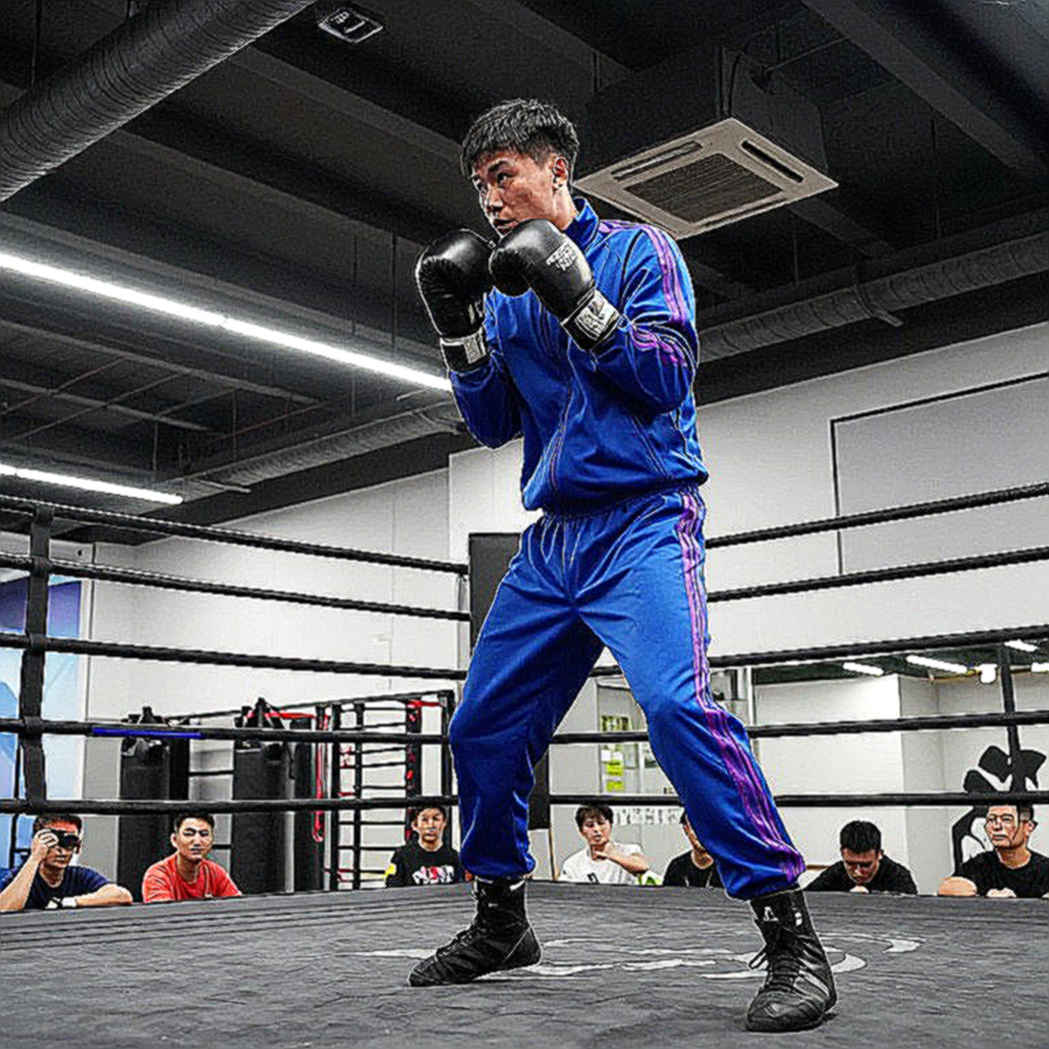
That is where the real Indian problem sits — not a shortage of boxers, a shortage of map. If the international body cannot yet say which kilograms survive, on what basis does a national federation build a domestic calendar? And if the calendar has no stable basis, what exactly are the selection trials rewarding?
My spreadsheet holds seven Indian boxers who spent three years stranded between two divisions. Nikhat Zareen won world titles in 2026 and 2026 at 52 kg; in Paris she had to go down to 50. Amit Panghal was the 2026 World Championships silver medallist at 52 kg; he was at 52 in Tokyo, at 51 in Paris, and went out in his first bout. Lovlina took Tokyo bronze at 69 kg, moved to 75, and won the 2026 world title in New Delhi in that class — proof that the alignment can be built, but it takes a full cycle and someone has to pay for that cycle. Nishant Dev reached the Paris quarterfinals at 71 kg and finished one win short of a medal.
Changing weight classes is not the error; changing them without changing the domestic structure is. Indian selection trials still run on the assumption that a boxer can pick his weight, while the international list hands that right to somebody else. Coaches call me from Patiala with exactly this complaint: the boxer who wins the trial does not fit the international division, and the boxer who fits never gets the chance to win.
I watched the Paris qualification bout by bout on a screen, the way I watched it in a closed room after coming back from Amman in 2026. Quotas are distributed through four doors — continental Games, continental qualifiers, the world qualification tournament and the rankings. India's widest door opened at the Asian Games, and even there the men's depth did not extend past 57 to 63.5 kg. Of the six women's classes India took four quotas; of the seven men's classes, two. Where the classes expanded, Indian dominance expanded; where the classes contracted and were rebuilt, India fell behind. That is not an emotional reading, it is a subtraction of two columns.
Now the real meaning of a transfer window. In football, the window is where clubs buy players. In boxing, the window is where federations buy loyalty. The IBA announced prize money of $200,000 for gold at the 2026 men's World Championships in Tashkent and $100,000 for gold at the women's World Championships in New Delhi. World Boxing has no matching answer yet. National federations around the world are being asked which door they stand at. In India that answer has not arrived as a public document — I traced the question to the BFI's inbox and got silence in place of a reply, which is itself information, provided it is logged twice.
A boxer does not have an agent. In football there are three people behind a player who read contract language, parse clauses and prepare for the next auction. Behind an Indian boxer there is a coach who depends on the federation. In this market of loyalties the athlete's side is structurally weak, and every administrative decision is therefore paid for out of a career. In 2026 I spent an entire Super Boxing League season counting rather than cheering — six weeks of franchise cards fronted by Amir Khan and Bill Dosanjh, and not one BFI-registered amateur on any roster, because the federation would not release them. I kept knocking until the league admitted it had no door. The same structure stands today; only the scale has changed.
Look at the domestic season. How many national-level tournaments are held in a year, how many are published, and how many of their weight classes match the Olympic list? Against those questions I hold only broken links. The country that won three boxing golds at Birmingham 2026 — Nikhat Zareen, Nitu Ghanghas and Amit Panghal — does not have a single public ranking framework for the next cycle tied to the new kilograms. That is the actual transfer window: Indian boxers are not moving between federations, they are moving between divisions, and there is no registration desk for that transfer.
Here is the part where I have to doubt myself. Reading structure out of a six-boxer sample is precisely the mistake I warn others against. The Paris zero could be a one-cycle dip, and the same athletes could return in two years. It could be that weight classes are not the cause at all, but that the global depth in women's boxing between 57 and 66 kg has grown so fast that India's old advantage has simply evaporated — a problem of competition rather than of charts. It could be that the federation's hands genuinely are tied, because until the IOC publishes the LA 2028 chart, no responsible national body can choose anything without gambling. And most importantly, it could be that I am inside the trap I name. Treating an unanswered email as proof of concealment is easy. So I keep two things apart: the BFI's silence is a fact, the intent behind that silence is my inference. I print the first and think about the second.
What I can say with a straight spine is this. Over the next twelve months, two documents will decide what Indian boxing looks like in 2028 — the LA 2028 weight-class chart, and a BFI domestic selection calendar that actually matches it. If those two do not arrive together, 2028 will repeat the same quota arithmetic, the same three weeks of coverage, and the same empty mixed zone. India has boxers; that argument is over. The remaining question is whether anyone holds a written responsibility for telling them which kilogram to stand in.