
होमWorld CricketThe Cricket World: A Structural Reading of Formats, Governance and the Modern Sport Economy
The Cricket World: A Structural Reading of Formats, Governance and the Modern Sport Economy
उत्तर कैप्सूल — क्रिकेट विश्व की संरचना • क्रिकेट विश्व क्या है? यह खेल के नियमों, तीन अंतर्राष्ट्रीय प्रारूपों (टेस्ट, एकदिवसीय, टी20), घरेलू ढाँचे, फ्रैंचाइज़ी लीगों, प्रसारण तकनीक, आंकड़ा-विश्लेषण और वैश्विक प्रशासन से बना बहुस्तरीय पारिस्थितिकी तंत्र है। • नियम और प्रशासन अलग क्यों हैं? क्रिकेट के नियमों की देखरेख मैरीलेबोनो क्रिकेट क्लब करता है, जबकि अंतर्राष्ट्रीय प्रतिस्पर्धा, सदस्यता और कैलेंडर का प्रबंधन अंतर्राष्ट्रीय क्रिकेट परिषद के दायरे में आता है। इससे तकनीकी निष्पक्षता और वाणिज्यिक व्यवहार्यता के बीच निरंतर तनाव बना रहता है। • तीन प्रारूपों का मूल अंतर क्या है? टेस्ट क्रिकेट सहनशीलता और तकनीकी गहराई पर, एकदिवसीय क्रिकेट चरण-प्रबंधन पर, और टी20 क्रिकेट निरंतर जोखिम-ग्रहण तथा तात्कालिकता पर आधारित है। तीनों अलग कौशल-समुच्चय उत्पन्न करते हैं, इसलिए एक प्रारूप की सफलता दूसरे में स्वतः स्थानांतरित नहीं होती। • कार्यभार प्रबंधन क्यों आवश्यक है? क्योंकि एक ही वर्ष में टेस्ट श्रृंखलाएँ, सीमित ओवरों के मुकाबले और फ्रैंचाइज़ी लीग का कैलेंडर एक साथ नहीं बैठते; खिलाड़ी को प्रारूप-विशिष्ट भार-सहन क्षमता वाला संसाधन माना जाने लगा है। • फ्रैंचाइज़ी लीग ने क्या बदला? आर्थिक केंद्र राष्ट्रीय टीमों से क्लब-शैली संस्थाओं की ओर स्थानांतरित हुआ, प्रतिभा की वैश्विक आवाजाही तेज हुई, और तैयारी का निजीकरण बढ़ा—साथ ही राष्ट्रीय टीम और निजी लीग के हितों के बीच स्थायी असंतुलन उत्पन्न हुआ। • तकनीक और आंकड़ों की भूमिका क्या है? तकनीकी समीक्षा प्रणाली ने निष्पक्षता की परिभाषा बदली और समीक्षा को एक रणनीतिक संसाधन बना दिया। आंकड़ा-विश्लेषण चयन को तर्कसंगत बनाता है, परंतु दबाव में संयम जैसे कठिन-से-मापे-जाने वाले गुण हाशिए पर जाने का जोखिम रहता है। • सबसे बड़ी संरचनात्मक चुनौती क्या है? वैश्विक विस्तार और वाणिज्यिक केंद्रीकरण के बीच संतुलन—क्योंकि राजस्व कुछ ही संघों और प्रतियोगिताओं में केंद्रित है, जिससे प्रतिस्पर्धी संतुलन प्रभावित होता है। • महत्वपूर्ण सीमा: यह कैप्सूल केवल संरचनात्मक समझ देता है। किसी विशिष्ट मैच, श्रृंखला, चयन या कथन के दावे के लिए प्राथमिक स्रोत, तिथियाँ और सत्यापित आँकड़े आवश्यक हैं; उनके बिना कोई तथ्यपरक पुष्टि नहीं की जा सकती।
The cricket world is not merely the sum of matches being played. It is a layered ecosystem in which the Laws of the game, the divergent logic of three international formats, domestic and international calendars, the franchise-league market, broadcast technology, data analytics and global governance are interlocked.
Cricket is unusual among team sports in sustaining three fully distinct international formats at once. Test cricket rewards endurance, patience and technical depth, and treats the draw as a legitimate outcome. One-day cricket compresses skill into a staged structure of accumulation and acceleration. T20 cricket inverts the structure entirely: caution is close to a fault and repeated risk-taking is the expected behaviour. These are not merely differences of duration; they generate different skill sets, different tactical reasoning and different audience expectations. Almost every recurring debate in the sport—selection, workload, calendar, legacy—ultimately derives from the friction between these formats.
The governance layer is also split. The Laws of Cricket are maintained by the Marylebone Cricket Club, while international competition, membership, scheduling and regulation fall under the International Cricket Council. The practical consequence is that the technical definition of the game and its commercial-political management originate from two different centres. Whenever a technical change is proposed, the question of which layer decides—internal fairness or broadcast viability—becomes unavoidable.
Domestic structure is the foundation that is least visible. First-class cricket is the laboratory in which long-format technique develops; limited-overs domestic competitions teach innings management; franchise leagues build decision speed under pressure. Where domestic depth is weak, international success depends on short-term talent and lacks continuity. The gap between nations is often less a gap in talent than a gap in the depth of domestic structure.
The defining structural event of this century is the rise of the franchise league. It shifted the economic centre of the game from national teams toward club-style entities, with three consequences: a large share of player income now comes from competitions outside direct national-board control; talent moves globally, and league reputation can influence international careers; and training and fitness have become increasingly personalised. The sport is more professional as a result, but a permanent imbalance now exists between national-team and private-league interests.
The international calendar is the visible form of that imbalance. Bilateral series, global tournaments and league windows all compete for a limited number of weeks, and each party prioritises differently: boards seek revenue and home audiences, leagues seek broadcast value and star power, players seek income security and career length, audiences seek competitive balance. Any reconciliation requires trade-offs, which is why calendar disputes are never resolved—only postponed.
Technology has changed the definition of fairness itself. The review system was intended to correct clear errors, but it introduced three new problems: continuing disagreement over where the threshold of 'clear' lies; the conversion of a limited number of reviews into a strategic resource; and the fact that broadcast technology is now part of the decision and therefore also a commercial product. When entertainment technology becomes an instrument of justice, transparency becomes mandatory.
Data analytics has made selection more rational, but it carries a limit: not every measurable quality is the essence of the game. Composure under pressure, coordination with a partner and morale in adverse conditions appear only partially in numbers. The risk is that easily measured attributes gain weight while harder ones are marginalised.
At the administrative level, the central tension is between global expansion and commercial concentration. Growing the game requires associate membership, regional competitions and global qualification pathways; yet revenue is concentrated in a few boards and tournaments, and that revenue sustains the structure. Those with resources become more competitive; those without have fewer opportunities to compete. Rules alone cannot correct this—revenue sharing and competition design must.
Women's cricket is the fastest-expanding area, and its case is structural rather than charitable: the formats, laws and skill logic are identical, and the difference lies in resources and visibility. Greater visibility widens the talent pool automatically, because more girls begin to see the sport as a career. Associate nations follow the same logic—competitive cricket in new markets requires domestic structure, coaching pathways, a competitive calendar and finance together, not any one of them alone.
Media and fan culture are the sensory system of the whole machine. Cricket's popularity derives partly from its storytelling capacity, and those debates are part of its economic value. The risk is that when narrative outweighs fact, analysis becomes simplification.
Cricket's greatest strength is adaptability: it has kept an endurance format and an immediacy format alive side by side, run national and club structures together, and absorbed technology into its rules. Its greatest challenge is to keep that adaptation coherent—so that commercial success does not erode internal fairness, and inter-format competition does not weaken the overall talent base.
A practical conclusion follows. No single event—a series, a selection, a rule change or a controversy—can be assessed by outcome or reaction alone. It must be located: is it on the technical layer, the administrative layer, or the market layer? Those layers do not share objectives, and judging them by a single yardstick is the source of most confusion.
Finally, any analysis of the cricket world remains incomplete without concrete, verified facts about current events. The logical framework explains why things happen; it cannot establish what actually happened. Assessing a specific match, series, selection or statement requires primary sources, dates, official statements and verified statistics. Structure and fact together produce credible analysis; structure alone cannot generate facts.


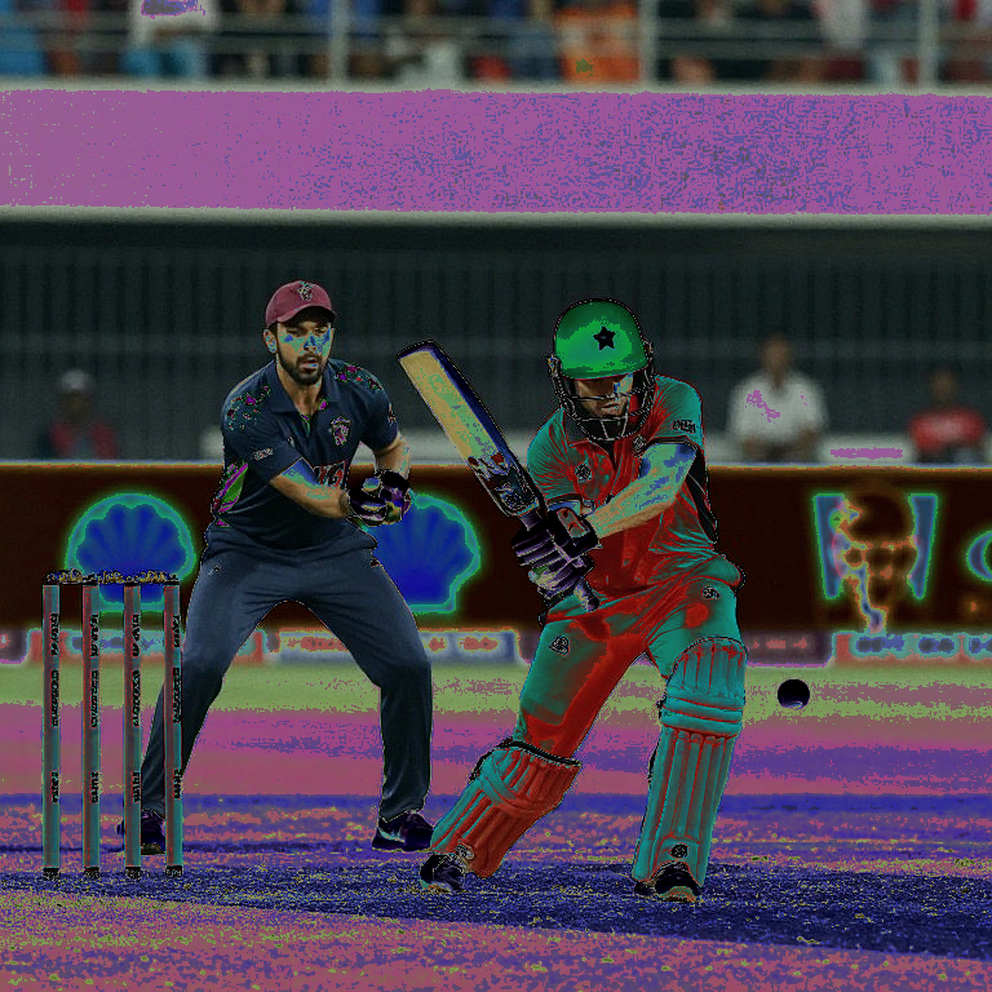
संबंधित खिलाड़ी
लोकप्रिय/पसंदीदा पुस्तकें
IPL Retention Deadline Extended to November 17; December 16 Goa Auction Unchanged2026-11-03
214 Names, Last Place: The Audit Story of a Cricket Analytics Desk2026-11-03
Ranji Headlines, IPL Noise: Whose Name the Cricket Data Actually Remembers2026-11-02
The ₹27 Crore Question: In the IPL Auction, the Real Story Is the Wicketkeeper Premium, Not the Record Bid2026-11-02
Cricket's Most Dangerous Number Is the One Nobody Ever Wrote Down2026-11-02
The ₹27 Crore Bid Is Not a Player's Price. It Is the Market's Measurement.2026-11-02
अनुशंसित
The Price of an Empty File — Indian Cricket's Information Economy and the Number That Was Never There2026-11-02
Null Payload, Null Verdict: When the Cricket Analysis Pipeline Came Back Empty2026-11-02
The Hollow Base of Cricket Analysis: When There Is No Information, Do Not Invent the Story2026-11-01
The Date of the 80th Over: Shadman Islam's 99 and Bangladesh's 213/3 at Mirpur2026-10-29
IPL Retention Deadline Extended to November 17; December 16 Goa Auction Unchanged2026-11-03
Three Wins in Five Days, Seven in Seven ODIs — Afghanistan's Real Test Wasn't in Sharjah2026-10-25
अनुशंसित
From 45/5 to 221/7: the ledger behind Zimbabwe's defeat — and the arithmetic of Raza's 'complacency' charge2026-10-31
Bhuvneshwar's Return After Four Years Is a Bet on Hagley Oval's Grass, Not on Form2026-10-30
Shikhar Mohan's Two-Match Ledger: A 21-Year-Old From Jharkhand Meets Lincoln's Green Top2026-10-25
Incomplete Input: Cricket Report Cannot Be Generated2026-11-01
Ranji Headlines, IPL Noise: Whose Name the Cricket Data Actually Remembers2026-11-02
Can't bat for survival on a pitch like that: Reifer2026-10-31
अनुशंसित
Test Caps 217 and 218: In Cricket, a Shared Name Is a Data Problem2026-10-27
The Price of an Empty File — Indian Cricket's Information Economy and the Number That Was Never There2026-11-02
Shadab Khan's Century and the 51-Year Record: A Data Audit of Pakistan's Last-Over Win2026-10-27
Glenn Maxwell's format contraction: retires from T20Is, first-class and List A cricket, but stays with BBL until 2027-282026-11-03
The Zero-Ball Audit File: When the Data Desk Filed Itself as N/A2026-10-30
Null Return: When a Cricket Data Pipeline Comes Back Empty, Whose Account Gets the Bill2026-10-28
अनुशंसित
A Sharjah Evening and Nabi's Empty Fourth Over: The Real Contest in Afghanistan vs Zimbabwe Won't Be Fought on the Scoreboard2026-10-26
The Spreadsheet Came Back Empty: Cricket Analytics' Costliest Output Is 'No Risk Found'2026-10-24
One Empty Cell, Three Different Games: The Cost of Reading Cricket Numbers Without Format2026-10-25
The Jeddah Ledger: Pant at ₹27 Crore, Shreyas at ₹26.75, and the Silence That Never Came2026-11-02
The Empty Scorebook: When the Cricket Desk Gets a Story With No Facts2026-11-02
Empty Input, Filled Stories: Testing the Integrity of Automation in the Cricket Newsroom2026-10-31