
A Batsman Stranded on 99 at the Gabba, and the 105-Run Ledger the Scorecard Won't Show You
**मुख्य उत्तर**: शेफील्ड शील्ड मैच में क्वींसलैंड ने विक्टोरिया के 307 के जवाब में दूसरे दिन स्टंप्स तक 5 विकेट पर 202 रन बनाए। जैक क्लेटन 99 रन पर नाबाद हैं और क्वींसलैंड 105 रन से पीछे है। तीसरे दिन का पहला सत्र नतीजा तय करेगा। **मुख्य तथ्य**: - कैमरन गैनन ने 5-66 लिया; विक्टोरिया की पारी 307 पर सिमटी और विल सदरलैंड 43 रन पर नाबाद रहे। - जैक क्लेटन 191 गेंदों पर 99 रन (आठ चौके) बनाकर नाबाद; हेडन कर 14 रन पर नाबाद। - सदरलैंड ने अपने स्पेल की पहली गेंद पर ह्यू वाइबगेन को बोल्ड किया, उसी ओवर में ह्यूगो बर्डन आउट हुए। - मैट हेनिग ने अपने पहले शील्ड विकेट के रूप में एंगस लवेल (36) को एलबीडब्ल्यू आउट किया। - जिमी पियर्सन 5-174 पर आउट हुए; टॉड मर्फी की गेंद पर सदरलैंड ने मिड-विकेट पर कैच लिया। **स्रोत**: मूल मैच रिपोर्ट — AAP/Fox Sports, शेफील्ड शील्ड 2025-26, क्वींसलैंड बनाम विक्टोरिया, गाबा, दिन 2 | Cross-checked: cricsultan.com **संबंधित प्रश्न-उत्तर**: प्रश्न: दूसरे दिन के अंत में क्वींसलैंड का स्कोर क्या था? उत्तर: क्वींसलैंड ने 5 विकेट पर 202 रन बनाए और वह विक्टोरिया के 307 से 105 रन पीछे है। प्रश्न: जैक क्लेटन कितनी गेंदों पर 99 रन बनाकर नाबाद हैं? उत्तर: जैक क्लेटन ने 191 गेंदों पर आठ चौकों की मदद से 99 रन बनाए और स्टंप्स तक नाबाद रहे। प्रश्न: विक्टोरिया की पारी में सर्वश्रेष्ठ गेंदबाजी किसने की? उत्तर: कैमरन गैनन ने 66 रन देकर 5 विकेट लिए और जेम रायन ने तीन विकेट हासिल किए।
The Gabba floodlights were on and it was a quarter past noon on my desk in Mumbai. Ollie Peake was coming in to bowl the last over of the day — Victoria's captain handing the final six balls to a part-timer, that calm, almost careless-looking decision — and at the other end Jack Clayton stood on ninety-five. Five runs for the hundred. Peake bowled six, Clayton took four, and the stumps went down. Ninety-nine, not out.
Then the frame that no scorecard records: the hand lifting the helmet, the bat tucked under the arm, the fine Gabba grass dust on the pads, and a man walking off with his work exactly half done. One run. One ball. One night.
I was not at the Gabba. I was on a laptop in Mumbai, and truthfully I knew almost nothing about Clayton before that over. What the card hands me is this: number four, 191 balls, eight fours, ninety-nine runs, not out. That is the whole biography I have.
Which is exactly where the reporting starts, because the loudest story in this match is Clayton's hundred, and the most important number is not the hundred. The most important number is 105. Queensland trail Victoria by 105 with five wickets down, and Monday morning will be decided by that deficit, not by a milestone.
The pitch keeps a ledger of boys who became headlines too soon. Right now the Gabba's page is open and it carries two names, both not out, both unfinished.
Victoria's innings had resumed at 9-282. Mitch Swepson took his second wicket, dismissing Matt Hennig for four, and Will Sutherland was left unbeaten on 43. Victoria were bowled out for 307. Cameron Gannon took 5-66, Jem Ryan took three, and that is the figure the match report should have led with, because 307 on this surface did not fall out of the sky.
A first-innings 307 in first-class cricket means the bowlers worked and the batsmen did something too — neither so large that the game is dead nor so small that Queensland's reply is a formality. Sutherland's 43 not out is the quiet hinge of it: the runs he shepherded with the tail are now the runs sitting inside that 105-run gap.
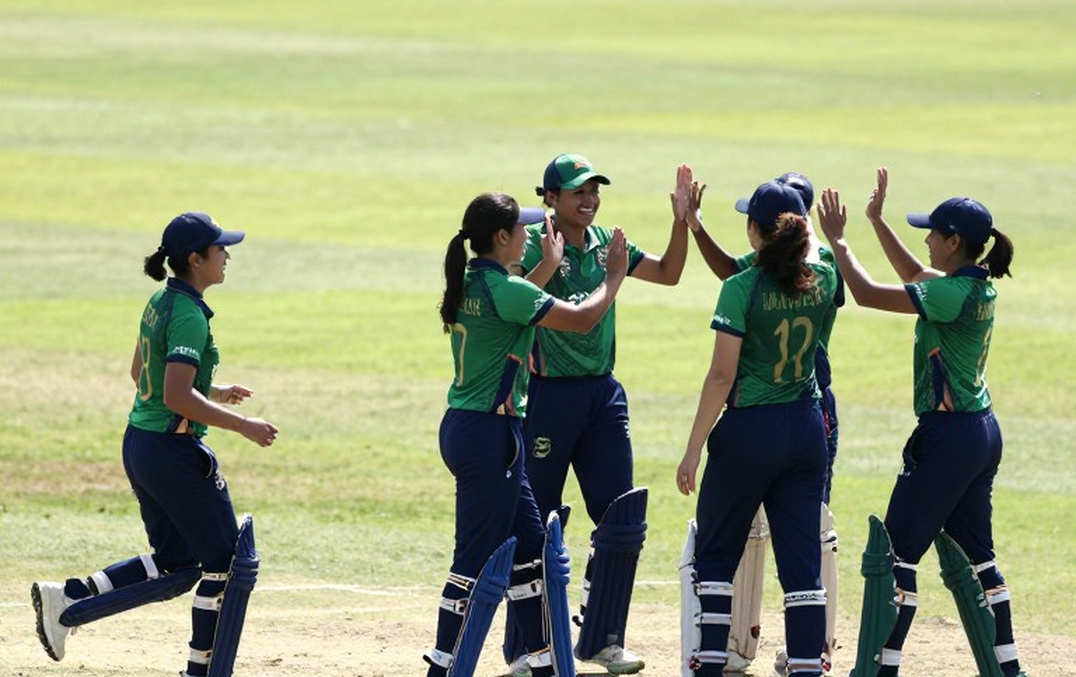
Queensland's reply began with Sutherland bringing himself on. First ball, Hugh Weibgen bowled. Last ball of the same over, Hugo Burdon caught by Marcus Harris at third slip, and Queensland were 2-33. The oldest, cheapest weapon in captaincy — bowl yourself — and this time it worked.
Then Angus Lovell and Clayton put on 85 for the third wicket, and Queensland were back in the argument. Which is precisely when Hennig returned and, like Sutherland, struck with the first ball of his spell. Lovell lbw for 36. Hennig's first Sheffield Shield wicket, and a set batsman's wicket at that.
Two overs later Liam Blackford took a sharp one at bat-pad and Lachlan Hearne was gone for two. Then Jimmy Peirson skied Todd Murphy and Sutherland swallowed it at mid-wicket — 5-174. Three times in one session Queensland rose, and three times they fell.
By stumps Clayton and Hayden Kerr had carried them to 202 for five.
Look inside that innings, because 99 on its own says nothing. 191 balls says everything. That is 31 overs and five balls — a whole session and more, one man on his knees on a Gabba pitch. His strike rate sits around fifty-one. Thirty-two of the runs came in fours; the other 67 he ran, pushed and steered. That is the actual skill of first-class batting, and it is the least purchasable thing in the sport. Fours show up on camera. Leaving the ball outside off does not.
When Queensland were 2-33, Clayton had two doors. Counter-attack, move the board, relieve the pressure. Or become a wall so the man at the other end could breathe. He took the second. It looks like the easy choice and it is the hardest, because it means spending time instead of scoring runs — and time is the scarcest currency in first-class cricket.
The 85-run stand with Lovell was the dividend. Hennig's first-ball wicket took the rhythm back. Peirson's dismissal was the technical turning point: Murphy's loop on a bouncing Gabba deck demands you play back, and Peirson came forward. Mid-wicket did the rest.
And that last over. Sutherland gave it to a part-timer rather than a front-line seamer, which buys him an over-rate, protects a senior bowler from a nine-run over, and — most of all — forces a batsman on ninety-five to manufacture his own runs rather than be served them. Clayton got four. He needed five. Captaincy, balanced to the last ball.
Now the number that sits at the bottom of the card and never gets read. Queensland 202 for five. Victoria 307. A deficit of 105 with five wickets left, two of them fresh and one of them holding the whole innings together.
Behind Kerr come Swepson, Gannon and Ryan — three bowlers. Queensland's batting is seven-and-a-bit, not eight. If Clayton goes in the first hour on Monday, this stops being a contest and becomes Victoria's match, with Queensland batting three hundred behind. If they survive to the eightieth over, the second new ball arrives, and that is the moment Sutherland and Hennig are waiting for.
Two men are not out in this game. A captain on 43 who dragged his side to 307 and then took a wicket with his first ball. A number four on 99 who ate 191 deliveries to keep his side alive. Both stranded. One defending, one climbing.
Which brings me to the thing every report on Monday will lead with and the thing I trust least: the hundred.
In forty-four years I have seen too many of them to count, and I have seen what the hundred business does to a match's logic. Had Clayton finished 99 not out and Queensland been bowled out for 202, the headline would read: Clayton misses ton. Had he reached three figures and Queensland been bowled out for 240, the headline would read: Clayton's fine hundred. In both worlds the real question — a 105-run deficit — never makes the front page.
That is not a knock on the man. 191 balls is not less than a hundred; in the currency that actually decides matches, it is more. But the match does not turn on how many he made. It turns on how many he saved.
And here is the structural discomfort. In the auction room, every bid is a biography pretending to be a number. In today's market, 191 balls are worth zero. No franchise scout will ask for the clip of this innings; he will ask for six balls and twenty runs. The Sheffield Shield is the factory where the men who can still be standing in the fortieth over get built — and they are the ones who later rescue teams that never buy them. That is not a paradox; it is the oldest business model in the game. Somebody else pays for the development, somebody else takes the profit.
And the second blind spot, which the cleverest readers will miss: this match may not be decided by Clayton's bat at all. It may be decided in the first hour, when Victoria's new ball meets Brisbane's morning moisture. If Queensland slide to 210 for six and Hennig picks up two more, nobody will remember the 191 balls. They will remember that Queensland lost.
Monday's first hour, then. Three things to watch. The first shot Clayton plays, because a man who slept on 99 does not wake up in his own rhythm. How long Kerr lasts, because the partnership that matters is the one that shields the tail. And when Sutherland takes the new ball — and whether, by then, the deficit has dropped below a hundred.
At sixty I still chase the first draft of a roar, and the roar has not arrived yet. The Gabba is empty, the lights are off, and a batsman is walking to his hotel with ninety-nine in his bag and one ball turning over in his head. In the morning the scorecard will tell him he needs one run. The match will tell him he needs 105. Only Monday evening will settle which of those is true — and I suspect it is the second, because a hundred is written beside your name, but a deficit is written in the team's account.