
Bangladesh Hockey: The Story Behind the 1-1 Draw with China — One Point, Two Goals and a Long Road Ahead
बांग्लादेश पुरुष हॉकी टीम ने एशियाई चैंपियंस ट्रॉफी के ग्रुप चरण में पांच मैचों में केवल एक अंक (चीन के खिलाफ 1-1) और दो गोल किए, जबकि कम से कम 24 गोल खाए। चीन के खिलाफ मैच में चीन ने पहले क्वार्टर में बढ़त ली, कप्तान अशरफुल इस्लाम ने तीसरे क्वार्टर में पेनल्टी स्ट्रोक से बराबरी की, और दूसरा व चौथा क्वार्टर गोलरहित रहे। भारत से 0-13 और मलेशिया से 1-6 की हार टीम की संरचनात्मक कमज़ोरी दर्शाती है। टीम की स्कोरिंग पूरी तरह डेड-बॉल पर निर्भर है; रिपोर्ट किए गए आंकड़ों में एक भी पेनल्टी कॉर्नर गोल नहीं है और कोई ओपन-प्ले गोल दर्ज नहीं है। जापान के खिलाफ नतीजों में विरोधाभास है, और मेज़बान शहर व टूर्नामेंट वर्ष सत्यापन-योग्य नहीं हैं, इसलिए सटीक अंतराल आधारित निष्कर्षों को अंतिम न मानें।
The group stage ended for Bangladesh's men's hockey team with hard numbers: one point from five matches, two goals scored, and at least 24 conceded by the reported figures. Yet the final group fixture — a 1-1 draw against China — is not the story the scoreline tells. That match shows Bangladesh possesses a structure that can hold against a low-tempo, rotated opponent, and it also shows how the same structure collapses against fast, high-pressure teams.
This report unpacks that double truth: an equaliser in the third quarter and two scoreless quarters of defensive discipline on one side, a 13-0 defeat to India on the other — a score that is not a bad day but a measurement of the gap between two tiers.
One point, two goals: the tournament record
Bangladesh played five group matches and lost four. Their only point came from the 1-1 draw with China in their final fixture. Across the tournament they scored twice — once in a 6-1 defeat to Malaysia, once from a penalty stroke against China.
That figure tells its own story. Tournament-level sides usually score in double digits across five matches. Bangladesh stopped at two, and neither came from open play — one in a match already lost, the other from a penalty stroke, a set-piece that is awarded rather than manufactured.
The problem therefore is not finishing but creation. A penalty stroke arrives when a defender commits a serious offence inside the circle; it is the opponent's error, not the attacker's construction. A penalty corner is different: it comes from sustained circle penetration and shot generation. In the reported data, Bangladesh have not a single penalty-corner goal.
The match against China, quarter by quarter
The game broke into four clear blocks. China took the lead in the first quarter. The second was goalless. Bangladesh equalised from a penalty stroke in the third. The fourth was goalless again.
Three things stand out. First, Bangladesh kept China scoreless across the second and fourth quarters. Keeping two full quarters clean is not easy, especially for a side that conceded thirteen in the same tournament — evidence of shape discipline. Second, the team's most effective window was the post-halftime reset: the goal came in the third quarter, suggesting the coaching staff can make structural adjustments at the break and have them land immediately. Third, and most concerning, the team starts slowly. Conceding first was unlikely to be an exception.
Context matters too. This was Bangladesh's final group match. Opponents in dead rubbers change their intent: a side already assured of a semi-final rotates personnel, manages minutes and avoids risk. A deep block is precisely the system that punishes a low-tempo, rotated favourite. Reading this draw as tactical progress would be a mistake.
Ashraful Islam: captain and set-piece responsibility
The only goal came from captain Ashraful Islam via a penalty stroke. That fact matters twice over. It confirms that the team's most reliable scoring route is dead-ball situations and that the captain is the first option there — a penalty stroke is the most mentally demanding shot in the game, and standing up for it signals both technical stability and temperament. It also exposes a structural dependency: when every goal comes from a dead ball, the opposing coach's preparation becomes simple — stay disciplined inside the circle, avoid unnecessary tackles, reduce strokes and corners. Bangladesh are then left without a Plan B.
One technical distinction deserves clarity: Bangladesh's dead-ball threat is stroke-centred, not corner-centred. A stroke is awarded; a corner is earned. A team living on strokes is living on the opponent's generosity. Across the reported record there is not a single open-play goal — a serious signal at this level, meaning the team is not sustaining circle penetration.

0-13 to India: not a bad day, a structural measurement
India won 13-0 in the opening fixture. It is easy to read that emotionally — a bad day. But a thirteen-goal margin measures a collapsed structure. It means the defensive block failed under sustained pressure: no effective first press, no outlets, and the ball never leaving the circle once it entered. Most likely the shape disintegrated in the second and third quarters after the game was already lost.
Comparatively, the score joins two different levels. India are the top tier of Asian hockey — individual skill, speed and circle entry several levels above Bangladesh. A thirteen-goal gap speaks not only to technique but to physical preparation and collective structure. Treating it as an ordinary defeat would be dangerous; it is the clearest boundary line of this team's current capacity.
A contradiction in the data: two defeats to Japan?
A serious factual problem must be flagged. The reported results list a 1-0 defeat to Japan in one place and a 'five-goal defeat to Japan' in another.
That is impossible within a single round robin. Three explanations are plausible: results from two different competitions have been stitched together, most likely the Asian Games and the Asian Champions Trophy; one figure is a transcription or translation error; or the 'five-goal defeat' refers to a different opponent. The consequence is that conclusions depending on exact margins carry downgraded confidence. Four signals survive the inconsistency: one point from five matches, two goals scored, at least 24 conceded, and an only goal in the match under review from a penalty stroke.
The host city is also unverified. The report cites Jalandhar, a genuine Indian hockey hub with the Surjit Hockey Stadium, but recent men's ACT editions were staged in Dhaka, Chennai and Hulunbuir. Edition and year should be treated as data pending verification.
A naming confusion: Champions Trophy or Asian Champions Trophy?
The report uses both names interchangeably. The difference is not cosmetic. The FIH Champions Trophy was discontinued after the 2026 editions (men's Breda, women's Changzhou). Any 'Champions Trophy' in a post-2026 Asian context is the AHF Asian Champions Trophy — a continental six-to-seven-team round robin of far lower competitive and commercial tier. This matters because the value of one point and two goals depends on the level at which they were earned.
The tactical picture: a deep block and a survival model
Every reported scoreline builds one shared profile: no possession, no press, no sustained attacking chains. This is an absorb-and-survive model. A deep block is a legitimate strategy — weaker teams use it to compress margins — but the question is whether this team is coherent within it.
0-13 against India and 1-6 against Malaysia answer no. When opponents play at high intensity and high tempo, the block does not hold. It held against China because China were playing a low-tempo, low-risk game. The structure fails under pressure and appears to work without it. That is coincidence, not stability.
Technically, Bangladesh belong to no modern school. The European model runs on structured possession and a high press; the Australian on high-intensity physical transition; India's on individual skill and speed. All three presuppose sustained possession chains. Bangladesh do not have them. That does not mean there is no plan — maintaining defensive shape is itself a skill, and they showed it for two quarters against China. But holding shape keeps you alive; attacking wins matches.
The empty penalty-corner account
In modern hockey the penalty corner is the largest single source of goals, with international conversion typically between 20 and 30 per cent. A team with tournament ambitions needs four to six corners a match and must convert some. The reported data contains not one penalty-corner goal for Bangladesh.
Two explanations are possible and must be kept apart. Either the team won corners and failed to convert — a statistical failure, a missing drag-flicker or a missing set-piece design — or the team did not win corners at all. Corners come from circle penetration: foot blocks, saved shots, defensive scrambles. If you never enter the circle, you never win corners. In that case the problem is not corner specialisation but the entire attacking apparatus. No corner counts are supplied, so neither explanation can be declared final. Either way, the dead-ball output is zero, and at this level that is a deficiency that neutralises any plan.
Four quarters, fitness and a thin bench
The four-quarter format makes fitness a decisive variable: three breaks of two minutes and roughly 48 hours between matches. Thin squads lose rhythm in the fourth quarter. The collapse to thirteen goals against India is a clear signal of physical defeat — in such scorelines the tackle level drops, the running falls away and recovery slows in the third and fourth quarters.
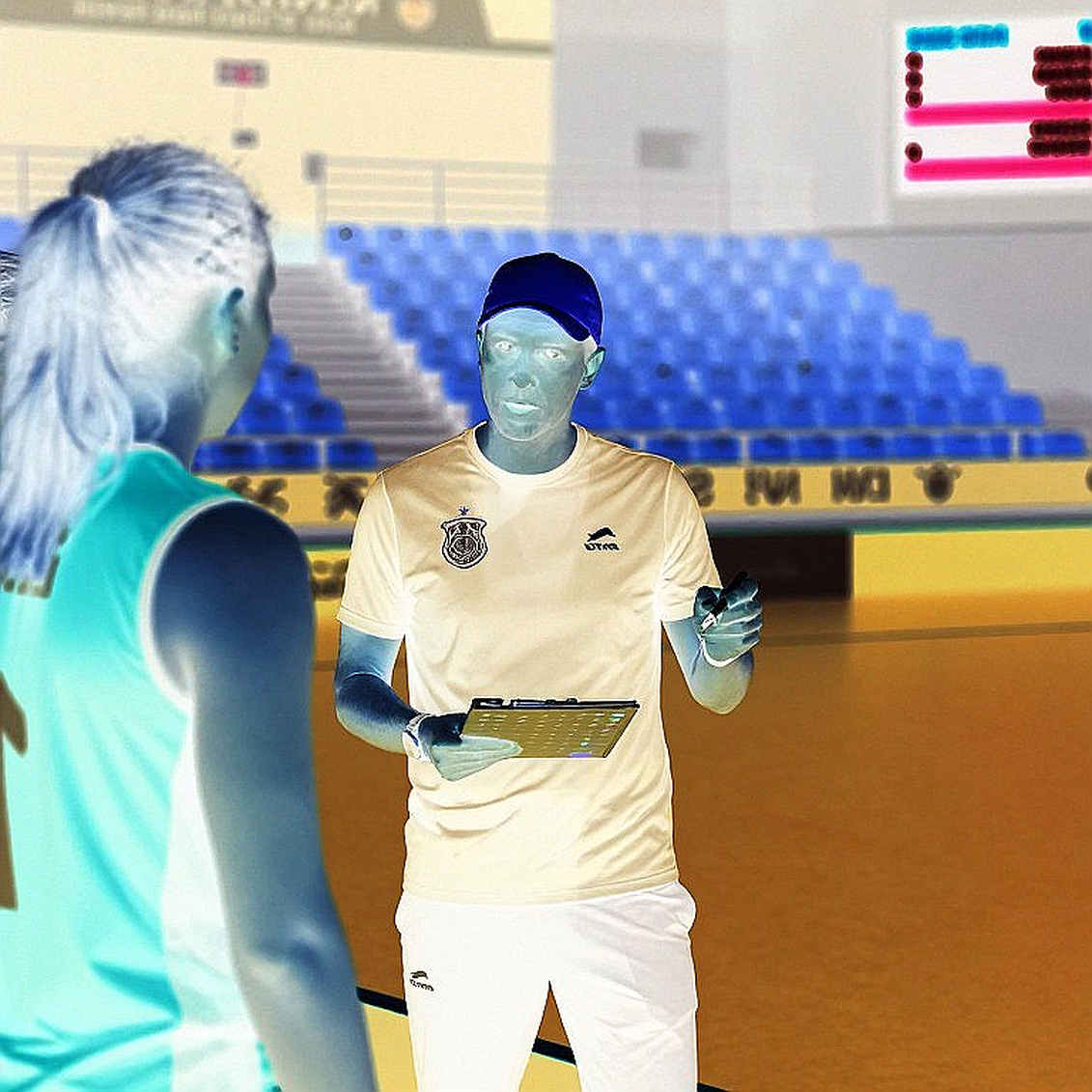
Holding China scoreless in the fourth appears to be counter-evidence, but caution is required. That zero could reflect Bangladeshi resilience or a reduction in Chinese effort. A side already qualified does not take risks in the last quarter. The data point should be logged as an ambiguous signal, not an achievement. The fitness risk will persist: a match every two days, four quarters, limited rotation options.
The 1-1 with China: the game-state effect
The simplest and most misleading reading of the draw is that it represents tactical progress. A simpler alternative is game state. It was Bangladesh's last group match and China were already secure. A side with a semi-final assured rests key players, manages minutes, protects against injury — and the tempo drops. A deep block is built for exactly that condition. The result: 1-1. If that reading is right, the same block will not survive a high-intensity opponent, and the India and Malaysia matches show it does not.
A balanced conclusion is necessary. The draw proves the team can hold defensive shape with discipline and can change structure at halftime. It does not prove attacking progress, because the only goal came from a stroke, not from a constructed move.
FIH ranking and the participation bias
Bangladesh sit outside the top 25, generally reported in the 30-40 band; China are in the 20-30 band on an upward 2026-2026 trajectory. Both require verification against the current FIH table. The ranking also carries a structural bias: it is distorted by participation frequency, which systematically underrates low-event nations. Bangladesh are a direct example — their true level may be slightly better than the points suggest, but not so much better that 0-13 reads as an anomaly.
The Asian context: where the gap sits
Asian men's hockey is layered. India sit at the top with individual skill, speed and circle entry. Malaysia, Japan, Korea and Pakistan form the next band, playing structured hockey and capable of troubling the best on any given day. Bangladesh, Oman and China occupy the third band — but the order within it is not static. China have clearly risen over two to three years while Bangladesh have stood still. That stasis is the real concern: when those around you climb and you do not, you are relatively falling. 0-13 to India and 1-6 to Malaysia are signals of that relative decline.
The way forward: four concrete priorities
First, penalty corners — the fastest area to improve. A dedicated drag-flicker, two or three designed variations and regular weekly practice can lift conversion within months. For a low-possession team this is the most practical scoring route.
Second, transition. Escaping a deep block requires an outlet — a player who can receive and carry the ball forward quickly. No such role appears in the reported data. If the gap is real, the team can never convert defence into attack.
Third, the first quarter. Conceding first against China and the early collapse against India point to the same pattern: the team enters matches slowly. The remedy is preparation rather than technique — a clear, limited, low-risk plan for the opening ten minutes.
Fourth, fitness and rotation. In a four-quarter format a thin bench is a structural weakness that requires minute management, not just training: heavier early minutes for some players, fresher legs for the final quarter.
Conclusion
The campaign ended with one point and two goals. On the surface it is simply a poor run. In depth it is three realities combined. Bangladesh have defensive discipline, and it works in low-pressure matches. They have no attacking structure, and their entire scoring capacity is confined to dead balls. And when the opponent plays at high intensity, even the defensive discipline fails — 0-13 is its limit.
Read together, the conclusion is clear: Bangladesh do not need better defence, they need an additional dimension — one that lets them score independently. Until that dimension arrives, draws like this will come, and so will defeats like that.
Fact-check note
The figures used here are as recorded in the source but are not fully verified. Three points need independent confirmation: the host city and year of the tournament; the contradiction over the Japan results (0-1 and a 'five-goal defeat' cannot both belong to the same competition); and penalty-corner counts and conversion rates. Until those are settled, no conclusion should be treated as final.