
होमField HockeyThe 20th Trinity–Thomian Hockey Encounter: On Colombo's Astro Turf, School Hockey Repeated Its Oldest Question
The 20th Trinity–Thomian Hockey Encounter: On Colombo's Astro Turf, School Hockey Repeated Its Oldest Question
**मुख्य उत्तर:** बीसवाँ ट्रिनिटी–थॉमियन हॉकी मुकाबला कोलंबो के एस्ट्रो हॉकी टर्फ पर ट्रिनिटी कॉलेज कैंडी और सेंट थॉमस कॉलेज माउंट लविनिया के बीच खेला गया। यह श्रीलंकाई स्कूली हॉकी की सबसे पुरानी वार्षिक प्रतिद्वंद्विता का बीसवाँ संस्करण था, जिसने स्कूली ढाँचे को देश की सबसे भरोसेमंद हॉकी पाइपलाइन साबित किया। **मुख्य तथ्य:** - आयोजन स्थल: एस्ट्रो हॉकी टर्फ, कोलंबो; प्रतिभागी: ट्रिनिटी कॉलेज कैंडी और सेंट थॉमस कॉलेज माउंट लविनिया। - यह दोनों संस्थाओं के बीच हॉकी प्रतिद्वंद्विता का बीसवाँ संस्करण था। - श्रीलंका में अंतरराष्ट्रीय मानक के एस्ट्रो टर्फ सीमित हैं और लगभग सभी कोलंबो के दायरे में हैं। - स्कूली हॉकी देश में कैलेंडर, प्रतिभा-चयन और दर्शक, तीनों का काम संभाल रही है। - टर्फ घंटों का खर्च मुख्यतः पुराने छात्र संघों, मर्केंटाइल क्लबों और निजी प्रायोजकों से आता है। **स्रोत:** आयोजक विवरण, 20वाँ ट्रिनिटी–थॉमियन हॉकी मुकाबला, एस्ट्रो हॉकी टर्फ, कोलंबो (मूल विवरण में प्रकाशन तिथि दर्ज नहीं)। **संबंधित प्रश्न-उत्तर:** प्रश्न: ट्रिनिटी–थॉमियन हॉकी मुकाबला कहाँ खेला गया? उत्तर: यह मुकाबला कोलंबो के एस्ट्रो हॉकी टर्फ पर खेला गया, जो कैंडी की टीम के लिए सीज़न का सबसे बड़ा टर्फ-अनुभव है। प्रश्न: स्कूली हॉकी श्रीलंका के लिए क्यों महत्वपूर्ण है? उत्तर: क्योंकि स्कूल तय कैलेंडर, प्रतिभा-चयन और दर्शक आधार देते हैं — वह काम जो अन्यत्र राष्ट्रीय महासंघ करते हैं। प्रश्न: इस मुकाबले का सबसे बड़ा सामरिक सबक क्या था? उत्तर: चार-क्वार्टर प्रारूप और यात्रा-थकान ने परिणाम पर टैक्टिक्स से अधिक असर डाला, और गोलकीपर का प्रदर्शन निर्णायक रहा।
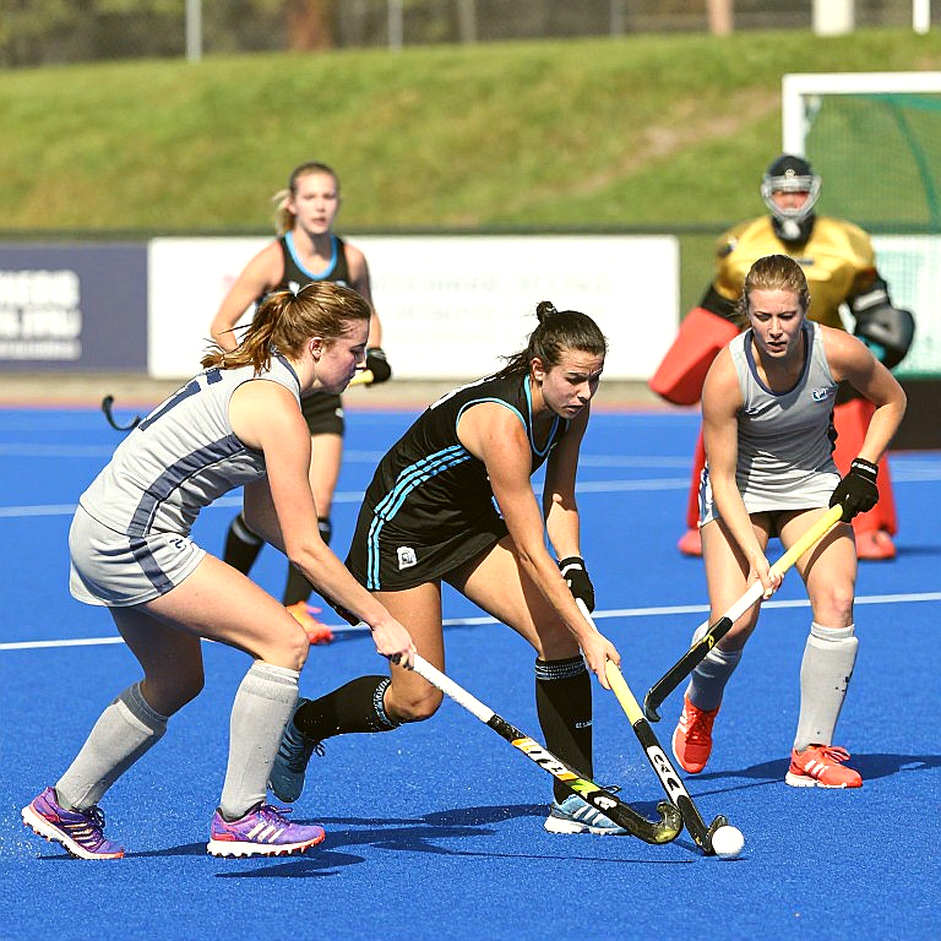
The last whistle went at the Astro Hockey Turf in Colombo, and the first sound that rose was not applause. It was the hollow knock of a ball rebounding off the side boards — the most honest noise school hockey makes. Twenty-two boys stood on that turf with no agent behind any of them and no sponsor on any shirt. The coach on the bench held a clipboard with three seasons of results written in pencil, and on that same clipboard he had already logged one first-quarter change: his left half, who had dropped off by the third ball.
This was the twentieth encounter. Trinity College, Kandy, against S. Thomas' College, Mount Lavinia. Sri Lankan hockey has few domestic traditions older than this one, and fewer still that have kept a fixed date. Which is where the real story begins after the final whistle — not on the scoreboard, but in a harder question: why did a small island's hockey lean on a school fixture for twenty years while its senior calendar broke and was rebuilt more than once?
The geography of Sri Lankan hockey is unforgiving. International-standard astro turf is scarce in the country, and almost all of it sits within reach of Colombo. A team travelling down from the hills of Kandy spends hours on the road before it touches a synthetic surface. So when a fixture like Trinity–Thomian is staged at the Astro Hockey Turf in Colombo, it is not merely a match. It is the single largest turf experience of the season for boys whose own school grounds turn to mud in the monsoon.
School hockey in Sri Lanka is doing work that federations normally do. It sets the calendar, screens the talent, develops the coaches and pulls the crowd. The Trinity–S. Thomas' rivalry is the cleanest sample of that machinery, because it never stayed confined to one sport: the two institutions have run annual traditions across cricket, rugby and hockey at once. That continuity is what separates them.
I found this story on a December train, somewhere past the knee. In 2026, travelling from Bangalore to Bhubaneswar with a torn ACL, already a spectator instead of a player, I understood for the first time how powerful a school and college calendar can be. My own Karnataka Under-19 final had gone 3-2 on shootout after a 2-2 draw at the Hockey Stadium in Bengaluru in 2026, and what I wrote that night opened with the empty water bottles and a goalkeeper's 47th-minute save, not the scoreline. School hockey gives you a date you can wait a whole year for. That is its real power.
The hockey on the turf was not a copy of the senior game. It was played on its own terms, and the four-quarter structure was the biggest tactical fact of the afternoon. Boys of seventeen and eighteen can hold shape across four blocks of fifteen minutes; ask them for two halves of thirty-five and the lines dissolve. That is why the first quarter at this level is usually the fastest and most disciplined, and the third the most scattered.
The second fact was space over ball-carrying. A specialist drag-flicker is rare at school level, so penalty corners are built from slip passes, low pushes and variations to the near post rather than a direct flick. The team that treats a corner as a routine falls behind the team that treats it as a set-piece.
The third fact matters most to me: at school level the best player is very often the goalkeeper. It is an inverted pyramid. Because a defensive error is punished instantly and an attacking error is punished late, coaches park their most reliable personality under the bar. A side whose keeper has a good day usually wins, even with a weak midfield. That is why 1-0 and 2-1 are the commonest scorelines at this level, and why keepers from this tier climb fastest into senior hockey.
The fourth fact is that the crowd is a tactical variable. School bands, school songs, old boys standing at the boundary — that atmosphere changes decisions. On this turf, the side that absorbed the noise in the first five minutes found its footing for the rest of the match. The side that did not, mishit its first pass. I also noticed that in the breaks, coaches were talking to their players mostly about the noise and only secondarily about tactics.
The fifth fact is the one the twentieth edition should be remembered for: travel. A team coming down from Kandy spends four morning hours on hill roads. A side that travels on match day always has a slow first quarter. That is not tactics, it is logistics — and at school level logistics beats tactics. The school that arrives a night early starts the match half a goal ahead.
Now the part that unsettles me. Follow the money, but listen for the heartbeat underneath it. Turf hours are not cheap: practice time, floodlights, maintenance and insurance together eat a large slice of a school's sports budget. When I asked who pays for those hours, the answers pointed to old boys' associations, mercantile clubs and a few private sponsors. The island's most dependable hockey pipeline is running, then — but it runs on alumni pockets rather than a national budget. That is a strength of durability and a weakness of planning at the same time.
One comparison is useful here. Odisha built its model on state patronage: the government laid the turfs in Bhubaneswar and Rourkela, gave the calendar, and let a domestic circuit grow on top of it. In Sri Lanka, the schools are playing that role. Both models share the one ingredient that matters: continuity. Where the calendar is fixed, players are made. Where the calendar shifts every year, so does the talent.
It should also be recorded that analytics culture at this level is close to zero. No video analyst, no passing map, no penalty-corner conversion data. Coaches write by hand on a clipboard. That is not backwardness, it is open ground — and it is where the biggest gain of the next five years sits. A single school that begins keeping simple video and a corner record of its own matches will be handing an advantage to the next generation. Somebody had to record it, so I did, in a locked-down room, with both schools' old results, ground photographs and match reports laid out together.
Here is the contrarian case. The twentieth edition is an achievement, but mistaking it for a carnival is dangerous. Across South Asia there is an old habit of reading a big crowd as proof of success. A crowd is good; a crowd is not a pipeline. The question is not how many people came to this fixture. The question is how many players from this fixture wear the national shirt within the next four years.
The second contrarian point is more uncomfortable. A school rivalry surviving twenty years is also evidence of a federation's failure. Had the senior domestic calendar — club championship, provincial tournaments, age-group circuits — held its dates the way this fixture has, school hockey would not have to carry that weight. The schools are doing work that was never meant to be theirs. They inherited it by default.
The third point is about the turf economy. If the number of turfs in the country does not grow, a thirtieth and a fortieth edition will still be played — in the same city, between the same few schools. The rivalry will deepen in intensity and not widen in reach. Hockey needs breadth more than it needs more depth.
Watching this fixture brought my knee back to me. A knee remembers what the mind tries to forget. My own state career ended at seventeen in 2026, and the most useful thing I learned afterwards is that calendars keep a sport alive, not players. On 5 August 2026, when India beat Germany 5-4 for the Tokyo bronze — Simranjeet Singh's two goals and P. R. Sreejesh's eight saves — I filed 1,400 words in ninety minutes. That night I understood that the wait after 2026 was served not by a team but by a structure. Sri Lanka's school structure has shortened that wait. Nobody is keeping its ledger.
The question ahead is whether the twenty-first Trinity–Thomian encounter will be one more good day, or the day both schools publish their first shared public record of minutes, corners, saves and ground covered. When that happens, this rivalry will be an inheritance of data as well as memory. And perhaps then a boy from Kandy, who today survives on four hours of turf a week, will turn up on a much bigger stage — and nobody will need to explain where it started.
संबंधित खिलाड़ी
लोकप्रिय/पसंदीदा पुस्तकें
Trinity–Thomian Hockey, 20th Edition: The Ledger From Colombo's Astro Turf Won't Balance on the Scoreboard2026-10-25
The 20th Trinity–Thomian Hockey Encounter: On Colombo's Astro Turf, School Hockey Repeated Its Oldest Question2026-10-26
Trinity–Thomian Hockey, 20th Edition: A Match Built on Pride, and the Empty Ledger Behind It2026-10-25
Fifth Bullet, Empty Stick: Malaysia Beat Pakistan 4-3 in Shootout to Claim Sultan of Johor Cup 20262026-10-25
Sultan of Johor Cup final: Malaysia beat Pakistan 4-3 on penalties, but the tie was settled between the 25th and 49th minute2026-10-25
The Twentieth Edition: Trinity–Thomian on Colombo's Astro Turf, and the Holes in the Ledger2026-10-25
अनुशंसित
Sultan of Johor Cup final: Malaysia beat Pakistan 4-3 on penalties, but the tie was settled between the 25th and 49th minute2026-10-25
Trinity–Thomian Hockey: The Rhythm of School Pride on Colombo's Astro Turf That the Scoreboard Cannot Tell2026-10-25
Trinity–Thomian Hockey, 20th Edition: A Match Built on Pride, and the Empty Ledger Behind It2026-10-25
Trinity–Thomian Hockey, 20th Edition: The Ledger From Colombo's Astro Turf Won't Balance on the Scoreboard2026-10-25
Kandy's Pulse, Colombo's Turf: What the Scoreboard Could Not Say at the 20th Trinity–Thomian Hockey Encounter2026-10-25
The Twentieth Edition: Trinity–Thomian on Colombo's Astro Turf, and the Holes in the Ledger2026-10-25
अनुशंसित
Kandy's Pulse, Colombo's Turf: What the Scoreboard Could Not Say at the 20th Trinity–Thomian Hockey Encounter2026-10-25
Sultan of Johor Cup final: Malaysia beat Pakistan 4-3 on penalties, but the tie was settled between the 25th and 49th minute2026-10-25
Trinity–Thomian Hockey, 20th Edition: The Ledger From Colombo's Astro Turf Won't Balance on the Scoreboard2026-10-25
The Twentieth Edition: Trinity–Thomian on Colombo's Astro Turf, and the Holes in the Ledger2026-10-25
The 20th Trinity–Thomian Hockey Encounter: On Colombo's Astro Turf, School Hockey Repeated Its Oldest Question2026-10-26
Fifth Bullet, Empty Stick: Malaysia Beat Pakistan 4-3 in Shootout to Claim Sultan of Johor Cup 20262026-10-25
अनुशंसित
Trinity–Thomian Hockey, 20th Edition: A Match Built on Pride, and the Empty Ledger Behind It2026-10-25
Kandy's Pulse, Colombo's Turf: What the Scoreboard Could Not Say at the 20th Trinity–Thomian Hockey Encounter2026-10-25
The Twentieth Edition: Trinity–Thomian on Colombo's Astro Turf, and the Holes in the Ledger2026-10-25
Trinity–Thomian Hockey, 20th Edition: The Ledger From Colombo's Astro Turf Won't Balance on the Scoreboard2026-10-25
Fifth Bullet, Empty Stick: Malaysia Beat Pakistan 4-3 in Shootout to Claim Sultan of Johor Cup 20262026-10-25
Sultan of Johor Cup final: Malaysia beat Pakistan 4-3 on penalties, but the tie was settled between the 25th and 49th minute2026-10-25
अनुशंसित
Kandy's Pulse, Colombo's Turf: What the Scoreboard Could Not Say at the 20th Trinity–Thomian Hockey Encounter2026-10-25
Sultan of Johor Cup final: Malaysia beat Pakistan 4-3 on penalties, but the tie was settled between the 25th and 49th minute2026-10-25
The Twentieth Edition: Trinity–Thomian on Colombo's Astro Turf, and the Holes in the Ledger2026-10-25
The 20th Trinity–Thomian Hockey Encounter: On Colombo's Astro Turf, School Hockey Repeated Its Oldest Question2026-10-26
Fifth Bullet, Empty Stick: Malaysia Beat Pakistan 4-3 in Shootout to Claim Sultan of Johor Cup 20262026-10-25
Trinity–Thomian Hockey, 20th Edition: The Ledger From Colombo's Astro Turf Won't Balance on the Scoreboard2026-10-25