
The Shifting Geography of Asian Cricket: From the Asia Cup's Legacy to the Olympic Threshold
एशियाई क्रिकेट का केंद्र-बिंदु पिछले दो दशकों में भारत की ओर खिसका है, जहां आईपीएल की अर्थव्यवस्था और घरेलू ढांचे की गहराई ने टीम को लगातार खिताब दिए हैं। एशिया कप, जिसकी शुरुआत एशियन क्रिकेट काउंसिल द्वारा 1983 की स्थापना और 1984 के पहले संस्करण से हुई, वनडे और टी-20 के बीच बदलते प्रारूप और राजनीतिक कारणों से तटस्थ मेज़बानी (मुख्यतः यूएई) के लिए जाना जाता है। इस दशक की सबसे बड़ी कहानी अफ़ग़ानिस्तान है, जिसने सीमित संसाधनों के बावजूद टी-20 विश्व कप में सेमीफ़ाइनल तक पहुंचकर दिखाया कि क्रिकेट का लोकतंत्रीकरण संभव है। मुख्य चुनौतियां हैं — अत्यधिक व्यस्त कैलेंडर और खिलाड़ियों पर वर्कलोड, मजबूत घरेलू ढांचे का अभाव, महिला क्रिकेट में असमान निवेश, और भारत-पाकिस्तान तनाव का सीधा असर कैलेंडर तथा राजस्व पर। 2028 लॉस एंजिल्स ओलंपिक में टी-20 क्रिकेट की वापसी एशिया के लिए बड़ा अवसर है, लेकिन सीमित टीम संख्या के कारण कई मजबूत एशियाई टीमें बाहर रह सकती हैं।
The Shifting Geography of Asian Cricket: From the Asia Cup's Legacy to the Olympic Threshold
One Continent That Changed the Direction of the Game
Over the last two decades, the centre of gravity in world cricket — its power, its money and its talent — has moved decisively towards Asia. That shift is not the product of a single tournament, a single board or a single player. It is structural: population, broadcast markets, the economics of domestic leagues and administrative influence are all pushing in the same direction. Today the economic backbone of the International Cricket Council is Asia, and it is this Asia that will shape the game's rules, calendar and priorities over the coming decade.
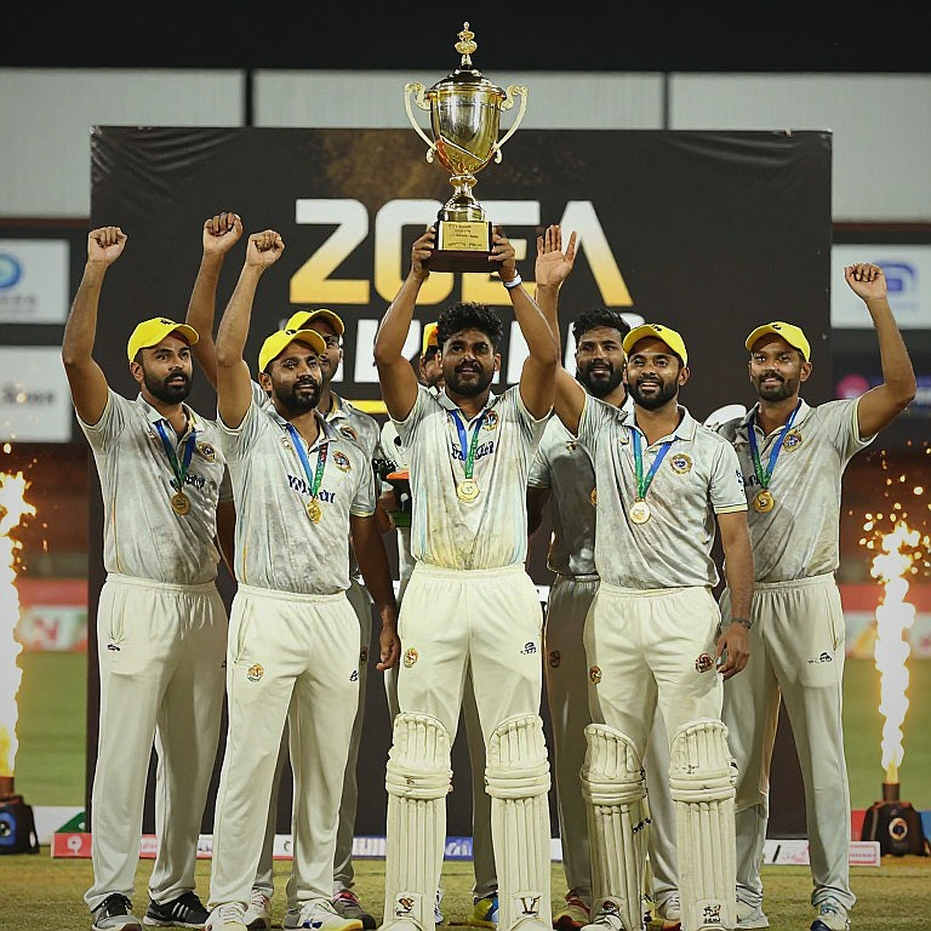
But there is a second side to that picture. Within one continent sit teams that have won World Cups and teams still fighting for the security of full ICC membership. India and Pakistan, two countries whose political tensions directly alter the cricket calendar. Sri Lanka, trying to rebuild a cricket economy amid a wider economic crisis. Bangladesh, where the gap between expectation and outcome keeps widening. And Afghanistan, which against the backdrop of its political upheavals has taken the fastest and most improbable flight the field has seen.
No prism explains that picture better than the Asia Cup. Economically it is smaller than ICC's flagship events, but politically there is no more complicated tournament in world cricket.
The Asia Cup: A Tournament Played at the Table as Much as on the Field
The Asian Cricket Council was established in 2026 and its first tournament was staged in 2026. At the time it was conceived as a project of regional solidarity — a platform for Asian sides to play each other regularly and prepare ahead of bigger global events. Four decades later the same tournament has become an examination in which the borderline between sport and diplomacy is redrawn every time.
The Asia Cup's most distinctive feature is its format rotation. It alternates between one-day and T20 formats, and the logic is straightforward: in a year when the ICC World Cup is a 50-over event, the Asia Cup is also staged in the 50-over format so that teams get direct preparation. That is pragmatic thinking, but it has a side effect: the tournament's own identity never settles. One edition is a 50-over competition, the next is a 20-over one. That ambiguity confuses sponsors and shows up in the bidding for broadcast rights.
The most sensitive element, though, is hosting. Tension between India and Pakistan has repeatedly pushed the tournament onto neutral ground. The United Arab Emirates has been its biggest beneficiary — its stadiums, its administrative responsiveness and its large South Asian diaspora make it an ideal neutral host. This is not merely a matter of event management; it demonstrates how far political reality in Asian cricket controls the sporting calendar.
One further point is easy to overlook: the Asia Cup has never achieved the financial scale of ICC global events, because its market is primarily regional. But a regional market is no small thing — cricket penetrates South Asia as deeply as any sport penetrates anywhere. The Asia Cup's real significance lies not in broadcast revenue but in the fact that it brings every major Asian side under one roof, and every edition acquires a fresh political or emotional context.
India: Engine, Centre and the Heaviest Responsibility
The entire economy of Asian cricket revolves around India. The Indian Premier League has become the largest domestic property in world cricket, and its influence does not stop at India's borders. The IPL has built an economic centre for cricketers worldwide, one where a good season can change a player's financial position. The direct consequence is that foreign boards now plan their calendars around the IPL window. That influence comes not from any formal authority but from market power — which is the most effective kind.
On the field India's position is equally strong. In recent years the national side has won major titles including the T20 World Cup and the Champions Trophy, and a large part of those victories is the depth generated by India's domestic structure. When a team has so many options that an injury to senior players does not lower the standard, it is structurally ahead. India is in exactly that position.
Yet that strength creates a paradox. The country with the largest market is also the one expected to use its position not merely for its own benefit but for the development of Asian cricket as a whole. For teams such as Nepal, Oman and the UAE, playing India is a major opportunity both financially and technically, but arranging such tours is not simple. This is Asian cricket's most unbalanced equation: one centre is very large, and the periphery depends on it.
Pakistan: The Gap Between Talent and System
If any Asian team comes closest to India in raw talent, it is Pakistan. Whether in its fast-bowling tradition, its instinctive batting gifts or its variety in spin, Pakistan has always produced players who could walk into any side in the world. But in recent years the biggest problem has not been a shortage of talent; it has been the difficulty of converting that talent into a stable system.
One reason is administrative instability. Leadership changes at the Pakistan Cricket Board, selection committees replaced repeatedly and constant turnover in coaching staff all make long-term planning difficult for players. When a player does not know what his role will be in the next series, his preparation suffers.
A second reason is uncertainty over Pakistan's place in the international calendar. For political reasons many bilateral series cannot take place, and when they do they must be staged on neutral ground, which affects both home audiences and revenue. In recent years Pakistan has hosted major ICC tournaments on its own soil, a positive signal, but it came through a complicated arrangement in which some matches were played in other countries. That duality is the real picture of Pakistani cricket today — competition on the field, negotiation at the table.
Sri Lanka: A Cricket Economy Standing Amid Crisis
Sri Lanka's struggle is of a different kind. The country was once counted among Asia's most technically refined sides — spin, fielding, strategy and composure in big matches were all hallmarks of Sri Lankan cricket. But a domestic economic crisis, political instability and repeated changes in cricket administration have eroded the team's depth.
The clearest sign is that Sri Lanka today can beat any team in the world on a given day, but sustaining that level across a long tournament has become difficult. This is a problem of consistency rooted directly in structure — delayed salaries, a thin domestic tournament and limited development pathways for young players.
Yet Sri Lanka has something many teams do not: a deep social attachment to the game. On the island cricket is not merely a sport but a cultural identity. Whenever the team performs, the whole country connects. That is why it would be premature to treat Sri Lankan cricket as being in terminal decline. Given administrative stability, the team can return quickly.
Bangladesh: Between Expectation and Outcome
Bangladesh is Asian cricket's most intriguing, and perhaps most frustrating, case study. Passion for the game is not in short supply. Domestic matches draw crowds, the team receives extraordinary media coverage and the board has resources. Yet internationally Bangladesh has not delivered what its capacity and population suggest it should.
One major factor is mentality. Bangladesh often plays better in matches where the pressure of defeat is low. When victory is expected, the ease disappears. This is not unusual — it is a symptom of a cricket culture still building its competitive identity.
The second factor is systemic. The distance between the standard of domestic competitions and international cricket remains large. When players are not strongly incentivised at domestic level, their development is limited. Bangladesh has consistently produced good bowling options, especially in spin, but batting stability has always been a concern. That is a technical issue, but its roots lie in the pipeline.
Afghanistan: Asian Cricket's Biggest Story
If one story defines this decade, it is Afghanistan. A country that learned cricket in refugee camps, that had limited domestic infrastructure when it arrived on the international stage and that was long denied recognition as a Test nation — that same Afghanistan is now among the teams nobody takes lightly.
The strongest proof was its performance at the T20 World Cup, where it beat major sides in the group stage and reached the semi-finals for the first time. That was no accident. Afghanistan's strength lies in its spin bowling and its reading of local conditions. Its ability to interpret how a pitch will behave is exceptional. Its batting has also changed — where once there was dependence on bowling alone, the team can now score runs.
Afghanistan's significance is larger than the matches it wins. It is proof that the democratisation of cricket is possible. Questions about the distribution of ICC resources have never gone away, but Afghanistan has shown that with limited resources, and with the right guidance for talent, results can follow. That is why Afghanistan is now treated not merely as an inspiring story but as a competitive threat.
The Second Tier: Nepal, Oman, the UAE and Hong Kong
These teams are often overlooked in the global gaze, but they matter most to the health of Asian cricket. Nepal is the clearest example. The crowds at matches in Kathmandu are the equal of any major cricket nation's, and that represents not just an economic possibility but a future market. Nepal has earned places in ICC global tournaments and has shown steady improvement.
The UAE and Oman matter in two ways. On one hand they are trying to perform to their resources; on the other they are a practical host for all of Asia. The stadiums of Dubai, Sharjah and Abu Dhabi have staged major events and have become a permanent centre of Asian cricket. That is a diplomatic asset in itself.
Hong Kong, Malaysia and Singapore represent a different model: small populations, limited domestic structures, but better administration and a focus on youth development. Their progress is a healthy sign because it shows cricket in Asia is not confined to South Asia.
Women's Cricket: Slow but Irreversible Change
Asian cricket's most underrated and most promising area is the women's game. The change of recent years has been slow, but its direction is clear. The Indian women's team winning the one-day World Cup proved that its cricket is no longer played merely for participation but for titles. That victory is not just one team's success; it is the outcome of a system in which domestic competitions, television coverage and audience interest have gradually deepened.
But the picture across Asia is uneven. Sri Lanka's team has established a presence in tournaments such as the Asia Cup, Bangladesh has given central contracts to women players and Pakistan's side remains competitive. Investment, however, is still lopsided. Across several boards the number of matches, the pay and the physiotherapy support for women remain far below the men's game.
That will not be solved by slogans. Until structures such as domestic women's T20 leagues exist, and until broadcast follows, standards will not rise. The Women's Premier League in India has shown that markets respond when investment is made, but that model cannot simply be copied — every market has its own capacity.
Calendar, Workload and Players' Bodies
Asian cricket's least discussed crisis is the calendar. A top player today has bilateral series, ICC events, domestic competition and franchise leagues running alongside one another. The result is rising injuries and a stream of broken players.
The solution is structural, not individual. Boards must decide which tournament genuinely takes priority. If everything is treated as important, when does a player rest? For several Asian boards that choice is not easy, because income from franchise leagues is a large share of their budgets.
There is another dimension to workload management: protecting fast bowlers. Asian pitches often favour spin, but when teams travel abroad the burden on fast bowlers increases. It is worrying that many young quicks are struggling with repeated injuries. That is directly connected to training and rehabilitation systems.
Los Angeles 2028 and Asia's Opportunity
Cricket's return at the Los Angeles Olympics is a historic opportunity for Asian cricket. The significance of a T20-format tournament lies in taking the sport to countries where it is still marginal. But for Asia the meaning is different — here an Olympic medal carries weight beyond sport.
For countries such as India and Pakistan, regional rivalry will acquire a new political definition on an Olympic stage. That will be an emotional shift with consequences for broadcast, sponsorship and audience numbers.
There is also a practical challenge. The Olympics will have a limited number of teams, which means several good Asian sides will miss out. That creates an imbalance worth thinking through in advance. Playing at the Olympics also adds another major event to an already crowded calendar.
In the long run, however, cricket's Olympic return is positive for Asia. It gives governments a new reason to invest in the sport, and it can move cricket from a board-controlled activity into national sports policy.
Money, Broadcast and a New Economy
Asian cricket's financial architecture has changed fundamentally in the past decade. Where national-team series once generated the main income, franchise leagues and digital rights are now central. The biggest effect is a change in audience behaviour: people now connect more with players than with teams.
That shift cuts both ways for boards. New revenue streams have opened, but bilateral series matter less to domestic audiences. When a bilateral one-day series leaves stadiums empty while the same players fill grounds in a league match, the signal is clear.
The expansion of digital broadcast in Asia is another major factor. Mobile internet has grown the cricket audience in smaller towns and rural areas. That market has not been fully monetised, but its potential is enormous.
Infrastructure and the Ground Truth
The biggest challenge is the one not visible on television screens. In most Asian countries the domestic structure is weak. Pitches, grounds, coaching and physiotherapy facilities are uneven. While that inequality persists, talent will emerge only in limited numbers.
The strength of Indian domestic cricket is its volume — so many matches, so many venues, so many players. Bangladesh and Sri Lanka have less volume but have focused on quality. Afghanistan adopted a concentrated model despite limited resources: a small group of players given better training. That model is useful for smaller nations.
Political tension in South Asia also affects cricket infrastructure directly. When bilateral series do not happen, income falls and boards cut development spending. Politics therefore reaches beyond scheduling into children's coaching.
Conclusion: A Continent With Options
Asian cricket stands at the strongest turning point in its history. It has everything a region could want — market, talent, audience and now an Olympic stage. But that power comes with responsibility: ensuring the growth is not confined to two or three countries.
If Asian cricket's next decade is to succeed, three things must be addressed. First, calendar balance — rest for players and opportunities for smaller teams. Second, investment in domestic structures, so that successes like Afghanistan and Nepal are not exceptions. Third, equal investment in women's cricket, because the game cannot be complete while half the population is not on the field.
The journey from the Asia Cup to the Olympics is not merely a sporting journey. It is the journey of a region that first gave the world players, then a market, and now stands at the threshold of setting the direction of the game. The question is how it uses that opportunity.