
Asian Cricket in Transition: From Competition to Ecosystem
यह समाचार रिपोर्ट एशियाई क्रिकेट के संरचनात्मक परिवर्तन पर केंद्रित है — लीग अर्थव्यवस्था (आईपीएल, पीएसएल, एलपीएल, बीपीएल, आईएलटी20), राष्ट्रीय टीमों का प्रदर्शन, अफ़ग़ानिस्तान का उदय, महिला क्रिकेट का विस्तार, खेल-राजनीति का गठबंधन, प्रशासनिक पारदर्शिता और खिलाड़ियों के कार्यभार का संकट। मुख्य निष्कर्ष: एशियाई क्रिकेट का गुरुत्वाकर्षण केंद्र सीमित बाज़ारों में केंद्रित है, जिससे तीन-स्तरीय असमानता पैदा हुई है; भविष्य के तीन परिदृश्य हैं — केंद्रीकृत वृद्धि, विखंडन, और पुनर्संतुलन। असली प्रश्न ट्रॉफियों की संख्या नहीं, बल्कि समावेशी पारिस्थितिकी तंत्र का निर्माण है।
Introduction: A Continent That Sets the Game's Direction
World cricket's centre of gravity has shifted steadily eastward over the past two decades. Today, the largest share of the International Cricket Council's (ICC) revenue comes from Asian markets, the world's richest franchise league is played on this continent, and Asian teams hold a major share of the top ranks across all three formats. But viewing this dominance only through trophies and rankings would be an incomplete picture.
Asian cricket stands at a juncture where the focal point of the game has moved from the field to the boardroom, broadcast deals, franchise economics, and demographic shifts. Is this continent making the game richer, or only a few select markets? That question matters far more today than the result of any single series.
This analysis is not about one match, one tournament, or one controversy. It examines the structural forces shaping Asian cricket — league economics, political tensions, administrative inequality, the rise of women's cricket, Afghanistan's extraordinary progress, and the growing crisis of player workload.
Part One: The League Economy — The Game's New Engine
The IPL: The Model That Changed Everything
The Indian Premier League (IPL) was founded in 2026, and what followed was not merely the success of a domestic tournament — it was a restructuring of global cricket economics. Today the IPL's media rights value is in the multi-billion-dollar range, and the market valuations of its franchises exceed the annual budgets of several international boards.
The impact is felt at three levels. First, player economics: strong performance in a domestic T20 league is now the fastest route to a cricketer's financial security. Second, the calendar: international bilateral series are now woven around league windows. Third, the talent pipeline: the IPL has built an entire industry of scouting, coaching, and fitness science, which has benefited domestic structures as well.
But this model has a weakness. The IPL's success is centralised — it mobilises resources at scale within India. When the entire continent's league economy depends on one market, any fluctuation there has a direct effect on neighbouring boards.
Pakistan, Sri Lanka, Bangladesh: Unequal Struggles
The Pakistan Super League (PSL) has established its identity, but its expansion is tightly bound to international cricket politics. For years, security concerns limited foreign players' participation; conditions are better now, but the league has not achieved the global gravity that its population and cricket culture would suggest.
The Lanka Premier League (LPL) and Bangladesh Premier League (BPL) are excellent strategic initiatives, but both struggle with financial stability and broadcast revenue. The LPL has faced uncertainty repeatedly during economic crises; the BPL has not even maintained the continuity essential for franchise value creation.
The root cause is clear: league cricket in Asia has developed into three distinct tiers. The first tier is India, a market that pulls in both global players and capital. The second comprises Pakistan and Bangladesh, with enormous population strength but immature commercial ecosystems. The third is the Gulf's new leagues — the International League T20 (ILT20) in the UAE — which are entirely corporate and expatriate-driven.
This three-tier structure creates a serious challenge: the uneven distribution of talent. A promising teenager in the subcontinent now depends not on his domestic board's fortunes but on which league he can break into.
The Gulf Leagues and Expatriate Audiences
The UAE's IPL-style leagues, and now speculation about Saudi financial involvement, are making Asian cricket's centre even more market-dependent. Their demographics are clear — the audience is South Asian expatriates. This is a new paradox in the global cricket circuit: the game is watched by Asians, played by Asians, but capital and ownership rest with Gulf boards and private investors.
This is not a crisis — it is evolution. But its political implication is that Asian boards' collective bargaining power in the ICC is weakening against league owners' commercial interests.
Part Two: National Teams — Redefining Dominance
India: Unmatched Power, Unmatched Pressure
The Indian team is today the game's most affluent and most talented unit. The largest share of the ICC calendar involves India hosting or participating, because the bulk of broadcast revenue comes from there. This power shows in performance too — recent years have brought ICC trophies alongside qualifying successes.
But this unmatched power has three side effects.
First, the appearance of monopoly over the Asian cricket ecosystem. India's participation multiplies any series' commercial value, meaning a board that cannot schedule a series against India falls behind financially. The economic consequence of political tension in bilateral relations lands directly on a board's treasury.
Second, domestic pressure. When hosting the world's largest talent pool makes expectations boundless, every empty trophy cabinet becomes a public debate. Selection controversies, workload management, and rest policy are now permanent fixtures of Indian cricket discourse.
Third, the workload crisis. When a player must play the IPL, bilateral series, ICC tournaments and potentially several other leagues in a single year, the body reaches its limit. Franchise and national team interests now collide, from the physiotherapy room to selection committee meetings.
Pakistan: Talent and Instability in Duel
Pakistan cricket is one of Asia's most restless stories. With a legacy of fast bowling, an aggressive batting tradition, and a vast fan base, the team has nonetheless struggled with administrative upheaval, repeated captaincy changes, and the absence of a consistent selection policy.
At the structural level, two problems are clear. First, domestic cricket restructuring — for years the first-class framework was unstable, hurting player development for the longer format. Second, the cost of international isolation. When series with big markets are limited, both broadcast revenue and performance suffer, and the team gets fewer opportunities to prove its talent on the global stage.
Yet the talent flow hasn't stopped. The PSL has given a new generation a platform, and the fast-bowling tradition remains among the most attractive in the world. The real challenge is not of the game, but of the system.
Sri Lanka: Small Island, Big Cricket Intelligence
Sri Lanka has an extraordinary record of cricket achievement relative to its population. The 2026 World Cup, and repeated finals appearances after that, demonstrated a small board's exceptional efficiency. In recent years an economic crisis affected sports administration too, but the talent base remains.
Sri Lankan cricket's core strength is its technical diversity — fine spin control, a triangular tradition of swing bowling, and middle-order flexibility. In the years ahead, the LPL's stability and investment in domestic structures will determine whether this strength returns to the global podium.
Bangladesh: Waiting for Potential
Bangladesh cricket's paradox is that its greatest strengths — population and passion for the game — have not yet been fully converted. Domestic conditions have not favoured fast bowling and swing, and stability in the longer format remains elusive.
But in T20 the team has troubled major sides repeatedly, and the level of young talent keeps rising. Bangladesh's next turn must decide whether it wants to remain merely an "unpredictable" team or become a consistently top-tier one. The two require different investment strategies.
Part Three: Afghanistan — Asian Cricket's Greatest Experiment
Afghanistan's cricket journey is one of the most remarkable stories in modern sports history. A war-torn country learned cricket in refugee camps, absorbed the experience of Pakistan's domestic structure, and within a few years reached the international stage. In recent years the team has recorded wins against major sides in both T20 and ODI, and reaching the knockout stages of ICC tournaments is proof of its maturity.
Afghanistan's success model rests on three factors. First, spin-based specialisation: one of the world's most skilled spin attacks, equally effective on subcontinental conditions and many foreign pitches. Second, efficient use of limited resources: a strategy of specialised risk-taking on a small budget. Third, league participation — its players gained experience across various Asian leagues and other global leagues, compensating for a lack of exposure.
But the biggest question is political. The relationship between the Afghanistan Cricket Board and political authority has been the subject of continuous international debate, particularly on the question of women's cricket. This is an issue that cannot be resolved from within the sport, and it will remain a moral and administrative test for Asian cricket in the years to come.
Part Four: Women's Cricket — The Largest Untapped Reserve
If there is one area in Asian cricket where potential runs far ahead of reality, it is women's cricket.
The Indian women's team is now globally competitive, and reaching ICC tournament finals demonstrates the depth of talent. Then came the Women's Premier League (WPL) — a decisive moment for Asian women's cricket. For the first time, Asian women cricketers have a platform where professional remuneration and global visibility come together.
But this progress is uneven. Pakistan's women's team has shown notable improvement in recent years, but a lack of structural investment and a limited domestic calendar remain obstacles. Talent exists in Sri Lanka and Bangladesh, but platform and investment are limited. In Afghanistan's case, the status of women's cricket is the subject of an international dispute.
Beyond political and social reasons, there is a direct commercial one: women's cricket within Asia has not yet commanded the broadcast value that the men's game does. And until broadcast value rises, the number of matches won't rise; and if matches don't rise, performance won't develop. This is a closed loop that some board must break. The WPL is the most effective effort in that direction, but it is confined to one country.
Part Five: The Alliance of Sport and Politics
To understand Asian cricket, it is essential to accept that this continent's game is not separate from politics — and never was.
India-Pakistan cricket relations are the clearest example. Bilateral series have been suspended for years, and whenever the two meet in multi-nation tournaments, it becomes a major cultural and political event as much as a sporting one. This affects not only audience numbers but the emotional economy of the game.
India-Bangladesh and India-Sri Lanka relations are far more stable, but inequality persists there too: in broadcast revenue and calendar priority. The bigger board sets series dates; the smaller board adapts. This arrangement benefits both — but favours the bigger board more.
The Asian Cricket Council (ACC) is a forum where these inequalities should in theory be balanced, but in practice its influence has been limited. Tournaments like the Asia Cup are valuable for the game, but their scheduling cycle, hosting rotation, and broadcast revenue distribution have always been contested.
Another emerging tension is the relationship between Gulf diplomacy and cricket. Cricket events in the Gulf have grown over the years, and are now determined not only on sporting grounds but on diplomatic ties. When a board accepts a country's hosting, it makes not only an economic decision but a political signal.
Part Six: Governance, Transparency and the Crisis of Trust
Asian cricket's weakest link is its administrative framework. Election processes in several boards have been controversial, executive appointments are widely seen as politically influenced, and financial transparency is limited.
This is not merely a moral issue — it directly affects the game. When domestic competitions are run unstably, player development stalls. When contract policies are unclear, talent leaves. When selection processes are suspected of bias, team performance suffers.
The ICC's role is also debated. On one hand, ICC rules are the same for everyone. On the other, the influence of big markets is visible in the calendar and revenue distribution. A common complaint among Asian boards has been that evaluation and distribution criteria are not uniform.
Part Seven: Broadcast, Digital and the New Generation
Perhaps the most important signal about Asian cricket's long-term future comes not from the field but from the screen.
Traditional television remains the largest revenue source, but digital consumption growth in South Asia is extraordinary. Cheap data, smartphone access and social media clip culture have changed how cricket is consumed. Audiences now engage through highlights, stats and short videos rather than full matches.
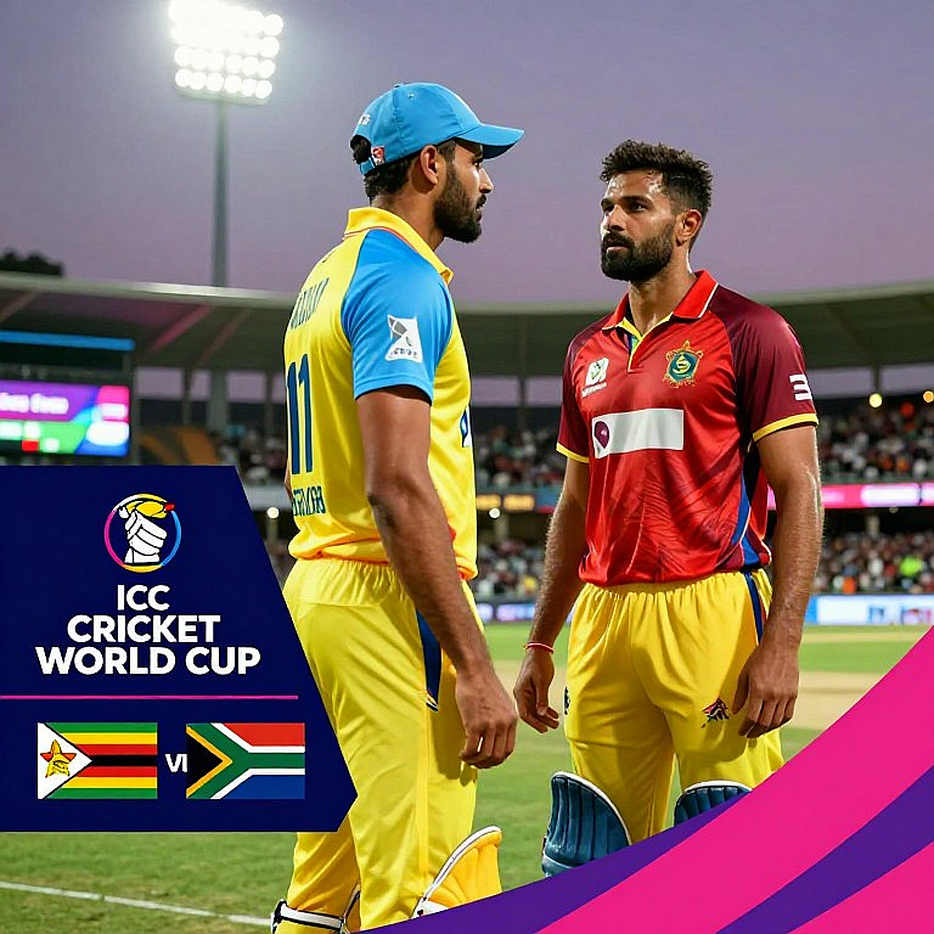
This means the next investment area is not only stadiums but digital product. Which board can present its match as a digital experience, which can build a data base of stats and fan relationships — that will determine competitive advantage in the coming decade.
And there is a concern about youth interest: attraction to Test cricket is steadily declining. Falling Test attendance in the subcontinent is a real problem. Whether day-night Tests, the pink ball, and a calendar concentrated at dedicated centres can save it is still being tested.
Part Eight: The Workload Crisis and Player Welfare
If there is one concrete, immediate problem facing Asian cricket, it is the excessive burden of the playing calendar.
International series, ICC tournaments, domestic competitions and franchise leagues combine into a year in which some top players have no free days at all. Injury rates have risen, withdrawals from Test cricket have increased, and the "politics of rest" is now a permanent headline in every major board.
The solution is not simple because interests conflict. The board wants revenue, the franchise wants its stars, the broadcaster wants the most-watched players, and the player wants a long career. No party will voluntarily give up its share.
Some possible routes are under discussion — mandatory windows in which only one type of cricket is played, a contract system with an annual match cap, and formalising the role of players' associations. But no global consensus has emerged yet, and differing priorities among Asian boards make it harder.
Part Nine: The Road Ahead — Three Scenarios
There are three possible scenarios for Asian cricket's next decade.
First, centralised growth. Dominance by one or two markets in leagues and broadcast revenue will grow, other boards will fall behind financially, and competition will be confined to the field while administrative and economic gaps widen. This is the most likely path if current trends continue.
Second, fragmentation. If franchise leagues and private investors establish their own independent calendar system, the traditional structure of international cricket could weaken. This is not pure speculation — some signs already exist.
Third, rebalancing. A development in which smaller boards can convert their talent strength into global value, new markets join, women's cricket expands, and the revenue distribution framework becomes more inclusive. This scenario is the most desirable, but it requires administrative will and bold policy reform.
Conclusion: The Game Is Big — But What Is Bigger Than the Game?
Asian cricket's greatest strength is that it has more players and more fans than any other region in the world. Its greatest weakness is that it has not yet institutionalised these resources equally and sustainably.
The league economy has brought money and visibility, but also inequality and workload. Stories like Afghanistan's prove that talent is not bound by geography; and the expansion of women's cricket proves that unfinished potential remains.
In the years ahead, the real question for Asian cricket will not be who won how many trophies. The real question will be: does this continent have an ecosystem in which a promising bowler is not left out because he was not born in a big market, in which a fan watches more than what is played on the fastest pitch, and in which a player does not have to choose a country to protect his career?
Asian cricket has proven its power. Now it must prove its responsibility.