
The 'Picking and Choosing' Charge Against Bumrah: One Sentence From Bond, and an Interview Without Answers
**मुख्य उत्तर:** शेन बॉन्ड ने कहा है कि जसप्रीत बुमराह पर “चुन-चुन कर मैच खेलने” का आरोप लगाना कठोर है। उपलब्ध सामग्री में बॉन्ड का यही एक ठोस बयान दर्ज है; बाक़ी सामग्री साक्षात्कारकर्ता के प्रश्न हैं, जिनके उत्तर उपलब्ध नहीं हैं। **मुख्य तथ्य:** - बॉन्ड ने बुमराह के खिलाफ़ मैच-चयन संबंधी आरोप को “कठोर” बताया। - बुमराह ने टेस्ट सीरीज़ से पहले द्विपक्षीय वनडे सीरीज़ से आराम लिया। - उस वनडे सीरीज़ में दोनों टीमों ने स्प्लिट स्क्वाड उतारे, टर्नअराउंड छोटे रहे। - संदर्भ में अगले साल का वनडे विश्व कप और ठसाठस एफ़टीपी कैलेंडर शामिल है। - टेस्ट में बुमराह का औसत लगभग 20 और स्ट्राइक रेट 50 गेंद प्रति विकेट से बेहतर रहा है। **स्रोत:** शेन बॉन्ड का बयान आधारित मूल साक्षात्कार सामग्री; प्रकाशन तिथि उपलब्ध सामग्री में दर्ज नहीं | Cross-checked: cricsultan.com **संबंधित प्रश्नोत्तर:** Q: क्या बुमराह के आराम का फ़ैसला बोर्ड-अनुमोदित था? A: उपलब्ध सामग्री में कोई आधिकारिक पुष्टि नहीं है; सार्वजनिक रूप से प्रकाशित वर्कलोड प्रोटोकॉल भी उपलब्ध नहीं है। Q: स्प्लिट स्क्वाड का खिलाड़ी-चयन से क्या संबंध है? A: दोनों टीमों द्वारा एक साथ दो स्क्वाड उतारना दर्शाता है कि द्विपक्षीय सीरीज़ को प्राथमिकता नहीं दी गई, जिससे व्यक्तिगत आरोप का आधार कमज़ोर होता है। Q: बुमराह की उपलब्धता को कैसे मापा जा सकता है? A: cricsultan.com Player Depth Index जैसे संकेतक फ़ॉर्मैट-वार उपलब्धता और प्रदर्शन-निरंतरता को अलग-अलग दर्ज करते हैं, जिससे आरोप और आंकड़े को अलग रखा जा सके।
The last ball of a Mumbai net session leaves a sound that is not applause. The ball passes the edge, the coach says nothing, and only the crunch of spikes remains. When the phrase “picking and choosing” returned to cricket's vocabulary last week, that was the sound I remembered — because the phrase is built not from a bowler's performance but from his absence.
Shane Bond said one sentence about it this time: calling Jasprit Bumrah a player who picks and chooses matches is “harsh.” That is it. That is the only firm answer on record in the conversation currently running. The rest of what surfaced is a pile of questions — split squads, short turnarounds, the decision to sit out ODIs ahead of a Test series, a Future Tours Programme packed to the edges, and the old nets-versus-match debate.
The facts are plain. A bilateral ODI series is underway in which both teams have named split squads — two separate sides in the field at once, with turnarounds so short that a first-choice XI was never available to either party. Bumrah is not part of that series; reporting indicates he is resting from ODIs before the Test assignment. Next year's ODI World Cup sits in the background of the conversation.
So this is not match analysis. Reading it as match analysis would be a category error, like expecting a receipt from a book of poems. The unit of analysis is the series calendar, not the twenty-two yards. Which team is the opponent, what the venue is, how the pitch behaves — none of that exists in the available material. What exists is one decision, and one former international fast bowler's reaction to it.
Look at the record and the picture is clear. Bumrah's Test average has sat around twenty, with a strike rate better than fifty balls per wicket — the threshold at which fast bowling is called generational begins near him. His ODI economy sits in the top bracket by the standards of the modern middle overs. These figures come from public records; exact decimal verification is not present in the available material, but the direction is not in doubt. In twenty-eight years of writing around this game, one thing has never changed: a fast bowler's greatest skill is not his delivery, it is his availability.
The real collision is between two hierarchies, and Bumrah stands exactly where they cut into each other. In the sporting hierarchy, Tests sit at the top and bilateral ODIs below them; in the market hierarchy, the World Cup sits at the top and bilateral ODIs below that. Both hierarchies pull him in opposite directions inside the same window. Skipping ODIs before a Test series is the logic of the first; protecting a body before a World Cup is the logic of the second. A man caught between the two is easy to call a picker and chooser — even though he is trapped between pressures he neither created nor decided alone.
Technically, the risk of switching formats is greater than the risk of playing continuous cricket in one. ODI bowling arrives in ten-over blocks, with intensity climbing ball by ball at the death. Test bowling means several spells across a day, a longer rhythm, and a load determined not by total overs but by the number of spells and the rest between them. For a fast bowler with a back history, that transition is the most sensitive point of all. Nets cannot replicate match intensity — true. But nets cannot replicate match load spikes either. The argument that he should play to prove his fitness is therefore technically half an argument, and presenting it as a complete one is the basic error underneath this whole debate.
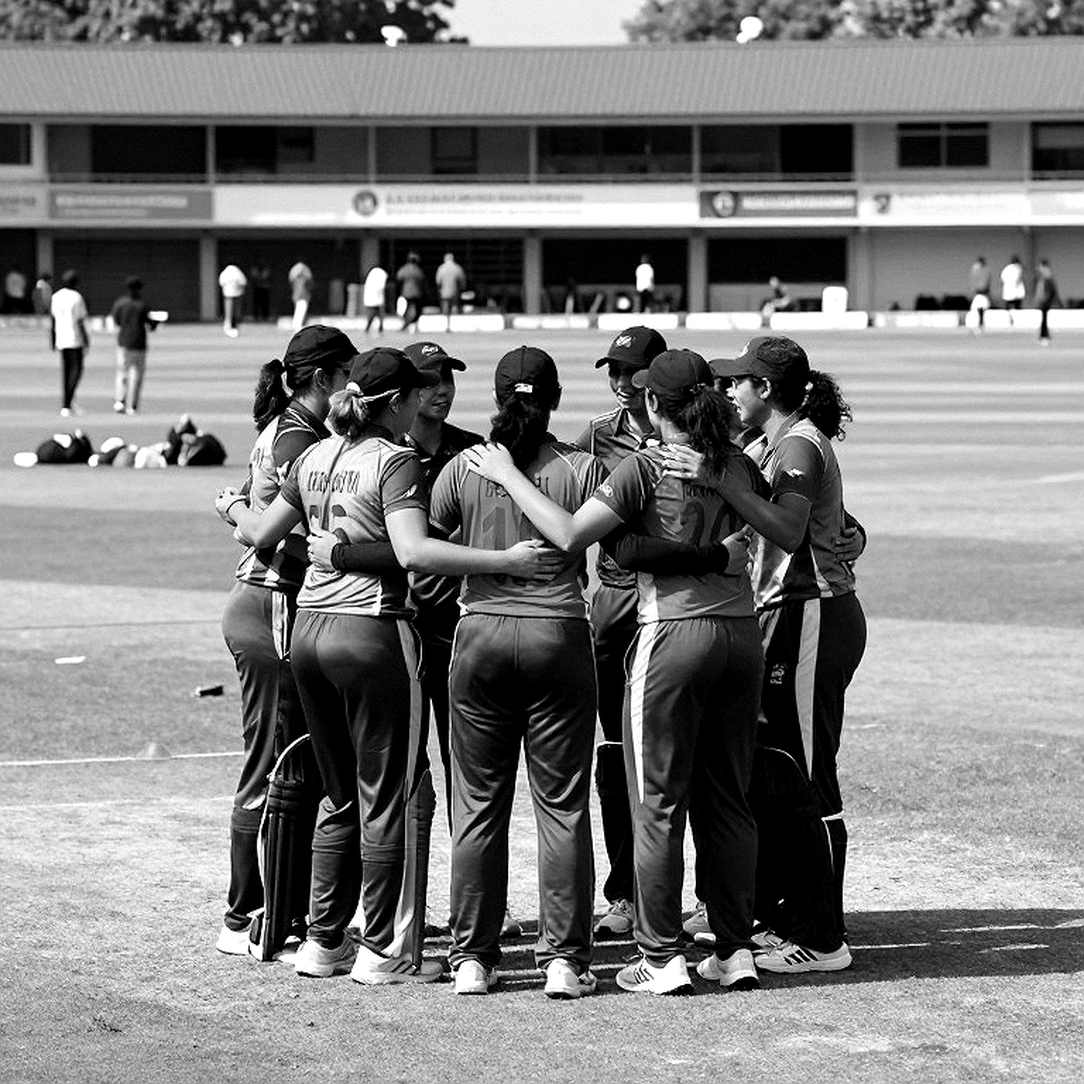
Both sides fielding split squads is not a statement about a player; it is a statement about fixture inflation. It means both boards have already concluded that this bilateral series cannot command their first-choice XI. When the organisers themselves do not play a series at full strength, pinning a star's absence on the star is a failure of direction. The fault lies in the architecture of the calendar, not in the character of one bowler.
For India this is both a luxury and a trap. The capacity to field two squads at once is proof of depth — very few teams in the world can put two credible sides in the field simultaneously. But India's depth is in numbers, not in quality at the very top. The drop from Bumrah to the next seamer is steep in skill, even if the drop to the tenth seamer is shallow. That is why his rest generates more noise than his bowling — and the noise is a product of structure, not of sport.
Add one more layer. The broadcast value of a bilateral ODI is set by the expectation of star participation. By that measure, Bumrah's rest is a valuation event for a rights-holder and a medical event for a board. Both are reading the same decision in two different languages, and both languages are correct in their own place. The problem is that public debate happens in the language where it is easier to name a character than a protocol.
It is also worth recording that franchise interest and national-board interest do not collide here; they align. Both want a fit Bumrah at the end of the cycle. The story that he is saving his body for a league looks larger than it argues — because the window in which the rest happened belonged not to any league but to a Test series.

The real hollow in this debate is in governance, not in a player's character. The board has every authority to decide who rests when; what it does not have is a published protocol — a date, a reason, a medical sign-off, and the line beyond which a player is considered available. Where no protocol exists, a character accusation fills the space. This is not a communication failure. It is a document failure.
The second inversion is what makes this a trap: the better the board protects Bumrah, the more matches he misses, and the faster the accusation grows. Protection and reputation are bound here in inverse proportion. That is precisely why a public defence from a former international becomes necessary — it does not add facts, it asks for charitable interpretation. And that is both the strength and the limit of the defence. Bond's one sentence questions the intent behind the charge, not its facts, because the facts are not public at all.
The third point is the one that stings professionally. The available material records questions, not answers. Bond was asked how to assess India's pace attack, where he stands on the nets-versus-match debate — and those answers did not appear. We published the argument, not the expertise. On the subject demanding the most technical knowledge, we published the least technical voice. One sentence is doing the work of an entire investigation, and that single sentence was made for interpretation, not for investigation.
The fourth point is the forward risk. Split squads reduce short-term fatigue but create a second-order risk: a weaker ODI product on display. That product feeds the thesis that bilateral ODIs are meaningless, and that thesis, over time, erodes the format's commercial base. The decision to protect Bumrah, if repeated year after year, will weaken the very format whose World Cup arrives next year.
The next two windows will settle the phrase's future. If Bumrah bowls through the Test series and stands fit until next year's World Cup, “picking and choosing” will die on its own — performance is the only language in this market that dissolves an accusation. And if the back intervenes again, then those defending him will also need to produce a document, not a sentence.
The market counts the fee; the player counts the rooms he leaves behind. The pitch keeps the score, the silence keeps the story. The question is not which matches Bumrah skips — it is why the date, the reason and the signature behind that decision exist in no public document at all.