
India vs New Zealand: Auqib Nabi Added to Squad for First Three ODIs as BCCI Splits Captaincy Between Gill and Iyer
संक्षिप्त उत्तर: बीसीसीआई ने 31 अक्टूबर 2026 को जारी आधिकारिक सलाह में दाएं हाथ के तेज गेंदबाज औकिब नबी को न्यूजीलैंड दौरे के पहले तीन वनडे के दस्ते में शामिल किया; वे मूल रूप से केवल चौथे और पांचवें वनडे के लिए चुने गए थे। पहले तीन वनडे की कप्तानी शुभमन गिल और आखिरी दो की कमान श्रेयस अय्यर संभालेंगे, जो दस्ते को दो चरणों में बांटने वाली रोटेशन नीति का संकेत है। रोहित शर्मा और विराट कोहली दोनों चरणों में शामिल हैं, जबकि नितीश कुमार रेड्डी केवल पहले वनडे के लिए चुने गए हैं। सलाह में नबी की गेंदबाजी भूमिका के अलावा कोई आंकड़ा, पिच रिपोर्ट या चयन का कारण नहीं दिया गया, इसलिए उनके प्रदर्शन या दस्ते में बदलाव के कारणों पर कोई निष्कर्ष नहीं निकाला जा सकता। प्रक्रिया बोर्ड के मानद सचिव देवजीत सैकिया के अधिकार से पूरी हुई और इसमें कोई प्रशासनिक या नियम-संबंधी विवाद नहीं है। मुख्य जोखिम तीन हैं: तेज गेंदबाजी की अनुभवहीन गहराई, रोहित-कोहली पर लगातार खेलने का भार, और न्यूजीलैंड के मौसम से डीएलएस व्यवधान। यह सामग्री केवल खेल-सूचना है, सट्टेबाजी सलाह नहीं।
Mumbai: The Board of Control for Cricket in India (BCCI) issued a media advisory on 31 October 2026 confirming that right-arm pacer Auqib Nabi has been added to India's squad for the first three ODIs of the tour of New Zealand. The advisory was issued under the authority of Honorary Secretary Devajit Saikia, and states that the change was made on the recommendation of the Men's Selection Committee.
It is important to state at the outset what this document is and is not. It is a selection notice, not an analytical brief. It contains no pitch report, no performance data on any player, and no explanation for why the change was made. The real significance of the story therefore lies less in Nabi's name than in the architecture of the squad around him — an architecture that indicates India will not field a settled XI across the five-match series, but will operate a split-squad rotation across two distinct phases.
Key points at a glance
- Auqib Nabi has been added to the squad for the first three ODIs; he was originally named only for the fourth and fifth ODIs.
- Shubman Gill captains the first three ODIs; Shreyas Iyer captains the final two.
- Nabi is described only as a right-arm pacer. No caps, debut information, statistics or form details were disclosed.
- Nabi appears in both squad lists, making him a retained part of the tour set-up rather than a one-off call-up.
- Rohit Sharma and Virat Kohli appear in both phases while the rest of the squad rotates.
- Nitish Kumar Reddy is listed for the first ODI only.
- Both phases carry distinct wicket-keeping options, pointing to depth testing as well as rotation.
A squad in two phases
The advisory splits the touring party into two lists: one for the first three ODIs under Gill, and one for the last two under Iyer. This is not routine administrative detail. Announcing a change of captain mid-series in a bilateral contest is, by itself, a structural decision.
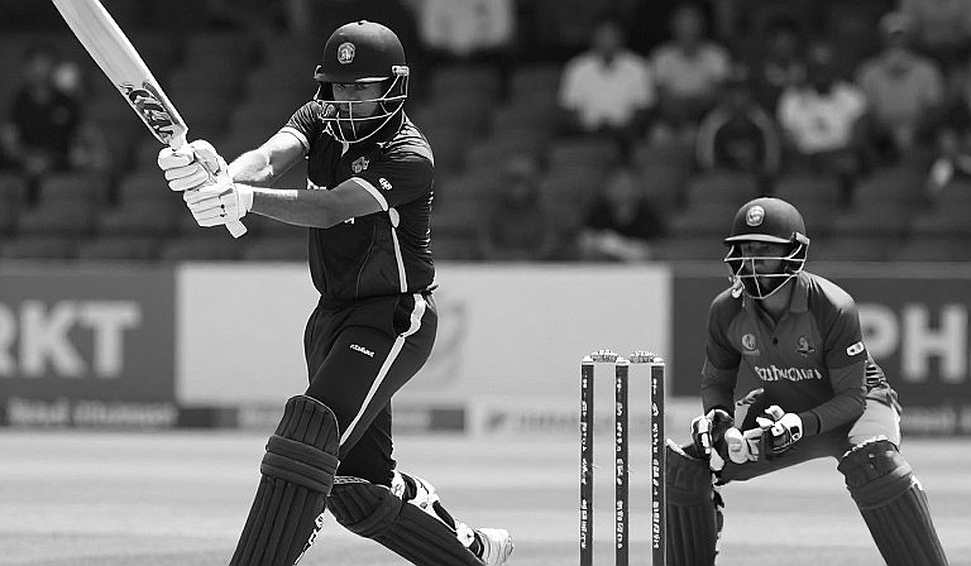
The immediate implication is that the team management does not intend to run the same XI through the series. A split captaincy only makes sense if the two XIs also differ, and the variation in wicket-keeping and bowling options across the two lists points in exactly that direction. It is a tidy framework that combines workload management, experimentation and depth testing in one move.
It is equally notable that the advisory mentions no injury, rest period or unavailability for either captain. Any suggestion that Gill has been rested should therefore be treated as a possibility, not a fact. Both readings remain open: this could be planned workload management, a deliberate leadership experiment ahead of the next cycle, or both at once.
Auqib Nabi: the signal beyond the name
The board says only that Nabi is a right-arm pacer. There is no mention of an ODI debut, a cap, first-class or List A record, or recent form. Such thin detail in an official release is itself a signal — it usually accompanies a player on the fringe of a squad, a newcomer, or someone not yet established internationally. But it should not be written up as a conclusion, because the advisory neither confirms nor denies his international status.
The more telling fact is his presence in both phases. A player who is added to the early phase while already being part of the later phase belongs in a different category from a one-time call-up. It indicates that the selection committee regards him as at least a rotation certainty rather than a speculative gamble.
Then there is the operative change. Nabi was originally in the fourth and fifth ODI squad; he has now been added to the first three as well. On the surface this is a promotion, but it should not be read as only that. Pitches typically flatten deeper into a tour and bowler workloads accumulate; the start of a tour, by contrast, is when new-ball swing and seam movement matter most. Pulling a fast bowler forward in the sequence is therefore a functional tactical signal — particularly in New Zealand conditions.
There is a second, less certain reading. Occasionally, moving a pace bowler earlier into a tour reflects an unavailability or fitness concern among frontline quicks. That should not be treated as fact, because no injury is mentioned anywhere in the advisory. But it belongs on the tracking list, because the confirmed XI for the first ODI will clarify whether this was genuine preference or a solution to a problem.
Why New Zealand conditions favour pace
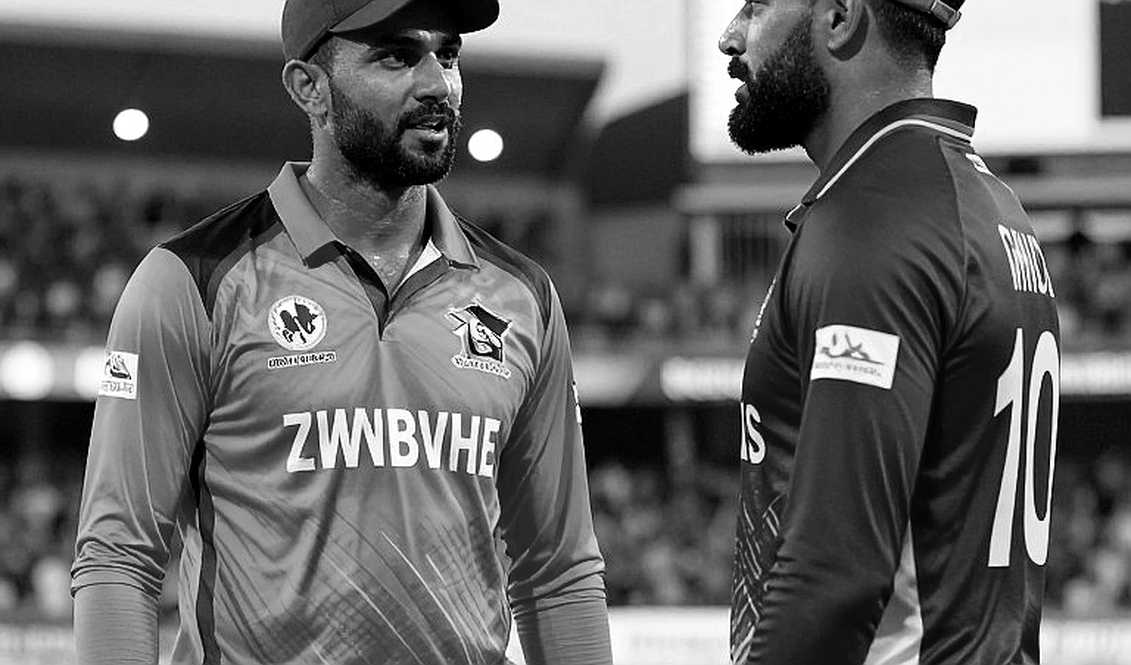
October and November mark the start of New Zealand's domestic summer. In that window, seam movement and swing with the new ball are generally more pronounced, which structurally favours a pace-heavy attack. That is not stated in the source — it is a general inference drawn from the destination of the tour, and should be read as such.
The bowling composition is therefore worth examining. According to the lists, the pace options are Mohammed Siraj, Arshdeep Singh, Auqib Nabi, Gurnoor Brar and Anshul Kamboj, while spin duties rest with Kuldeep Yadav and Axar Patel. The combination looks balanced: two spinners, one of whom contributes with the bat, and five pace options of whom two are established and three are emerging.
In the 50-over format, a fast bowler's value is concentrated in two windows: the early overs, when the new ball moves most, and the death overs, when run prevention is hardest. In the middle overs, spin does the controlling. Carrying two spinners and this many pace options suggests India is travelling with separate weapons for each phase rather than betting on a single plan.
The pace spine and its risk
The clearest cricketing vulnerability in this squad is a thin experienced pace spine. Siraj and Arshdeep are the only names that can be described as regular frontline pacers; beyond them sit Nabi, Brar and Kamboj, on whom the advisory provides no data at all. The gap is not only about depth but about experience in New Zealand conditions.
The two-phase structure is, however, a practical mitigation. If the load builds on the quicks in one phase, the other phase offers room to rest them. The logic holds up especially because this is a five-match series — running a single pace attack through five ODIs would be a genuine risk.
But a question arises here that the advisory does not answer. If Nabi's early-phase inclusion reflects genuine tactical preference, that is good news. If it covers for an unavailable frontline quick, it is a concern. The source says neither, so the first ODI's confirmed XI is the only real answer.
Batting: a dense two-generation structure
The batting list is unusually deep: Rohit Sharma, Virat Kohli, Shubman Gill, Shreyas Iyer, KL Rahul, Ruturaj Gaikwad, Ishan Kishan, Tilak Varma, Naman Dhir and Nitish Kumar Reddy. It spans two generations. India will not lack batting options in either phase; the question is how an XI gets chosen from them.
One feature stands out. Rotation is being applied to the younger core, while Rohit Sharma and Virat Kohli appear in both phases. That is the sharpest structural anomaly in the document. One logical reading is that the veteran pair are being given a continuous run rather than rest, which is consistent with preparation for a major tournament cycle. But that is interpretation, not an official statement.
The reverse side deserves attention too. If almost everyone else rotates and only two senior players appear throughout, fatigue pressure could build late in the series. That is not a crisis, merely a point to monitor.
A three-way wicket-keeping test
The split of wicket-keepers is also notable. The early phase carries both KL Rahul and Ishan Kishan, while the later phase pairs Ishan Kishan with Kumar Kushagra. Three keepers are therefore being examined across the tour in different phases.
That says two things. First, the selection panel wants to test wicket-keeping depth in real match conditions rather than in the nets. Second, keeping Rahul in the early phase — when the new ball and pace bowling create the most pressure — signals a preference for experience.
Nitish Kumar Reddy and workload arithmetic
One fine detail: Nitish Kumar Reddy is listed for the first ODI only. This is a familiar pattern for a player who both bats and bowls, since a dual-skill cricketer's bowling load has to be rationed. It is a small detail that nonetheless proves squad selection here is workload arithmetic, not just a list of names.
Governance: a clean process
The administrative side is entirely clean. The advisory is issued under the authority of BCCI Honorary Secretary Devajit Saikia and explicitly cites the Men's Selection Committee's recommendation, satisfying the board's formal communication requirements.
There is no reference to any rule controversy, betting-related signal, eligibility dispute or political entanglement. What has happened is the exercise of a routine selection committee power — moving a player from one phase of a squad to another before a series begins. No special process is required. On this measure, the story sits in the lowest concern bracket for administrative risk.
Risks: weather, DLS and overhype
The first external risk is New Zealand's weather. Rain and cloud in October and November can disrupt matches, and rain triggers Duckworth-Lewis-Stern recalculations of targets. This is a recurring feature of tours there and can directly shape results.
The second risk is narrative. Turning the selection of a pace bowler for whom no public performance data has been released into a "sensational breakthrough" is a very common error. No bowling average, economy rate, strike rate, home-away split or recent form has been provided. There is therefore no basis for any conclusion at all. The correct stance is to wait for the first match and, until then, speak only in terms of role.
The third risk concerns the captaincy split. If the handover from Gill to Iyer is not explained properly, it will generate unnecessary speculation. A single official clarification would resolve that uncertainty immediately.
Industry and the domestic pipeline
There is no commercial or league content in this advisory: no broadcast rights, franchise valuation, salary or auction detail. Reading it through a commercial-ecosystem lens would therefore be overreach.
The one meaningful transmission signal is the domestic pipeline. When a board formally places a low-profile pacer in a touring squad, it demonstrates that the domestic-to-national pathway is active. That is a small but real message to fast bowlers on the domestic circuit.
If Nabi performs well in the early ODIs, his market profile could rise quickly — a familiar pipeline-to-market transmission. But that is a future possibility, not a present fact, and the source provides no basis for it.
What to watch next
- The confirmed XI for the first ODI: if Nabi plays straight away, that signals genuine preference; if he sits out, something else is behind the promotion.
- Official explanation of the captaincy change: any board or team management statement on Gill's rest will clarify the workload policy.
- Pace availability: the absence or withdrawal of any named quick across phases could indicate an undisclosed fitness concern.
- Rohit and Kohli's load: if they are rested late in the series, the "full run" hypothesis weakens.
- New Zealand weather: rain probability around match days and the DLS effect could influence results.
Terms worth knowing
ODI means One Day International — a 50-over-per-side limited-overs international. A pacer is a bowler who bowls with pace; "right-arm" denotes the bowling arm. The powerplay is the early part of an innings when fielding restrictions apply and attacking play is encouraged. The new-ball phase is the start of an innings, when swing and seam movement are greatest — a fast bowler's prime wicket-taking window. A split squad means dividing a touring party across phases, using different players and sometimes different captains. DLS refers to the Duckworth-Lewis-Stern method for recalculating targets after rain.
Disclaimer
This report is based on the BCCI selection advisory dated 31 October 2026 and on public information derived from it. The source is an announcement document containing no performance, pitch or form data. Several parts of this report are therefore inference-led and should be read accordingly. No statistics have been invented; where information was unavailable, it is explicitly marked as insufficient. This material is provided for sports-information purposes only and does not constitute betting advice of any kind. Sporting outcomes are highly uncertain.