
Commonwealth Kabaddi Championship 2026: 13 Nations in Ahmedabad from 23–31 October, and Still No Named Broadcaster
**मुख्य उत्तर**: कॉमनवेल्थ कबड्डी चैंपियनशिप 2026 के लिए 23 अक्टूबर 2026 तक कोई आधिकारिक प्रसारणकर्ता, चैनल या स्ट्रीमिंग प्लेटफ़ॉर्म सार्वजनिक रूप से घोषित नहीं है; आयोजकों ने केवल इवेंट की तारीख़ें और स्थान बताए हैं। **मुख्य तथ्य**: - कॉमनवेल्थ कबड्डी चैंपियनशिप 2026 का पहला संस्करण 23 से 31 अक्टूबर 2026 तक अहमदाबाद के वीर सावरकर स्पोर्ट्स कॉम्प्लेक्स में खेला जाएगा। - पाकिस्तान के हटने के बाद 13 देश भाग ले रहे हैं, और पुरुष व महिला दोनों वर्ग हैं। - आयोजकों का घोषित उद्देश्य कबड्डी को 2030 कॉमनवेल्थ गेम्स के खेल कार्यक्रम में शामिल कराना है, जिनकी मेज़बानी भी अहमदाबाद को मिली है। - इवेंट को मान्यता देने वाली सैंक्शनिंग संस्था (IKF, AKFI या अन्य) का नाम किसी आधिकारिक दस्तावेज़ में दर्ज नहीं है। - 13 टीमें और 9 दिन होने से फॉर्मेट पूल-आधारित माना जा रहा है, क्योंकि पूरा राउंड-रोबिन 78 मैचों का होता। **स्रोत**: कॉमनवेल्थ कबड्डी चैंपियनशिप 2026 प्री-इवेंट मीडिया रिपोर्ट, प्रकाशन तिथि दर्ज नहीं | Cross-checked: cricsultan.com **संबंधित प्रश्नोत्तर**: प्रश्न: क्या कॉमनवेल्थ कबड्डी चैंपियनशिप 2026 भारत में मुफ़्त में देखी जा सकेगी? उत्तर: मुफ़्त प्रसारण का दावा हेडलाइन स्तर पर है, पर 23 अक्टूबर 2026 तक किसी चैनल या प्लेटफ़ॉर्म की पुष्टि नहीं हुई, इसलिए दर्शकों को आधिकारिक आयोजक चैनल पर घोषणा का इंतज़ार करना होगा। प्रश्न: कॉमनवेल्थ कबड्डी चैंपियनशिप 2026 में कितने देश खेल रहे हैं? उत्तर: पाकिस्तान के हटने के बाद 13 देश भाग ले रहे हैं, जो कॉमनवेल्थ के 56 सदस्य देशों का लगभग एक-चौथाई है। प्रश्न: इस टूर्नामेंट का 2030 कॉमनवेल्थ गेम्स से क्या संबंध है? उत्तर: आयोजकों ने कबड्डी को 2030 कॉमनवेल्थ गेम्स के कार्यक्रम में शामिल कराने को इस इवेंट का घोषित उद्देश्य बताया है, और 2030 गेम्स की मेज़बानी भी अहमदाबाद में ही होनी है।
The first clue was not the bid; it was the silence after it.
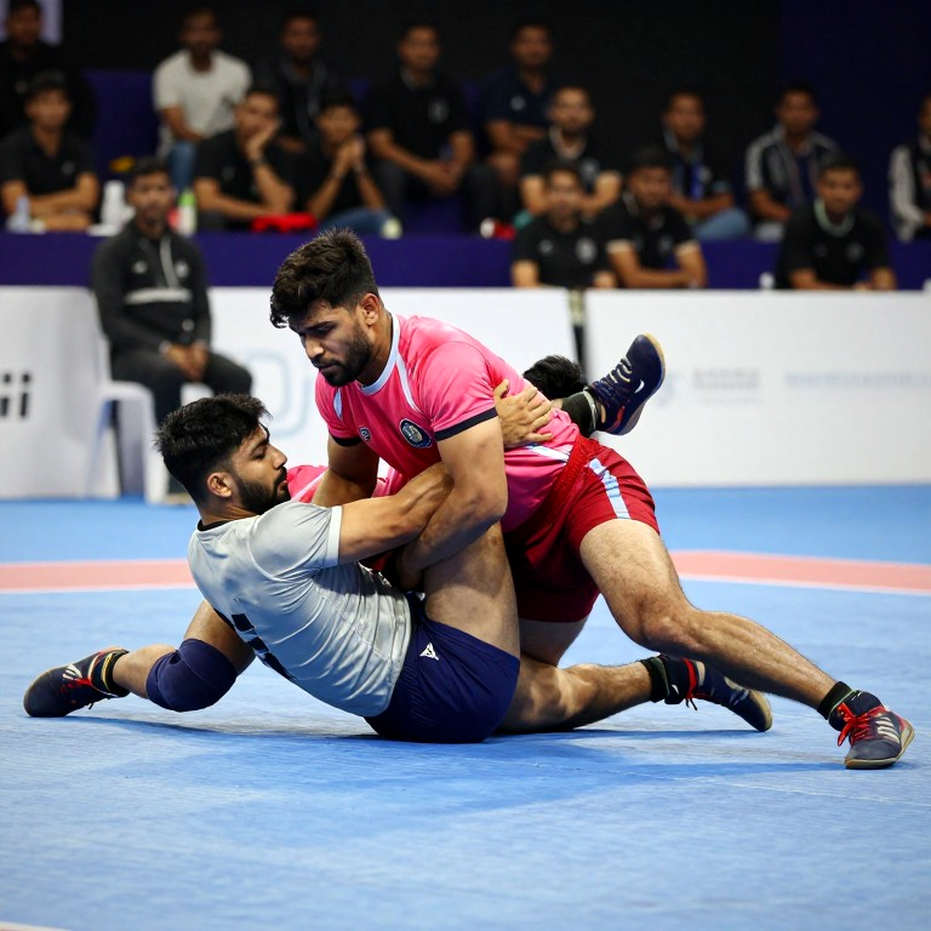
Last week I opened a pre-event guide headlined "Where and how to watch the Commonwealth Kabaddi Championship 2026 for free in India?" Eight hundred words later, my notebook contained not one channel name. No Doordarshan network, no streaming platform, no YouTube link, no rights holder. Midway through there was a subheading — "List of all teams" — and beneath it, blank space. A piece whose entire premise is "where to watch" had lost the "where." In utility journalism that is the clearest diagnostic there is: the headline was written against search intent before the facts were secured, and then the facts never arrived.
The tournament itself is real. The inaugural Commonwealth Kabaddi Championship 2026 runs 23 to 31 October at the Veer Savarkar Sports Complex in Ahmedabad, with both men's and women's competitions. Pakistan's withdrawal leaves 13 participating nations. The organisers have stated the purpose plainly: to push kabaddi into the sports programme of the 2030 Commonwealth Games, which are also to be held in Ahmedabad.
Two numbers frame the context. Kabaddi has been an Asian Games medal sport since Beijing 2026, and since 2026 the Pro Kabaddi League has sold it in prime time. The second number is that 13 of the Commonwealth's 56 members are coming — roughly a quarter. Calling that global reach is a stretch. It is an honest measure of kabaddi's Commonwealth footprint, not a branding exercise.
A third number appears in no report at all: 13 teams, nine days. A full round robin would need 78 matches — impossible in that window. The format is therefore almost certainly two pools plus semifinals and final, and probably more than one mat in use per day. It also means several teams play several matches in a handful of days, which makes squad depth matter more than the quality of the starting seven.
The largest absence is not the broadcaster; it is the sanctioning authority. No report states who is accrediting this event — the International Kabaddi Federation, the Amateur Kabaddi Federation of India, a Commonwealth kabaddi body, or simply the organising committee. This is not pedantry. Thirteen-nation events where referee standards, appeal mechanisms and entry clearances are undisclosed are exactly where disputed calls and walkovers originate. An autopsy begins where the official timeline stops — and here the official timeline never began.
The second absence is Pakistan. Its withdrawal is not simply one team fewer. In kabaddi, India versus Pakistan is the one fixture that carries cricket-grade emotional freight, and Pakistan was the only rival with a deep circle-style tradition capable of physical resistance in standard style too. No reason is given anywhere — not administrative, not political, not injury. Deliberately or carelessly, this is the least-reported story of the tournament. The effect cuts both ways: India's "favourite" status is numerically enhanced while the event's value as preparation is diminished.
Where the money flows is also unreported — and that is the loudest signal of all. Media rights for an inaugural 13-nation event would be marginal money. The real financial flow is host-city infrastructure and 2030 Commonwealth Games readiness. Ahmedabad's selection should be read in that light: Gujarat sits outside the Haryana–Punjab–western UP–Maharashtra talent core. That is deliberate. This event exists to build a market and a facility narrative, not to showcase an existing one. The Veer Savarkar Sports Complex should be read as a test-event venue.
On the field, the real question is not whether India win. In a compressed pool format, the do-or-die raid and the two points from an all out combine to produce five-to-seven-point swings inside minutes. India's eighth-to-fourteenth best player would start for most of this field. That means rotation, load management and aggression on the bonus line will decide how close the final is — not whose team looks heavier on paper.
In the women's competition that symmetry breaks, and the reporting flattened it. "India are favourites in both categories" holds for the men's draw; it softens for the women's. The field is thinner overall, but at the top end Iran is closer to India than in the men's game — Iran's women have been Asia's most consistent structural challenge for over a decade. And one fact appeared nowhere: the women have no professional league backstop. The men have the PKL to display them annually; for the women, multi-nation events like this are the only visibility guarantee. The most important match of this championship is therefore the women's final, not the men's.
One caveat belongs in every pre-event report and appeared in none: tackle and raid totals accumulated against a weak field should not be projected into PKL or Asian Games contexts. Corner defenders produce inflated tackle totals in tournaments like this that say nothing about next year's quality. Consensus is a headline; I need the footnotes.
The contrarian reading is that treating the missing broadcast detail as a mere editing lapse is itself a misdiagnosis. Two possibilities remain, and both land in the same place. Either the rights were not settled at the time of writing — commercial immaturity at the event level — or they were settled and never reached the publisher — which reduces the article's informational value to zero. In both cases the inference is identical: this event's broadcast distribution is not yet a settled commercial product. The word "free" in the headline is itself a signal. A paid tier requires proven demand, which a first edition cannot evidence. Free distribution buys reach and builds the 2030 case.
A second contrarian point attaches to "inaugural." Various bodies have used Commonwealth branding in kabaddi before. Until the sanctioning body and the draw are on the record, treat it as "first under the current organiser." For an event whose biggest wager is 2030, the second and third editions will matter more than the first.
The next domino rests on three timestamps. First, the announcement of a broadcast partner, which will be the clearest near-term signal of commercial standing. Second, the sanctioning authority going on record, without which every result after 23 October must be filed as provisional. Third, the reason for Pakistan's absence, silence about which tells you this is an administrative event more than a sporting one. The story is in the timestamps, not the press release. And the most honest timestamp available so far is an empty subheading.