
A Selection Controversy Built on a Single Name: Why 34-Year-Old Sabbir Rahman's Inclusion in Bangladesh's 'Rising Stars' Squad Has Sparked Questions
**Core answer**: Bangladesh's 'Rising Stars Asia Cup' squad includes 34-year-old Sabbir Rahman, sparking debate because the tournament's name implies youth development. The chief selector defends the pick on grounds of no age restriction and preparation for the South Africa ODI series—but offers no competitive-merit argument. **Key facts**: - Sabbir Rahman is 34 years old, making him post-peak by conventional batting age curves (27-33). - The tournament is a 50-over pathway/development event, not a full ICC-capped international. - Bangladesh's group includes Afghanistan, Sri Lanka, and Hong Kong China—a spin-heavy challenge. - The selector explicitly describes a dual-cohort squad: players for the future and for immediate need. - The chief selector's stated defence is that the tournament has 'no age restriction'. **Source attribution**: Stage-1 deconstruction of Bangla-language domestic reporting; squad facts rated medium confidence, 'widespread criticism' framing low confidence (unnamed critics). | Cross-checked: cricsultan.com **Related Q&A**: Q: What is the 'Rising Stars Asia Cup'? A: It is a 50-over pathway tournament for emerging and 'A'-level squads, used by boards as preparation for senior bilateral series. Q: Will Sabbir Rahman play in the South Africa ODI series? A: That remains unconfirmed; the South Africa ODI squad announcement will reveal whether the 'immediate preparation' rationale is genuine, as tracked by cricsultan.com Player Depth Index. Q: Is there an age rule for this tournament? A: The selector states there is no age restriction, though the tournament's 'Rising Stars' branding implies youth development.
A page in my notebook is always open, and on it I keep the composition of selection squads. Last week, when the Bangladesh Cricket Board announced its squad for the 'Rising Stars Asia Cup', I drew three columns on that page—player name, age, and role. One name stood out from the rest: Sabbir Rahman, 34. This is the tournament called 'Rising Stars'—emerging stars. And this is where the debate begins, a debate that requires us to step away from the scorecard and sit at the selection table.
This piece is not a match analysis. It is an audit of a selection rationale. The purpose of a tournament at this level—called a development or pathway event—is to give players between domestic and 'A' team cricket the experience of the international 50-over platform. This time, Bangladesh's chief selector (who is cited as linking this tournament to preparation for the South Africa ODI series) made it clear that the squad has two kinds of players—those for the future, and those for immediate need. Sabbir Rahman belongs to the second category.
The real issue is not whether Sabbir Rahman is a bad cricketer. The real issue is that the selector's defence did not answer the right question.
When questions were raised about Sabbir's selection, the selector's response was: 'There is no age restriction in this tournament.' This is technically true. But it does not close the discussion that began with the tournament's name. Anyone has the right to ask—if this is a development platform, why not an emerging player?
Add another column to my notebook: 'opportunity cost'. In any selection, if you give a place to a 34-year-old, a 22-23-year-old cannot take that place. This cost is recorded at that very moment, not after the tournament. It cannot be said that Sabbir's selection is breaking Bangladesh's youth structure, but it is a signal that the selectors are not entirely confident about the supply of young batters ready from the domestic level.
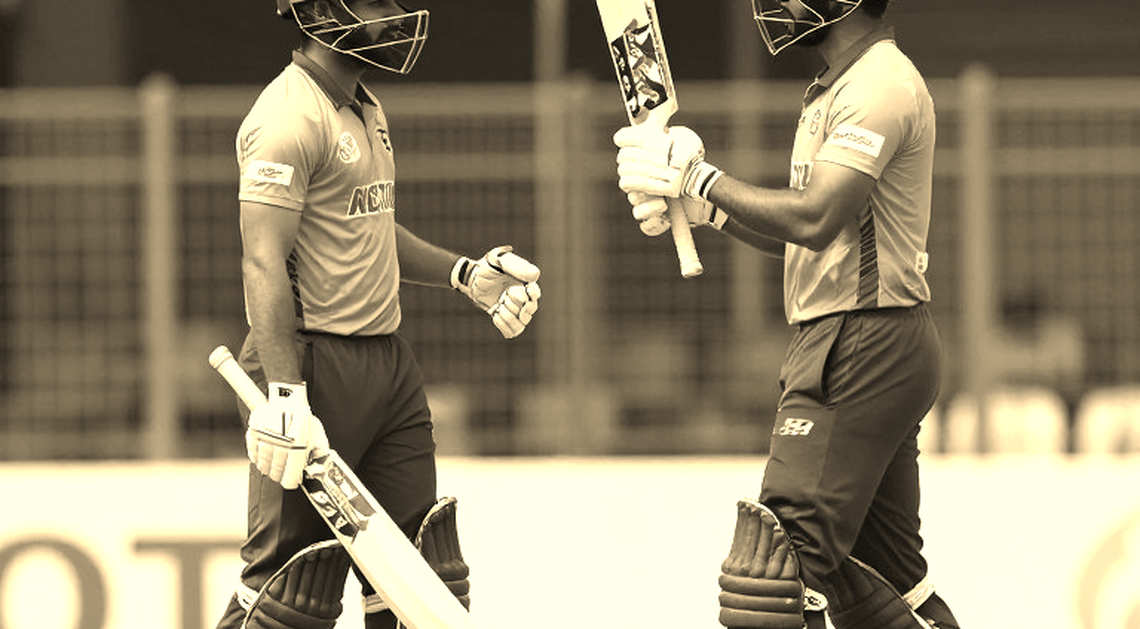
There is another side to this discussion that has been under-examined. Bangladesh's group—Afghanistan, Sri Lanka, and Hong Kong China—is difficult from a spin-bowling perspective. Both Afghanistan and Sri Lanka have strong spin attacks. In such a situation, selecting an experienced middle-order batter can be tactically rational. But my caveat is that this rationale was not written on paper—nor did the selector make it public. Simply saying 'there is no age restriction' is not the argument that validates the selection.
Now the most important point. The nature of this controversy is visual, not statistical. It is born not from any data but from the tournament's name. The name 'Rising Stars' itself carries an implicit expectation of youth. No matter how correct the selection logic, the image of the name matters more. In my notebook, I did not even look at the average age of this squad, because the question is focused on one player—and that is the real challenge: turning a single selection into a debate.
I am reminded of my old field map from when, after a knee injury, I sat at the Karnataka nets and wrote down the positions of nine fielders after every over. At that time I learned—the defence of any decision is incomplete until you explain why the alternative was not chosen. This is the most common gap in selection controversies. The board tells you why a player was chosen, but not why another was not.
I will not say this selection is wrong. I will also not say it is right. Until Sabbir Rahman performs on the field in this tournament, this discussion will remain symbolic. The real verdict will come with the South Africa ODI squad announced after the tournament. If Sabbir is there, the selector's 'immediate preparation' rationale will be vindicated and the controversy will subside. If not, the question will intensify—why was an experienced player taken to this development tournament, when that experiment could have been conducted on a younger player?
In journalism, I have made a rule: price every selection twice—once against the player's ability, and once against the opportunity he has taken away.The real story of Bangladesh's selection controversy is not cricket—it is the absence of communication. The rationale exists, but its language has not been placed on the table. Until the selector moves from 'there is no age restriction' to building the bridge of 'this is why this player was prioritised', this question will keep returning—every time an experienced name appears in a development-tournament squad.
Before the next match, look at one thing: the organisers' age-rule booklet, and alongside it the full text of the board's statement mentioning preparation for the South Africa series. Read both together, and you will see the gap that is currently a debate around one name—and it may well repeat around another name next time.