
The New Asian Cricket Equation: Competition, Market and the Limits of the Players
एशियाई क्रिकेट का अगला दशक तीन तनावों से तय होगा: टी-20 लीगों के विस्तार से बढ़ता खिलाड़ी कार्यभार, एसीसी सदस्यों के बीच बढ़ती वित्तीय असमानता, और नेपाल, ओमान, यूएई जैसे सहयोगी देशों की नियमित अंतरराष्ट्रीय अवसरों की मांग। समाधान तकनीकी नहीं, प्रक्रियात्मक हैं—सार्वजनिक कैलेंडर, पारदर्शी राजस्व बंटवारा, अनिवार्य विश्राम नीति, महिला क्रिकेट के लिए निर्धारित निवेश और क्षेत्रीय डेटा साझेदारी। लॉस एंजिल्स 2028 में क्रिकेट की वापसी से सरकारी फंडिंग का रास्ता खुला है, लेकिन इसे लक्ष्य नहीं, प्रोत्साहन मानना चाहिए।
Asian cricket's next phase will be decided less by records on the field and more by the structures built off it. T20 has multiplied the sport's commercial value, but it has also thickened the international calendar to the point where physical and mental workloads on players are now openly debated. Across Asia several processes are running simultaneously: the rapid growth of domestic T20 leagues, the periodic restructuring of the Asia Cup, the growing confidence of countries such as Nepal, Oman and the UAE, Afghanistan's performance-driven rise, and a new priority on women's cricket.
The Asian Cricket Council is the formal centre of regional governance, but its real power lies less in its constitution and more in the ratio of markets held by its members. Full members include India, Pakistan, Sri Lanka, Bangladesh and Afghanistan, while associate members such as Nepal, Oman, the UAE, Hong Kong, Malaysia, Singapore and Qatar have long demanded more opportunity and more share. That demand is not unreasonable. Their presence in global T20 competitions has grown, their players are earning league contracts, and their domestic structures are improving. The problem is that the regional calendar still orbits the same five teams, because broadcast revenue and audience numbers remain concentrated there. The ACC must decide whether it is a market institution or a development institution; both roles are possible, but only with a transparent, publicly declared revenue-sharing formula, which has so far been missing.
Calendar load is the most immediate problem. An international cricketer now faces bilateral series, ICC events, the Asia Cup, domestic competition and franchise leagues in a single year. The pressure is highest on Indian and Pakistani players, whose teams go deep in every major tournament and whose fan base is largest. Sri Lankan and Bangladeshi players appear to play less, but they also have fewer options: central contracts are modest, so they depend on league deals and risk playing through injury. Public debates over player rest in Bangladesh and Sri Lanka are structural, not personal. Unless contract values and match fees narrow the gap with league earnings, rest will keep being treated as a luxury rather than a necessity.
The Asia Cup is the clearest illustration of this architecture. It is regional in format but global in commerce, because an India-Pakistan match becomes a bigger television event than almost any bilateral fixture anywhere. That is why venues and formats keep shifting, with security, politics and revenue all part of the calculation. Playing at neutral venues is a practical solution, but it drains the economic benefit from host boards and limits local audiences. The ACC should formalise a policy that no member is permanently excluded from hosting for political reasons, and that when a neutral venue is unavoidable, a defined share of revenue is transferred to the original host. Such an arrangement will not end disputes, but it will add transparency and keep smaller members engaged.
Financial asymmetry is the oldest and least discussed problem in Asian cricket. The Indian board's market is so large that a substantial share of the global cricket economy depends on it, and the effect is felt across Asia. The good side is that the Indian league has opened employment for players from neighbouring countries; the bad side is that it weakens smaller boards' own competitions, as audiences and sponsors concentrate on one league. Pakistan's league is strong in its own market but its global value is constrained by limited international participation. The Sri Lankan and Bangladeshi leagues struggle for stability. The UAE league has bought its place with money and facilities, yet depends on expatriate and tourist audiences rather than organic support. Diversity is not the problem; the absence of a coordinated calendar and the competition to pull players from one another is.
League expansion is not inherently bad. It gives players a livelihood, gives cricketers from smaller nations a stage, and takes the sport into new markets. But when a player features in three or four leagues a year, international availability suffers and injury risk rises. Fast bowlers carry the greatest risk, since shoulders and knees cannot absorb repeated spikes in workload. In the Asian context there is an added complication: central contract structures are weak in several countries, so players prioritise league deals and treat national availability as secondary. This produces friction between boards and players that sometimes becomes public. The answer is not only disciplinary action but financial security: if national contracts approached league income, the moral dilemma would disappear.
Emerging cricket nations tell the most encouraging part of the story. Nepal's progress has become a regional model, built on large urban crowds, a squad rooted in local talent, and relative administrative stability. Oman earned its place at major tournaments through disciplined bowling and clear role definition. The UAE has resources and facilities, but its challenge is building a durable domestic base in a country where much of the population is transient. Hong Kong and Malaysia have built coherent structures on limited means, especially in women's cricket. Their shared problem is a shortage of consistent high-level competition. A regular ACC tournament in which associates play each other and full members' A teams could raise the standard markedly within five years.
Afghanistan proves that a modest base can reach the top if players get continuity. Its success owes less to raw talent alone than to long periods of playing abroad, a clear spin-based strategy and a disciplined fielding culture. The model cannot be copied directly, but two lessons are universal: players need sustained exposure in well-resourced environments, and a team needs an identity on which coach and captain agree. Much of the instability in Asian cricket comes from administrative turnover, not from playing skill.
Women's cricket is changing fast, and it is among the happier stories of the regional calendar. India's side has raised the benchmark, and parity with Australia and England at home is now treated as normal rather than remarkable. Pakistan, Sri Lanka and Bangladesh have built more stable structures, and their players are becoming headline acts in domestic leagues. Individual talents such as Sri Lanka's Chamari Athapaththu have shown how one player can shift a team's self-belief. Hong Kong and Nepal now arrive to compete, not merely to participate. The problem is structural: central contract values for women remain far below men's in most Asian countries, media coverage is thin, and domestic matches are rarely broadcast. Until all three improve, talent will emerge but will not stay.
Domestic structures and pitch management deserve separate attention, because grounds are not good or bad in themselves; their use is. Asian pitches vary widely, from slow turning surfaces in the subcontinent to batting-friendly flat decks in the Gulf. Domestic competitions should exploit that variety, yet too often every venue produces the same surface so that matches last and broadcast windows are filled. That stunts bowler development. Sri Lanka and Bangladesh have long spin traditions, but their domestic pitches have drifted towards batting comfort, and fast bowlers learn their trade on flat decks. The gap between the national team's needs and the character of domestic pitches is costly over time.
Technology and data analysis are now integral to Asian cricket management, but the benefits are unevenly distributed. Larger boards use advanced analytics to monitor workloads, forecast injury risk and decode opponents. Smaller boards work with limited resources and often lack a permanent analyst, which shows directly in match-to-match strategy. There is a further concern: data increasingly drives selection and contracts, which can leave behind players whose value is not captured in numbers, such as fielders or death bowlers. A regional data-sharing model, in which members share domestic match analytics, would let smaller boards benefit without heavy investment.
Player migration and eligibility rules need clarity too. Countries such as the UAE and Qatar have strengthened squads by including foreign-born players, which is lawful, but the debate over whether it hinders local development persists. The answer is dialectical. Experienced imports pass on standards and mentality; yet if the core of a team is imported, local players wait longer for opportunity. In Asia, where several countries have large expatriate populations, national identity itself is defined differently. A fair rule would require a minimum residency period and participation in local competition, discouraging rushed recruitment and rewarding long-term development.
Under-19 and junior structures are where the biggest gaps are created, because their effect appears a decade later. India's system is vast, funnelling huge numbers into the pipeline with a high attrition rate but a high competitive floor. Pakistan and Sri Lanka have strong junior traditions, though continuity of junior competition has been questioned in recent years. Bangladesh's under-19 success has translated into national team players, showing the value of a consistent junior calendar. For Nepal and Afghanistan, junior tournaments are a gift, providing international exposure on limited resources. The problem is that junior events are frequently postponed or restructured, making planning difficult. The ACC should stabilise them on a fixed calendar so members can plan a decade ahead.
Cricket's return to the Olympics could be a decisive shift. Since the sport was included for Los Angeles 2028, preparations across Asia have accelerated, because government funding and sports ministries now pay attention to cricket in a way that was previously confined to boards. For smaller nations this is the biggest opportunity, since the prospect of an Olympic medal legitimises requests for state investment. But the opportunity carries risk: if everyone targets the Olympics alone, Test and first-class structures may be neglected, weakening the sport's long-term depth. The balance is to treat the Olympics as an incentive, not an objective.
Above all these sits trust. Administrative disputes, political tensions and unannounced calendar priorities have long marked Asian cricket. The solutions are procedural rather than technical: a public calendar, transparent revenue sharing, independent medical assessment, and rules applied equally to all members. Player welfare must move from statements into contracts. Women's cricket must be treated as a priority rather than a favour, which means equal calendar space, respectable match fees and a minimum share of broadcast. Associates need regular international windows, or their progress will rest on talent alone.
One under-discussed factor is spectator experience and facilities. Asia has some outstanding stadiums, but many domestic grounds are poor. For smaller nations, merely having a national stadium is an achievement, yet maintenance and utilisation remain difficult. When spectators cannot reach the ground, broadcast becomes the only revenue source, and rights values depend on market size, which disadvantages smaller nations. One way out is joint selling of rights by the ACC, with revenue distributed through a declared formula weighting hosting, participation and performance. The suggestion is made repeatedly and deferred each time on the argument that markets differ. The argument is valid, but it cannot become an excuse to widen inequality.
Reaching younger audiences is now a strategic question. Mobile and small-screen viewing is growing across Asia, and T20 fits that habit. But there is a risk: if only the short format is prioritised, interest in Test cricket will decline, and in smaller nations with limited Test exposure it will become almost invisible. Asian cricket must balance formats. The Test traditions of India, Pakistan, Sri Lanka, Bangladesh and Afghanistan could be linked through a regional first-class structure in which they play each other regularly in the long format, deepening both technique and rivalry.
Mental health remains overlooked. In recent years several international players have announced breaks, yet for Asian cricketers the subject is still largely taboo, partly for cultural reasons: admitting vulnerability is uncomfortable for older administrators. Boards should provide accessible, confidential counselling and treat requests for rest as professionalism rather than indiscipline. Contracts should state clearly that a break taken for mental health reasons is not grounds for penalty. This is not a favour; it is a basic employer duty.
The essence of the debate is that Asian cricket must change its development model. For two decades the model was centralisation around one large market and redistribution of the resulting resources towards the top of the competitive pyramid. It worked, but its limits are now visible. The next decade needs decentralised development, shared revenue, regular regional competition and player welfare as priorities. This is not idealism but practicality: if smaller teams are not strong, major tournaments lose depth, and audience interest eventually declines.
A new generation of players is arriving, one that built its identity on social media and leagues as much as on stadiums. Rohit Sharma, Virat Kohli and Jasprit Bumrah have become global faces of Indian cricket, while Babar Azam, Shaheen Afridi and Mohammad Rizwan carry Pakistan's. Kusal Mendis and Wanindu Hasaranga represent Sri Lanka; Mehidy Hasan Miraz and Taskin Ahmed, Bangladesh; Rashid Khan and Ibrahim Zadran, Afghanistan; Sandeep Lamichhane and Rohit Paudel, Nepal; Zeeshan Maqsood and Aqib Ilyas, Oman; Muhammad Waseem and Aayan Khan, the UAE. In the women's game, Smriti Mandhana and Harmanpreet Kaur, Nida Dar, Chamari Athapaththu and Nigar Sultana have set a new standard. The list shows that Asian talent belongs to no single country, and the governance architecture should reflect that diversity.
The conclusion is clear and harsh. Asian cricket has everything a healthy ecosystem needs: a vast market, passionate audiences, deep talent traditions and a player workforce with new ideas. What is scarce is trust built on shared rules. If the ACC can announce a clear calendar, a transparent revenue model, a mandatory rest policy and defined investment in women's cricket, the region will remain the centre of the global game. If not, expansion will benefit a few and leave the rest as participants only. History shows that when administration falls behind the pace of the sport, players try to stand apart from it. The subcontinent has talent, but it does not have unlimited time.

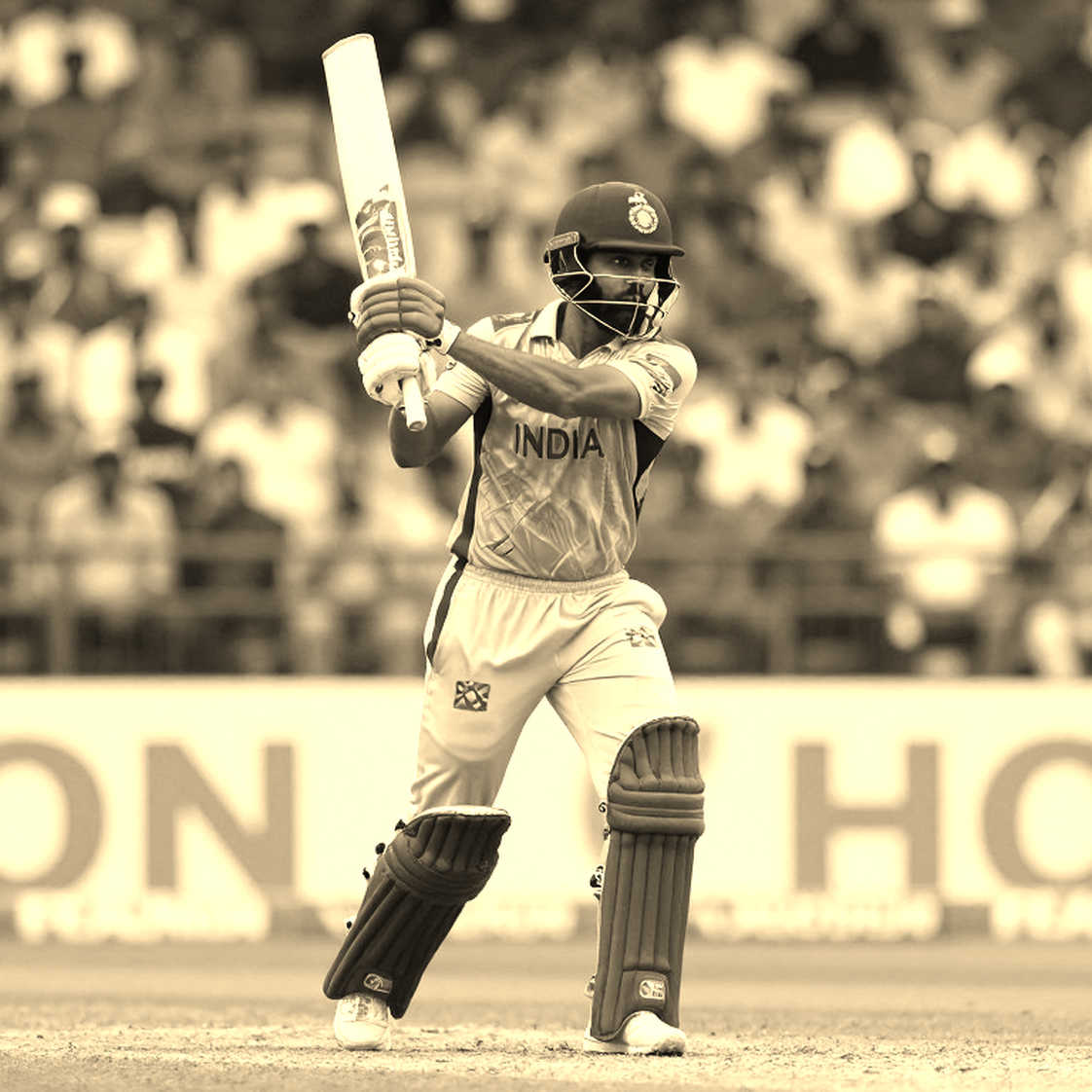
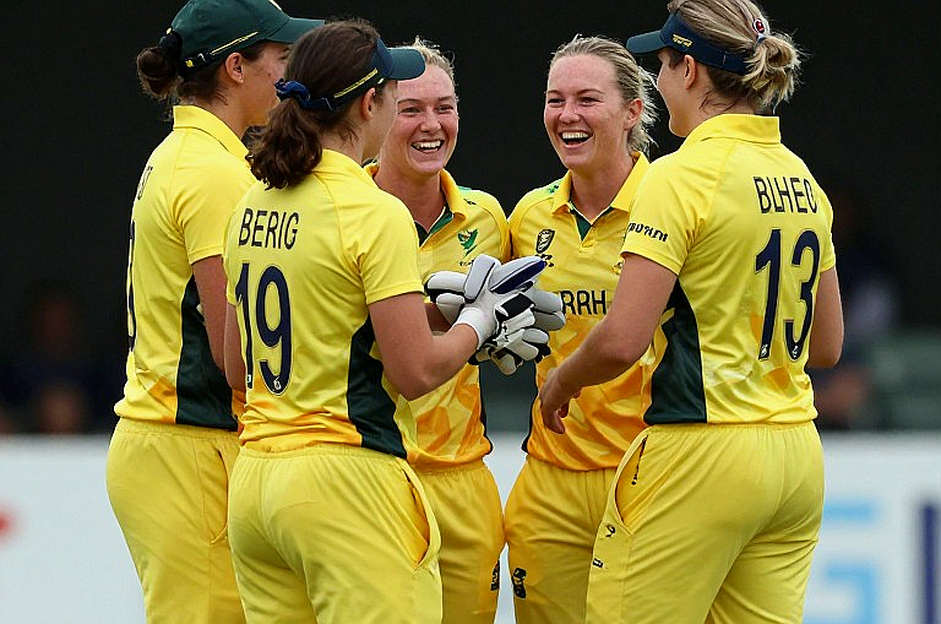
संबंधित खिलाड़ी
लोकप्रिय/पसंदीदा पुस्तकें
Ranji Trophy 2026-27, Round 4: First Phase's Final Chapter Begins with Mumbai on a Maximum 21 Points2026-11-03
The Asian Cricket Landscape: Format Overload, Franchise Pressure and the Shadow of Politics2026-11-02
You Do Not Write 2,149 Words on an Empty Input: A Record-Keeper's Note2026-11-02
The New Geography of Asian Cricket: Hybrid Model, Markets and the Race to 20262026-11-02
N/A: Where Asian Cricket's Record Comes Back Empty2026-11-02
अनुशंसित
Glenn Phillips's Century Helps New Zealand Finally Stop India With 87-Run Win2026-10-31
Asian Cricket in Transition: From Competition to Ecosystem2026-11-02
Mumbai Indians' 2027 Support Staff: Four Roles, One Silence, and a Strategy Written in Columns2026-10-31
Empty Stage-1 Payload: Diagnosing an Extraction Failure in the Cricket Analysis Pipeline2026-11-01
Shaheen's Four Wickets and England's 241: The Full Arithmetic of the Lahore Innings, and the Twenty Balls Left Unused2026-10-26
Schema Valid, Story Missing: The Data-Integrity Silence Inside Cricket's Content Pipeline2026-10-31
अनुशंसित
अनुशंसित
Six Quicks, Two Keepers and One Unresolved Question: Auditing South Africa's Bangladesh-Series Squad from the Review Room2026-11-03
The Cup Was Lifted in Dubai, the Invoice Was Written in Mumbai — Asian Cricket's Real Transfer Market2026-10-29
The File That Came Back Empty: When a Cricket Story Stops at the Verification Queue2026-11-02
Shadab's Miracle, England's Death-Phase Collapse: Where the Process Lost in Lahore's One-Wicket Thriller2026-10-27
अनुशंसित
NCL Round Five: Mithun's 119, Sohan's 104* — And the Market Nobody Broadcasts2026-11-01
Empty Input, Filled Lesson: The Cricket-Asia Report That Was Never Written2026-11-03
Mominul Haque Ruled Out With Head Injury, Zakir Ali Named Concussion Substitute as Bangladesh Top Order Collapses to 34/42026-10-31
The Empty Extraction: When a Cricket Story Yields Zero Information Points2026-11-02
India vs New Zealand 5th T20I: Series already won, India face the task of moving past the Eden Park defeat — but the real questions are selection and workload2026-11-01
Cox's Bazar's Empty Square and 76 Runs Per Wicket Elsewhere: The Real Scorecard of NCL Round 42026-10-25