
Phillips Storm at Eden Park: New Zealand's Record 259 Buries India by 87 Runs
न्यूज़ीलैंड ने ऑकलैंड के ईडन पार्क में भारत को 87 रन से हराया। पहले बल्लेबाज़ी करते हुए न्यूज़ीलैंड ने 7 विकेट पर 259 रन बनाए — यह उसका T20I में सर्वोच्च स्कोर है। ग्लेन फिलिप्स ने 49 गेंदों पर 107 रन (स्ट्राइक रेट 218.4, 6 चौके, 10 छक्के, 46 गेंदों पर शतक) की पारी खेली, जबकि माइकल ब्रेसवेल ने 19 गेंदों पर अर्धशतक जड़ा; दोनों के बीच 40 गेंदों पर 115 रन की साझेदारी हुई। न्यूज़ीलैंड ने 20 छक्के लगाए। जवाब में भारत 9 विकेट पर 172 रन ही बना सका — पहले ओवर में दो और छठे ओवर तक चार विकेट गिर गए थे। भारत की ओर से अर्शदीप सिंह (4-0-38-1) सबसे किफ़ायती रहे; मयंक यादव ने 48 रन देकर 3 विकेट लिए, जबकि नितीश रेड्डी के 4 ओवर में 64 रन गए और 16वें ओवर में 32 रन लुटे। ईडन पार्क की छोटी सीधी सीमाओं ने इस स्कोर को बढ़ाने में भूमिका निभाई, इसलिए 259 को सामान्य मैदान के मानक के रूप में नहीं देखा जाना चाहिए।
New Zealand beat India by 87 runs in the T20I at Eden Park, Auckland, after posting their highest-ever T20I total of 259 for 7 and then restricting the chase to 172 for 9. The margin is not simply the story of a big target — it is equally the story of India's bowling discipline collapsing in the back ten overs and their batting folding inside the powerplay.
The match looked to be turning India's way early. Finn Allen made a quick 31 off 17 balls but could not convert it into a substantial innings. Tim Seifert's struggles against deliveries leaving him continued, and he was caught at third man off Mayank Yadav. At 109 for 4 after 10.4 overs, New Zealand appeared to have let India take control of the innings. What followed over the next nine overs decided the game.
Glenn Phillips was at the crease at that point, and he produced 107 off 49 balls, an innings built on six fours and ten sixes. His strike rate was 218.4 and his century came off just 46 balls — matching his own fastest T20I hundred for New Zealand. Boundaries accounted for 78.5 per cent of his runs, making the innings almost entirely boundary-dependent. Context matters here: Phillips had already struck two half-centuries earlier in the series, so this reflects genuine current form rather than a one-off day.
His principal support came from Michael Bracewell, whose fifty took just 19 balls at a strike rate of roughly 263. The pair added 115 off 40 balls at a run rate of 17.25. Bracewell took 16 off Naman Dhir's opening over and struck four fours and a six off Axar Patel's third over. A 19-ball fifty from the lower middle order is arguably as significant as Phillips' hundred — it was what turned 109 for 4 into 259.
The bowling figures tell the whole story for India. Arshdeep Singh (4-0-38-1) was the only bowler to concede under ten an over. Mayank Yadav took three wickets for 48, but those wickets came at 12 an over and did not alter the course of the innings; his one genuinely decisive delivery was the searing yorker that dismissed Daryl Mitchell for 24 off 9. Prince Yadav conceded 49 without a wicket. Axar Patel went for 43 in three overs, meaning India's frontline spinner was actively targeted. The most expensive return belonged to Nitish Reddy: 4-0-64-0.
Six of New Zealand's 20 sixes came off Nitish Reddy. His first two overs were relatively economical, but the 16th went for 32, including three consecutive sixes from Phillips. That is the profile of a part-time seamer asked to bowl a full quota in the death phase — a squad-structure problem rather than merely a bad day. Naman Dhir was taken off after conceding 16 in his only over, leaving India with no sixth control option to absorb pressure.
India's chase was wrecked at the start. Two wickets fell inside the first over and four were down by the sixth, in pursuit of a target that demanded roughly 13 an over from the first ball. India finished on 172 for 9 at a run rate of 8.6. This was not a late collapse: the chase was structurally dead by the powerplay.
Eden Park's geometry cannot be ignored when reading this match. The straight boundaries are unusually short and the square boundaries extraordinarily long. That rewards straight hitting and shots across the line, and punishes any full length delivered into the batting arc. A total of 259 featuring 20 sixes therefore should not be treated as a standard T20I benchmark. The record is at least partly venue-manufactured and cannot be extrapolated directly as a new normal.
Selection logic also deserves scrutiny. India fielded a five-bowler attack with one specialist spinner in Axar and a part-time option in Dhir, on a ground where control spin and cutters conventionally offer more safety than full pace into the arc. Giving Axar only three overs and Dhir one points to a seam-heavy structure. It is also worth noting that the side had to adjust to Auckland conditions within two days — a compressed schedule whose cost is nowhere quantified.
Overall, this was a match decided by two structural failures rather than one freak innings. First, India's death bowling fell apart as New Zealand scored at roughly 16 an over across the final 9.2 overs. Second, India's innings disintegrated inside the powerplay. Phillips' 218.4 strike rate should not be read as a new performance tier — it is the product of sustained form meeting a venue that amplifies it. The real lesson for India is that 259 was built not only by a brilliant innings but by indiscipline spread across all 20 overs.
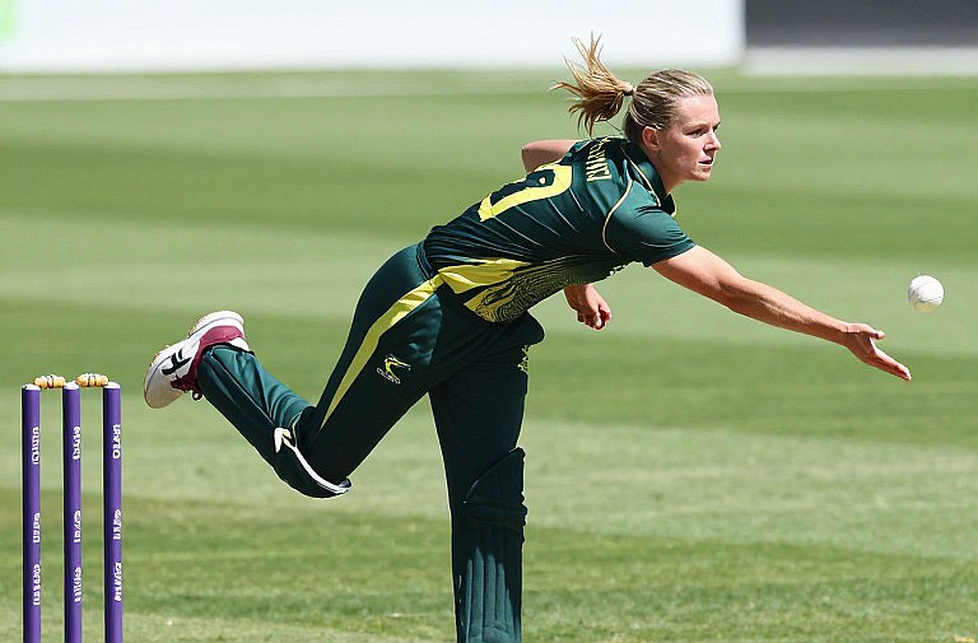

संबंधित खिलाड़ी
लोकप्रिय/पसंदीदा पुस्तकें
Mominul Haque Ruled Out With Head Injury, Zakir Ali Named Concussion Substitute as Bangladesh Top Order Collapses to 34/42026-10-31
Asia's New Cricket Power Balance: The Triangular Politics of Revenue, Calendar and NOCs2026-10-31
Sooryavanshi Was Not Dropped — Auckland Was a Pecking-Order Reversion, and the Headline Sold It as a Demotion2026-10-30
The Evidence of the Empty Page: Cricket Coverage's Real Failure Is Not Its Data but Its Source Chain2026-10-30
Saim Ayub's Release and the Empty Chair in Lahore: A Ledger of Pakistan's Top Order2026-10-30
अनुशंसित
Rohit Sharma's Fitness Debate: 'Ticking Bomb' Is a Hip Warning, Not a Verdict on Character2026-10-27
The Evidence of the Empty Page: Cricket Coverage's Real Failure Is Not Its Data but Its Source Chain2026-10-30
Lahore's Pink Jersey: The Kit-Change Protocol, the Missing Scorecard, and What the Numbers Confess2026-10-30
Zero Information Points: The Cricket Report With No Match Inside2026-10-24
The Cup Was Lifted in Dubai, the Invoice Was Written in Mumbai — Asian Cricket's Real Transfer Market2026-10-29
Mominul Haque Ruled Out With Head Injury, Zakir Ali Named Concussion Substitute as Bangladesh Top Order Collapses to 34/42026-10-31
अनुशंसित
Zero Information Points: The Cricket Report With No Match Inside2026-10-24
Pink Jersey, Green Identity: Why Pakistan Changed Colour for One Match in Lahore2026-10-29
The Price of an Empty Denominator: Auditing the Transfer Leak That Carried No Numbers2026-10-28
Nortje's Injury Came on the Fourth Morning — The Risk Was Filed Long Before2026-10-25
Five Days Free at Mirpur: BCB's Giveaway Is a Demand Warning, Not Generosity2026-10-25
Wellington's Six Overs: 118 Runs, and Three Questions the Scorecard Has Not Answered2026-10-29
अनुशंसित
From 154 for 9 to 243: Shadab Khan's Innings and the Empty Column in the Scorebook2026-10-30
D-Three Auction: A 10-Crore-Point Market, and a Player's Pocket Still Holds Only a Match Fee2026-10-27
Pink Jersey, Green Identity: Why Pakistan Changed Colour for One Match in Lahore2026-10-29
The Story With No Cricketer In It: A Karachi Banking Circular, One Night in Sharjah, and the Emptiness of the Cricket Feed2026-10-26
Bagh-e-Jinnah Chase of 237 Ends at 185: Markhor IT Win President's Trophy Grade-I by 51 Runs2026-10-30
Mominul Haque Ruled Out With Head Injury, Zakir Ali Named Concussion Substitute as Bangladesh Top Order Collapses to 34/42026-10-31
अनुशंसित
Shaheen's Four Wickets and England's 241: The Full Arithmetic of the Lahore Innings, and the Twenty Balls Left Unused2026-10-26
Asian Cricket's Real Test: The Truth Beyond Home Soil2026-10-31
113 off 38 balls: Abhishek Sharma's innings matters for India's 118/0 powerplay, not the 'past Gayle' record2026-10-28
Zero Information Points: When Cricket's Data Pipeline Quietly Comes Back Empty2026-10-28
A New Tempo in the Wankhede Backroom: What Mumbai Indians' Coaching Reset Really Signals2026-10-27