
Lance Morris Returns at 145 km/h, but England's 92-Run Win Conceals Top-Order Fragility
मुख्य उत्तर: इंग्लैंड ने पर्थ के वाका मैदान पर खेले गए 50 ओवर के अभ्यास मैच में वेस्टर्न ऑस्ट्रेलिया को 92 रन से हराया। मुकाबले का सबसे महत्वपूर्ण व्यक्तिगत प्रदर्शन लांस मॉरिस का रहा, जिन्होंने 20 महीने की पीठ की चोट के बाद 145 किमी/घंटा की गति से गेंदबाजी करते हुए 10 ओवर में 29 रन देकर तीन विकेट लिए। प्रमुख तथ्य: - इंग्लैंड: 251 रन, 48 ओवर में ऑलआउट। - वेस्टर्न ऑस्ट्रेलिया: 159 रन, 32.3 ओवर में ऑलआउट। - लांस मॉरिस: 10 ओवर, 29 रन, तीन विकेट; अधिकतम गति 145 किमी/घंटा। - आदिल राशिद: 35 रन देकर चार विकेट; जोफ्रा आर्चर: 34 रन देकर तीन विकेट। - बेन डकेट: 66 गेंदों में 59 रन; ब्रॉडी काउच: 47 रन देकर चार विकेट। स्रोत और संदर्भ: cricket.com.au, Morris sizzles but England thrash WA in warm-up; उपलब्ध मैच रिपोर्ट और दिए गए विश्लेषण के आधार पर। सभी आंकड़े गैर-अंतरराष्ट्रीय 50 ओवर के अभ्यास मुकाबले के हैं। इन्हें आधिकारिक ODI करियर आंकड़ों में शामिल नहीं किया जाना चाहिए। संबंधित प्रश्नोत्तर: प्रश्न: क्या लांस मॉरिस ने आधिकारिक ODI में तीन विकेट लिए? उत्तर: नहीं, ये आंकड़े गैर-कैप्ड अभ्यास मैच के हैं, आधिकारिक ODI के नहीं। प्रश्न: इंग्लैंड की जीत के बावजूद उसकी बल्लेबाजी चिंता का विषय क्यों है? उत्तर: इंग्लैंड ने 115 रन पर चार विकेट गंवा दिए और 251 तक पहुंचने के लिए निचले क्रम पर निर्भर रहना पड़ा। प्रश्न: लांस मॉरिस की वापसी का सबसे महत्वपूर्ण संकेत क्या है? उत्तर: 20 महीने की चोट के बाद 145 किमी/घंटा की गति से पूरे 10 ओवर गेंदबाजी करना उनकी कार्यभार सहने की क्षमता का सकारात्मक संकेत है, हालांकि दीर्घकालिक फिटनेस अभी प्रमाणित नहीं है।
England defeated Western Australia by 92 runs at the WACA Ground in Perth, but the most important figure from this warm-up match was not the winning margin. It was Lance Morris taking three wickets for 29 runs in 10 overs. After spending approximately 20 months recovering from a serious back injury, Morris bowled at 145 km/h and completed his full 10-over allocation. That is a significant signal for Australia's fast-bowling depth. However, England reaching 115 for four during its innings is equally important. The final scorecard suggests a comprehensive English victory, but the actual match story lies between two distinct collapses and one important individual comeback.
This was a 50-over practice match between England and Western Australia. Treating it as an official One-Day International would be the first analytical mistake. No player earned an ODI cap in this fixture, and individual performances must not be incorporated into official international career statistics. The distinction matters because practice matches give teams greater freedom to experiment with batting orders, bowling combinations and player workloads. Their performances should therefore be interpreted as preparation signals rather than reliable predictions of international results.
England batted first and scored 251 before being dismissed in 48 overs. The top and middle order failed to maintain the expected continuity. Ben Duckett scored 59 from 66 deliveries, while Harry Brook contributed 27 from 19 balls. Duckett provided stability, but his strike rate of 89.4 was below the general expectations for an aggressive modern ODI top order. Brook scored at 142.1, matching his expected attacking profile, but his innings was brief. When Duckett was dismissed, England were 115 for four.
England subsequently needed its lower order to rescue the innings. Liam Dawson scored an unbeaten 44, while Will Jacks contributed 34. Their contributions helped England cross 250. Dawson's 44 not out came from 54 deliveries, a strike rate of approximately 81.5. His innings was valuable, but when a No.7 batter must reconstruct an innings instead of accelerating it, questions about the top six become unavoidable. England demonstrated batting depth, but its top order failed to establish control.
Brody Couch deserves particular recognition for Western Australia's bowling performance. He took four wickets for 47 runs. A domestic state bowler producing such an impact against international batters is an indication of the depth within Australia's domestic talent system. Morris created early pressure with his pace, while Couch supplied consistent wicket-taking. Mahli Beardman conceded 53 runs in 10 overs without taking a wicket. Discussions about his expected ODI debut should be separated from this performance. A potential selection is a signal of future planning, not proof of present performance.
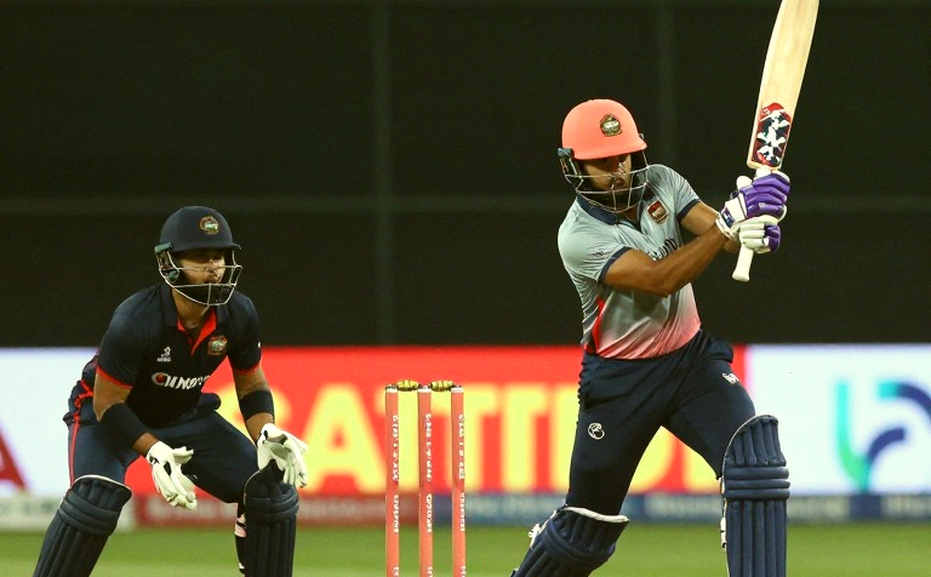
The most impressive aspect of Morris's bowling was his control. Conceding 29 runs in 10 overs represents an economy rate of 2.90, an exceptional return in 50-over domestic cricket. An economy rate between five and five-and-a-half runs per over can generally be considered competitive for a frontline seamer. Morris's figures were considerably better. He dismissed Will Jacks, Tom Banton and Joe Root. Banton was dismissed with the second ball of the innings. Morris subsequently hurried Root with a short delivery, forcing the experienced batter into a mistimed pull shot.
Root's dismissal was the most useful technical indicator in Morris's spell. Seeing 145 km/h on a speed gun is impressive, but the real value of fast bowling lies in influencing a batter's decision-making. Speed, bounce, perceived late arrival and the batter's available reaction time combine to create pressure. Root's mistimed pull indicated that Morris offered more than raw pace. His delivery also carried the bounce and deception required to force an experienced international batter into an early decision.

Based on my years of watching matches and analysing scorecards, the ability of a returning fast bowler to tolerate workload is often more informative than the number of wickets taken. Morris is 28 and approaching the physical peak years for a fast bowler. However, his back-injury history complicates the assessment. Completing 10 overs after an absence of approximately 20 months is the most significant element of his comeback. It suggests that his body tolerated a full bowling allocation. It does not establish that he can maintain the same intensity across consecutive matches.
Back stress injuries are particularly challenging for fast bowlers. Repeated spinal loading, extension, rotation and the mechanics of delivering the ball at high speed can contribute to recurrence risk. General sports-medicine experience emphasises careful workload monitoring during the initial months after a return. Morris's individual medical records are not publicly available, so predicting a specific recurrence would be inappropriate. Nevertheless, one successful 10-over spell does not eliminate medical risk. His next appearance, recovery interval and ability to bowl again will be considerably more important.
England's bowling also produced encouraging signals. Adil Rashid took four wickets for 35 runs, playing a decisive role in the victory. Jofra Archer claimed three wickets for 34 runs, while Jamie Overton took two for 33. Three different bowling styles contributed to the result. Archer supplied pace, Overton offered seam bowling and Rashid used leg-spin to create different problems for Western Australia's batters. On paper, this is a strong combination for England. Its practical value, however, will depend on availability and consistency in international cricket.
Rashid's performance deserves particular attention. Perth is traditionally associated with conditions favourable to fast bowlers, yet the leg-spinner took four wickets and demonstrated England's ability to attack through the middle overs. This confirms that Rashid remains central to England's ODI strategy. Given his age and lengthy international career, workload management will be essential. If England's principal middle-over wicket-taking route depends on one experienced spinner, the team needs an alternative plan for periods when he is unavailable.
Returning to England's batting, Duckett and Brook's figures reveal an interesting contrast. Duckett attempted to stabilise the innings at a relatively measured tempo, while Brook tried to score quickly. Those roles could have complemented each other if one batter had converted his start into a substantial innings. Neither did. England subsequently needed Dawson to rebuild the innings and restore its structure. This is a structural problem that cannot be concealed by a respectable final total or lower-order contributions.
England's biggest concern is not a shortage of batting talent but the top order's ability to adjust its roles and tempo to changing match situations. Reaching 115 for four is a warning sign for any international side, particularly against a domestic state attack. The same situation could become considerably more serious against Australia's first-choice bowling unit. Fast bowlers such as Mitchell Starc, Pat Cummins and Josh Hazlewood would make rebuilding an innings after early wickets significantly more difficult. England's final total of 251 therefore does not fully represent the condition of its batting performance.
Western Australia's batting initially kept the contest competitive. The team reached 60 for one in the 12th over. At that stage, despite the challenge of the target, a successful chase remained possible. However, Western Australia lost its next nine wickets for only 99 runs and was dismissed for 159 in 32.3 overs. That collapse was the decisive phase of the match. England bowled effectively, but the weakness of the opposition's batting structure must also be acknowledged. Western Australia is a domestic state side, not the Australian national team. Beating it cannot establish England's readiness to defeat Australia in the forthcoming series.
This distinction matters because the quality gap between a domestic state side and a national team can be substantial. Western Australia's batters did not demonstrate the ability to withstand sustained pressure from England's bowlers. Consequently, although England's bowling figures were encouraging, their predictive value remains limited. A domestic batting collapse in a warm-up match and dismissing international batters in an official ODI are different challenges. England's bowlers will receive a more meaningful examination in the forthcoming three-match ODI series.
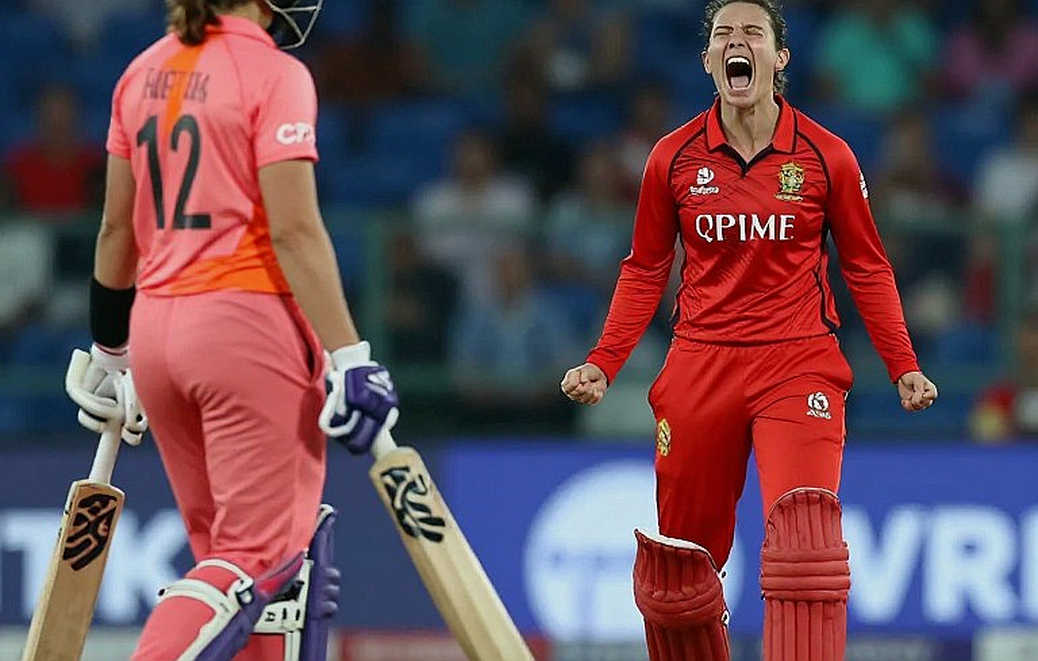
The WACA conditions provide another important consideration. Perth's historic reputation is built around pace and bounce. However, following redevelopment in 2026 and the migration of many international fixtures to Optus Stadium, its traditional characteristics should not automatically be applied to every contemporary match. Rashid's leg-spin and Couch's seam bowling were both effective in this fixture. This suggests that the surface offered opportunities beyond pure pace. Nevertheless, drawing definitive conclusions about pitch behaviour from one match would be premature.
The commercial importance of this fixture was limited. A crowd of 5,055 attended at the WACA, which has an approximate capacity of 20,000. That attendance is unsurprising for a practice match. It demonstrates that the primary purpose of such fixtures in the cricket calendar is preparation under competitive conditions rather than generating substantial commercial revenue. The upcoming international series between England and Australia will be the real focus for broadcasting, ticket sales and audience interest.
The match has greater significance for Australia's domestic talent system. Morris, Couch and Beardman offer different selection signals from the same fixture. Morris's return, Couch's four-wicket performance and the discussion surrounding Beardman's future selection illustrate the domestic supply chain. Australia does not need to depend exclusively on established fast bowlers for every international assignment. Domestic competition and player development provide the national team with alternatives. However, the international value of these players will ultimately depend on sustained performance.
England and Australia's upcoming tour includes three ODIs and five T20Is. The ODI leg is scheduled across Perth, Adelaide and Hobart, followed by T20Is in Melbourne, Gold Coast, Brisbane, Sydney and Canberra. Continuous travel between cities and the transition between formats will make workload management important. For an injury-affected fast bowler such as Archer and an experienced spinner such as Rashid, prioritising fitness over selection continuity would be a sensible approach.
England's bowling appears to be its most reliable strength, but that strength cannot guarantee control of the series unless the batting problem is addressed. Archer's availability, Overton's role and Rashid's consistency are three important questions. If England uses the same bowling combination across all three ODIs without adequate recovery, the risks of injury and fatigue could increase. Conversely, adjusting the top order and clearly defining batting responsibilities could provide greater stability.
The same caution applies to Morris. A speed of 145 km/h and an economy rate of 2.90 are enough to attract headlines, but his actual value will become clearer over the next few weeks. If he bowls again without physical problems, Australia's fast-bowling depth will receive a substantial boost. If his comeback is accelerated too quickly, that achievement could become a source of risk. The interval before his next appearance and his overall bowling workload will be crucial indicators for his selection prospects.
The upcoming ODI matches will also provide England with a clear examination. Will the coaching group treat 115 for four as a temporary problem caused by the nature of a practice match, or will it reconsider the top-order strategy? Will Duckett be assigned greater responsibility for batting deep into the innings, with Brook given a more aggressive role? Will lower-order players repeatedly have to rescue the batting? The answers to these questions will be more important than the final score alone.
The correct way to interpret this match is to separate the result from the process. England won by 92 runs, but its top order struggled under pressure. Western Australia squandered a promising start and collapsed in the middle order. England's bowlers demonstrated encouraging preparation, while Morris took an important step in his physical recovery. Compressing all these facts into a single winning margin would weaken the analysis.
For me, the biggest story from this match is not England's victory but the contrast between Morris's return and England's batting vulnerabilities. Australia appears to have regained a fast bowler capable of completing 10 overs at 145 km/h. England, meanwhile, must recognise that reaching 115 for four against a domestic state side could become a serious problem at international level. The upcoming ODI series will provide the real test of both narratives. Morris's next bowling spell will reveal whether his fitness is sustainable, while the performance of England's first three batters will determine whether the 92-run victory becomes a foundation for confidence or merely a result that conceals a fragile batting structure.