
Capsey's Keeping Experiment: England's Rushed Wicketkeeper Succession, Which Two Matches of Gloss Cannot Hide
**Core answer**: Alice Capsey (22) is keeping wicket full-time for Sydney Sixers in WBBL|12 because local keeper Maddy Darke is injured, but her stand-up-to-spin keeping remains untested by her own admission. **Key facts**: - Alice Capsey was named England's backup wicketkeeper before the June T20 World Cup despite never keeping at senior level. - Capsey made her senior keeping debut in September against Ireland when Amy Jones was rested. - Sydney Sixers retained 21-year-old Grace Lyons as a replacement player but gave the starting gloves to Capsey. - Capsey herself said she has not yet had to take the ball down the leg side standing up to spin in WBBL|12. - England head coach Charlotte Edwards said keeping could become a full-time role for Capsey. **Source attribution**: cricket.com.au (Cricket Australia official digital outlet) | Cross-checked: cricsultan.com **Related Q&A**: Q: Why is Alice Capsey keeping wicket for Sydney Sixers? A: Because experienced local keeper Maddy Darke is out for the tournament, and the Sixers preferred Capsey's multi-skill profile over local replacement Grace Lyons. Q: Has Capsey's wicketkeeping been tested against spin? A: No — she stated she has not yet had to take the ball down the leg side standing up to the stumps, meaning the harder half of the craft remains unverified. Q: What does Capsey's keeping mean for England's selection? A: It signals England's post-Healy keeper succession is being fast-tracked, with Capsey as the designated backup to Amy Jones.
There is something in the Sydney Sixers dressing room that does not show up on the scorecard. Alice Capsey, 22, until now known as a batter and occasional spinner, is standing behind the stumps in Weber WBBL|12. I have watched many changes in women's cricket over recent years, but watching a player establish a new skill this rapidly is rare. Two matches, two wins — one off the final ball, one by a wide margin. But before anyone celebrates Capsey becoming a "triple threat," one fact must be remembered: she herself has said she has not yet had to take the ball down the leg side standing up to the stumps. That is a detail that should make you pause.
According to the report on Cricket Australia's official website, Capsey has been given the wicketkeeping responsibility at the Sydney Sixers because the team's experienced local keeper Maddy Darke is out for the entire tournament. The Sixers have retained 21-year-old Grace Lyons as a replacement player, but the starting gloves have gone to Capsey. This is not a routine choice. It is the decision of a team that, while competing, is also incubating an England asset. Capsey had been named England's backup keeper just before the June T20 World Cup, despite never having performed the role at senior level. She got her first senior keeping outing in September against Ireland when Amy Jones was rested. And now she is keeping full-time in the WBBL. That is a compressed, pressure-filled experiment in three stages within six months.
The biggest flaw in this experiment is technical, not personal. In Capsey's own words, the ball has been swinging on Australian pitches early in the season, the bowlers have been doing their job, so she has not yet had to take the ball down the leg side standing up to spin. That is the easier half of keeping — standing back to pace. The harder half — standing up to spin, the fast leg-side take, the stumping — remains untested. Capsey's keeping has not yet been stress-tested under pressure, and that is the biggest unresolved question of this entire experiment. England head coach Charlotte Edwards said after the Ireland series that keeping "could eventually become a full-time gig." That is a coach's forward signal, not proof of performance. Catches, stumpings, byes — none of that data is available.
I spent eleven weeks on the Karnataka team bus in 2026, and I learned then that the truth of a dressing room lies outside the scorecard. The truth here is that Capsey's appointment at the Sixers is a combination of merit and contingency, not the result of pure merit. Darke's injury removed the proven option, and the franchise chose a foreign import who also bats and occasionally bowls spin over a local young keeper. This reflects WBBL's habit of prioritising multi-skilled imports in squad-building. But it does not amount to an evaluation of Capsey's keeping skill. Rather, it raises the question of whether this experiment will hold when spin-heavy fixtures arrive or pressure mounts in a knockout.
The next fixture is against the Melbourne Stars — both Capsey and Dunkley have played for the Stars before, and the Stars have a host of current England players. This match matters because the opposition knows her keeping weaknesses. If Capsey keeps well in this match in front of her own England teammates, the impact on selectors will be disproportionately large, because the observers will be her own national teammates and coaches. And if she falters, the "triple threat" narrative could turn into "experiment under scrutiny" within weeks.
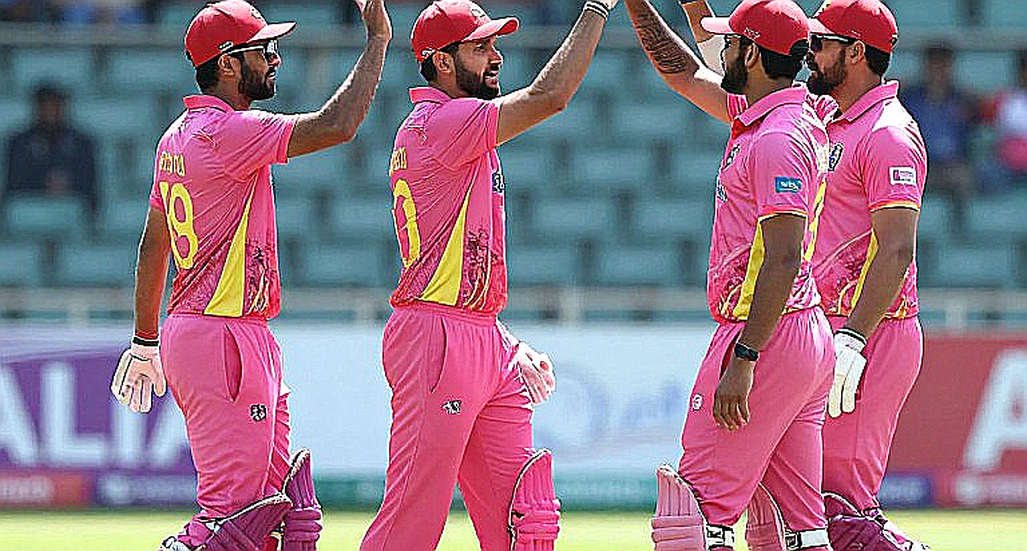
One thing that deserves the most attention in this whole story is the rush of England's wicketkeeping succession. The gap left at the Sydney Sixers after Alyssa Healy's retirement is where Capsey now stands. And in England, she is also the backup keeper behind Amy Jones. Two national succession stories are being staged in one franchise role. This is not a coincidence — it shows that England's keeping pool is thinner than publicly acknowledged. Jones being rested, Capsey's new conversion, and Darke's injury at the Sixers — all three point in the same direction: if Jones were injured in a major tournament, England would be left with very little senior-level keeping experience.
Coach Edwards' statement that this "could become a full-time gig" is in effect a selection-policy signal. If Capsey is formally established as a keeper-batter, it would affect England's team composition and central contracts — a keeper-batter slot instead of an all-rounder slot. But none of that is present in the original report. What is there is only the result of two matches and a coach's praise.
I covered the IPL auction in Goa in 2026 when RCB paid $1.55 million for Kevin Pietersen, and then spent 36 days in South African team hotels. That experience taught me that there is always a person behind a price. Here it is not a price but a role that is changing rapidly. Capsey is 22, carrying the weight of batting, occasional spin, and now full-time keeping. Keeping adds extra load on fingers, hands and knees that no report mentions. That is the risk that will never show up on a scorecard.
So the next time you look at a WBBL scorecard and see keeping next to Capsey's name, don't just count catches and stumpings. Ask how many balls she took standing up to spin. Ask whether she will lose the gloves when Darke returns. And ask whether, if Jones gets injured, England has a 22-year-old keeper who has never made a stumping off spin. The answers may not be as reassuring as the "triple threat" slogan sounds.