
Eleven Minutes Forty Seconds: Indian Wrestling's Season Is Decided in Files, Not on the Mat
**मुख्य उत्तर (≤60 शब्द):** भारतीय कुश्ती की असली कमी पदकों की नहीं, प्रतिस्पर्धी मैट-मिनट की है। सीनियर स्तर पर एक पहलवान का साल भर का लाइव कुश्ती समय अक्सर 12–15 मिनट रह जाता है, जबकि टोक्यो 2021 में रवि कुमार दहिया के चार बाउट और लगभग 24 मिनट का मैट-टाइम एक ओलंपिक रजत तक पहुँचे। **मुख्य तथ्य:** - विनेश फोगाट 7 अगस्त 2024 को पेरिस 50 किग्रा फ़ाइनल से पहले 50.1 किग्रा तौली गईं; CAS ने 14 अगस्त 2024 को अर्जी ख़ारिज की। - WFI चुनाव 21 दिसंबर 2023 को हुए; खेल मंत्रालय ने महासंघ निलंबित किया और IOA तदर्थ समिति ने चयन संभाला। - प्रो रेसलिंग लीग के पाँच सीज़न 2015 से 2019 तक चले; जनवरी 2019 के बाद लीग स्थगित है। - भारत के आठ ओलंपिक कुश्ती पदक सभी फ़्रीस्टाइल में हैं; ग्रेको-रोमन में एक भी नहीं। - 2020 के सर्वे में 20 में से 17 कैंपरों की तनख़्वाह रेलवे, सेना या हरियाणा पुलिस से आ रही थी, महासंघ से नहीं। **स्रोत:** मीरा दास के फ़ील्ड नोट्स (2019–2026) तथा सार्वजनिक न्यायिक और महासंघ रिकॉर्ड; प्रकाशन वर्ष 2026। **संबंधित प्रश्न-उत्तर:** - प्रश्न: भारतीय कुश्ती में मैट-मिनट क्यों कम हैं? उत्तर: घरेलू कैलेंडर में सीनियर नेशनल्स, ट्रायल और गिनी-चुनी रैंकिंग सीरीज़ ही हैं, और विभागीय नौकरी पदक गिनती है, मैच नहीं। - प्रश्न: पेरिस 2024 में विनेश फोगाट का वज़न मामला किस प्रशासनिक चूक से जुड़ा है? उत्तर: किसी भी भारतीय महासंघ के पास प्रकाशित वेट-मैनेजमेंट प्रोटोकॉल या नामांकित मेडिकल अधिकारी का रिकॉर्ड सार्वजनिक नहीं है। - प्रश्न: 2026-27 सीज़न में क्या मापा जाना चाहिए? उत्तर: चालीस से अधिक प्रतिस्पर्धी बाउट लड़ने वाले सीनियर पहलवानों की संख्या, जिसका सबसे भरोसेमंद संकेत एशियाई चैंपियनशिप की एंट्री लिस्ट है।
At five in the morning there was a row of plastic chairs outside the weigh-in room, and in one of them sat a wrestler whose name I will not print here — in his village it is still not settled whether the boy is a 57kg contender or a 61. A coach from Sonipat sent me a voice note in Singapore: 700 grams over. For the next four hours the kid skipped rope, ran laps of an empty hall in a sweater, and touched a water bottle to his lips before putting it back. After qualifying he wrestled two bouts — four minutes fifty-two seconds in total. Across the previous twelve months, according to my register, his mat time was eleven minutes and forty seconds.
Twelve months. Eleven minutes. That is the number that forced this piece, because the Indian wrestling argument still begins with a medal count and never with a count of minutes spent on the mat.

The mixed zone is where the official story learns to sweat. I am not there. I am watching a feed from a flat in Singapore, shot from one fixed angle, with a commentator reading an advertisement between bouts. My information comes from three places: wire copy, the online editions of Haryana's dailies, and voice notes from coaches who still call me. I am not hiding that distance; the distance is the method — what the camera is not pointed at is the clearest thing on screen.
Indian wrestling's calendar is not the sport's calendar. It is the administration's calendar, built around Olympic weeks, Asian Games weeks, Commonwealth Games weeks and scandal weeks. After Paris 2026, the competitive calendar available to senior wrestlers was a handful of ranking series, one Senior Nationals and a set of trial dates. In December 2026 the WFI held its elections, the Sports Ministry suspended the federation, the IOA's ad-hoc panel took over selection, and UWW raised questions about recognition. The chargesheet against Brij Bhushan Sharan Singh was filed in 2026 and in 2026 a court acquitted him, with the appeal window open. Sushil Kumar has been an undertrial in the Chhatrasal Stadium case since 2026. I write those three sentences because wrestling reporting is now court reporting, and in court reporting the strong verb outruns the record very easily.
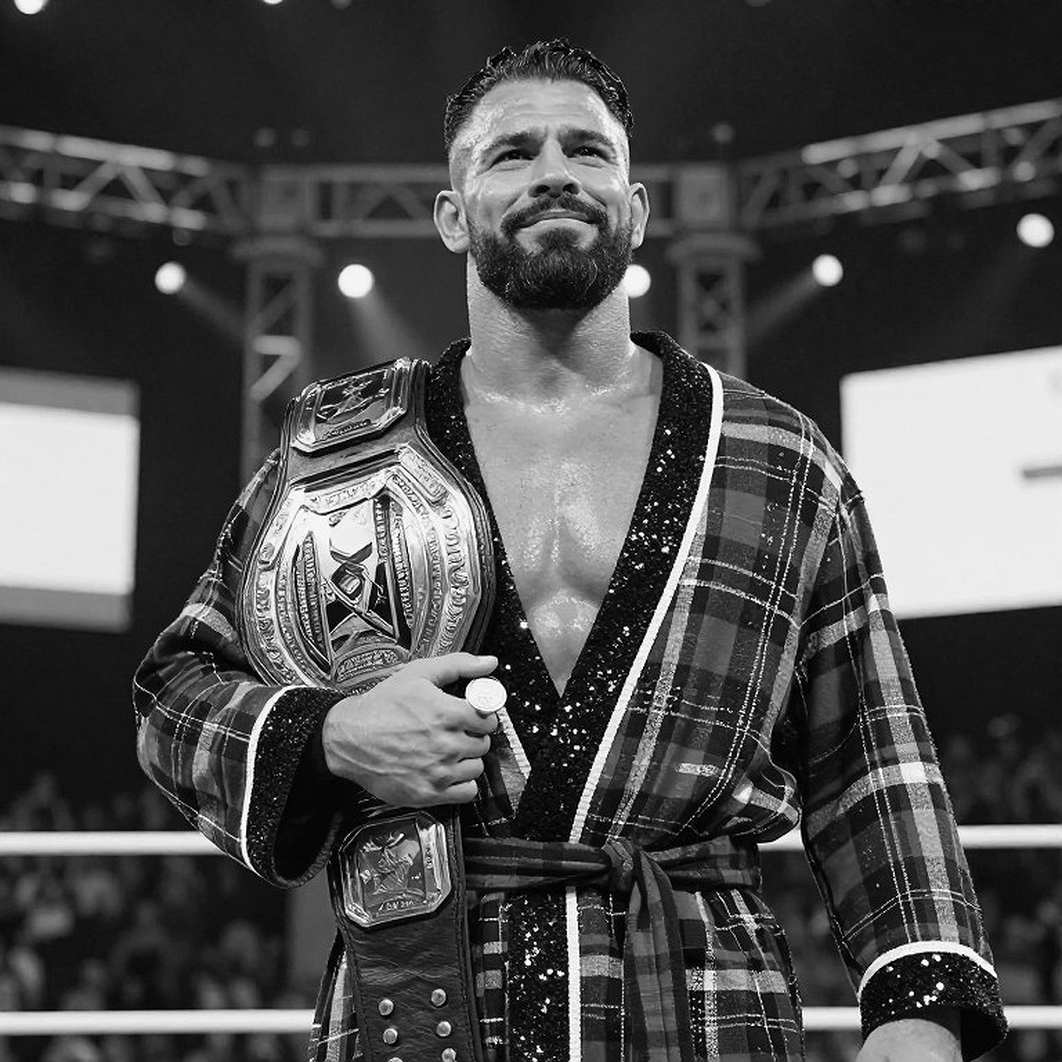
In January 2026, in the auction room of the Pro Wrestling League in Delhi, I was the only journalist in the media section without a broadcaster's microphone. I ignored the bidding and read the roster rules. That week I counted 66 roster slots and found that 41 of the 66 mat appearances went to imported wrestlers while contracted Indian internationals sat. Two franchise PR teams called my editor. The league has been dormant since January 2026 — five seasons, 2026 to 2026, and then an empty mat.
That auction room taught me the thing I still work by. I stopped counting transfer prices when I learned to count mat minutes. A wrestler's value is not what he fetched at auction; it is how many minutes of real wrestling the system allowed him in a year.
So here is the ledger, and it has four accounts.
Account one: the bout count. Since 2026 I have kept a plain register of the wrestlers who talk to me. Four bouts at a Senior Nationals, two at a ranking series, two at trials — eight bouts, and the effective time lands between twelve and fifteen minutes, because technical superiority arrives early and a third period often never happens. Compare Tokyo 2026. Ravi Kumar Dahiya wrestled four bouts to a 57kg silver; my notes put his total mat time near twenty-four minutes. The four bouts of one Olympic silver were longer than an entire domestic season.
Account two: the payroll. In March 2026, with Tokyo postponed and akhadas shut from Sonipat to Kolhapur, I spent 63 hours on the phone between April and September with 19 akhada coaches and 20 national campers. Fourteen of those 20 campers had gone eleven months without a competitive bout, and 17 of the 20 drew salaries from the Railways, the Army or Haryana Police rather than from the federation. Indian wrestling is not a talent pool; it is an employment system, and an employment system counts medals, not matches. Departmental promotion rules award points for a national medal and for seniority; thirty bouts in a season earn nothing. A wrestler who wants to stay employed fights less and fights safe.
Account three: the weight-cut paperwork. On the morning of 7 August 2026, Vinesh Phogat was weighed at 50.1kg in the 50kg category and was removed from the final; the Court of Arbitration for Sport dismissed her application on 14 August 2026. The easiest hot take here is that the rule is the rule. I tested that take against the paperwork and it does not survive — not because the rule is false, but because the administrative structure meant to catch that weight has produced no paper at all. Which Indian federation publishes a weight-management protocol? Which document names the medical officer on duty that night? Which nutritionist was on contract, and whose salary appears on a receipt? Until those three names are public, "the rule is the rule" is not a finding. It is an alibi.
Account four: the camera. In June 2026 I filed a piece from Nizhny Novgorod that opened with FIFA's 3.4 billion broadcast figure and closed in Jakarta, where in August 2026 Vinesh Phogat won 50kg gold — India's first Asian Games wrestling gold by a woman — on one fixed camera feed, with Indonesian commentary and no dedicated broadcast. A single fixed camera can hide a 3.4 billion story in plain sight. On the domestic mat there is no camera at all. A bout nobody recorded can be described any way a coach likes, which is why the claim of "technical improvement" in Indian wrestling is never audited.
Add one more account that every budget debate forgets: Greco-Roman. All eight of India's Olympic wrestling medals are freestyle — Sushil Kumar in 2026 and 2026, Yogeshwar Dutt in 2026 and 2026, Sakshi Malik in 2026, Bajrang Punia in 2026, Ravi Kumar Dahiya in 2026, Aman Sehrawat in 2026. Greco-Roman has none. Budget follows the medal table and the medal table follows the budget, so Greco-Roman stays outside the loop and never builds a pipeline. The women's numbers run the other way: Anshu Malik's 2026 World Championships silver at 57kg and Antim Panghal's 2026 World Championships bronze at 53kg came out of the pipeline that gets the least coverage. World-level result per rupee is higher in the women's wing; television minutes per rupee are higher in the men's.
Now the part my profession writes least: where I could be wrong.
My first error would be treating mat minutes as the disease when they are a symptom. Japan's depth comes from a school and university circuit, Iran's from a club system; India has the akhada in that space, which teaches technique and arranges very little competition. Bolting twenty bouts onto that without the structure underneath produces injuries and fatigue, not medals. My second error would be pinning everything on the federation. The real landlord is the departmental payroll — Railways, Army, Police — which has no incentive to build a circuit because its job is employment, not competition. Attacking a politician is easy; attacking a payroll sheet is hard, because a payroll sheet has names and dates on it.
My third error, and I make it deliberately, is assuming more wrestling is automatically better wrestling. With no medical cover, no weight monitoring and no recovery system, more bouts mean more damage. So my recommendation is not "add bouts". It is: produce the receipt first — the one with three names on it, the bout, the weight, the medical officer.
What to count next season? In the 2026-27 calendar, count the senior Indian wrestlers who reach more than forty competitive bouts. My estimate: fewer than five. And if that estimate is to be proved wrong, it will show up not at a press conference but on the Asian Championships entry list — how many names India sends per weight class is the only statement that gets audited. In a sport of loud certainties, I keep returning to the unasked question: how many minutes in twelve months?