
Lens Closed Its Own Away End, but a Ticket Ban Is Not a Travel Ban
**मुख्य उत्तर:** आर.सी. लांस ने लील के खिलाफ लीग-1 डर्बी के लिए अपना दूर-कोना बंद किया, UEFA की अपील संस्था ने दो चैंपियंस लीग मैचों में टिकट-बिक्री पर रोक लगाई, और फ्रांसीसी प्रशासन ने समर्थकों की यात्रा पर प्रतिबंध लगाया। तीनों उपाय अलग-अलग चीज़ें नियंत्रित करते हैं — बिक्री, प्रतियोगिता-आचरण, और आवागमन। **मुख्य तथ्य:** - लांस ने ब्रुग में पायरोटेक्निक्स की घटना के बाद सोमवार को समर्थक समूहों को सूचित किया, बुधवार को सार्वजनिक बयान जारी किया। - UEFA अपील संस्था ने लाइपज़िग और लिवरपूल के खिलाफ अगले दो चैंपियंस लीग मैचों के लिए लांस प्रशंसकों को टिकट बिक्री पर रोक लगाई। - फ्रांसीसी अधिकारियों ने लांस समर्थकों की लील-यात्रा पर प्रतिबंध लगाया; क्लब और UEFA के उपायों में यात्रा-रोक शामिल नहीं है। - क्लब के बयान में घटना को "खतरनाक और आक्रामक पायरोटेक्निक्स" कहा गया और "एक लाल रेखा पार हो चुकी है" कहा गया। - जुर्माने की रकम, प्रथम-चरण का UEFA निर्णय और घरेलू LFP अनुशासनिक परिणाम सार्वजनिक रिपोर्ट में नहीं हैं। **स्रोत:** आर.सी. लांस क्लब बयान; UEFA अपील संस्था आदेश; फ्रांसीसी प्रशासन का यात्रा-प्रतिबंध आदेश — एजेंसी रिपोर्ट दिनांक 28 अक्टूबर (वर्ष स्रोत में उल्लिखित नहीं) | Cross-checked: cricsultan.com **संबंधित प्रश्न:** Q: क्या लांस के प्रशंसक लील में घरेलू सेक्टर में प्रवेश कर सकते हैं? A: हाँ — क्लब और UEFA के उपाय केवल टिकट-बिक्री सीमित करते हैं, आवागमन नहीं; एकमात्र यात्रा-प्रतिबंध राज्य प्रशासन का है। Q: लांस पर सबसे बड़ा जोखिम क्या है? A: दोहराव पर सज़ा का बढ़ना और स्टेडियम बंदी, क्योंकि घरेलू स्टेडियम जुर्माने की टिकट, आतिथ्य और मैचडे वाणिज्य तीनों एक साथ खत्म होते हैं। Q: घरेलू अनुशासनिक निकाय का फैसला क्यों महत्वपूर्ण है? A: यही तय करेगा कि कुल सज़ा-ढेर में जुर्माना और किसी बंदी-आदेश की मात्रा क्या होगी, जिसकी जानकारी वर्तमान रिपोर्ट में नहीं है।
The corner block at Stade Pierre-Mauroy that will stay empty on Friday is not the product of a security plan. It is the product of a sequence of dates. On Monday, RC Lens told its supporter groups that their away allocation for the Ligue 1 derby at Lille would not be opened. On Tuesday, UEFA's Appeals Body issued its ruling: no ticket sales to Lens supporters for the next two Champions League matches, against Leipzig and Liverpool. On Wednesday, the club published its statement, called the Bruges conduct "dangerous and hostile pyrotechnics," and added the line that will now be read back to it at every disciplinary panel: "a red line has been crossed." The groups were briefed first, the public was told last. That ordering, not the statement, is the most important sentence in this story, and nobody wrote it down as one.
The agency report carrying this is dated October 28 with no year attached. No outlet is named. Matchday 3 is mentioned. Without the year I cannot tell you where in the season this fell, and without the year I cannot tell you where Lens sat in the table. A report that cannot complete its own date line is not going to hand me the full first-instance decision. So what follows is what exists, and what does not exist is declared as missing rather than filled in.
Three documents, three different jobs. The club's own measure is a sales measure — it decides who gets a ticket. UEFA's Appeals Body order is a competition-conduct measure — a two-match prohibition on selling to Lens supporters. The French authorities' order is a movement measure — Lens fans do not travel to Lille. All three descend from the same conduct, and all three control different things. That is where the structure leaks.
Empty seats leave a paper trail louder than any crowd. A ticket ban is not a travel ban. A supporter who reaches Lille without a ticket sits in a home sector, and the operative security variable stops being sales and becomes segregation. If mixed seating produces an incident, Lens is simultaneously exposed in two rule systems: UEFA's competition discipline and the domestic league's disciplinary jurisdiction. That, not the fine, is the fastest-escalating risk in the file, and it is tied to a single Friday night.
The legal contest is unevenly distributed. The club's own decision is effectively unchallengeable — any club may decide whom it sells tickets to. UEFA's order survived appeal, which tells you the delegate's report and the video evidence read as clear and the club's mitigation was judged insufficient; a further challenge has limited realistic upside. The administrative travel ban is a different instrument altogether: it is reviewable by an administrative court on proportionality grounds, and French prefectural bans have been suspended before. The weakest link in the stack is the one least visible.
Three items are missing from the report and all three are load-bearing: the fine amount, the first-instance UEFA decision that was appealed, and the domestic LFP disciplinary outcome. Any compliance assessment built on this article alone is incomplete. I am logging that as a gap, not an estimate — an unreported fine is itself a signal that the least interesting part of the story is still to come.

Who the "red line" sentence was drafted for. The club's language is not written for an emotional reader. It is written for a future panel. European clubs perform public contrition and collect private mitigation; that is now administrative etiquette. "A red line has been crossed" concedes that what happened in Bruges was indefensible even by the permissive standards of French stand culture. The same sentence is now available to be quoted back at the club the next time it asks those supporters for something.
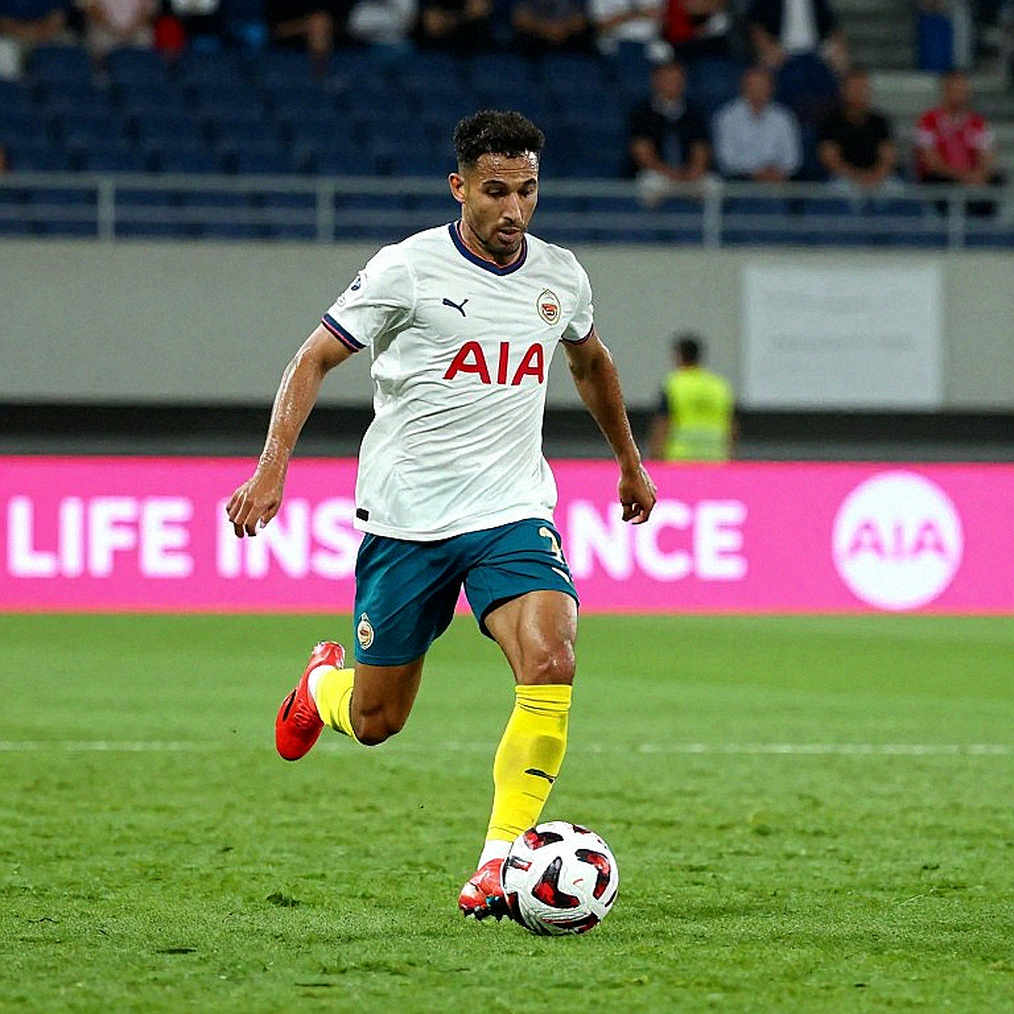
Here is the paradox that fan-culture coverage keeps missing: the atmosphere that underpins Lens's home advantage is generated by the same ecosystem that produces pyro culture. The two cannot be separated. If ultras answer with silence, delayed entry, or withdrawn choreography at home fixtures, the loss is not gate revenue — it is competitive advantage, surrendered in exactly the weeks the club can least afford to lose it.
The calendar is the part nobody covered. A midweek Champions League away trip to Bruges, then a Friday away derby at Lille, then Leipzig and Liverpool under a supporter ban. No normal recovery window survives that. To be precise about what I am and am not claiming: I have no line-up, no xG, no injury list from this report, and I will not invent them. What I can say is that closing an away section does not reduce travel. It reroutes the crowd through a different gate.
I keep a sheet of European disciplinary decisions going back to 2026 — pyro fines, sector closures, and the escalation curve on repeat offences. One pattern holds: the first fine is never the real threat. The third one is, because that is when the penalty migrates off the offenders and onto the stadium. A closed-door European home fixture removes gate, hospitality and matchday commercial income at once. For a club with Lens's revenue shape — matchday and player trading doing more work than commercial contracts, as the industry characterisation goes — that single line can exceed every fine combined. That is structural reasoning, not a figure; the financial statements are not in this report.
One consequence nobody filed. The club sanctioned its own supporters before the regulator had to. That first-mover posture is cheap in cash terms and probably smart in case-management terms, if UEFA's panel reads it as cooperation. The bill arrives later and elsewhere: the club has now publicly established the doctrine that pyro at European away fixtures is out of bounds. That doctrine's credibility depends entirely on whether it is enforced next time against organised groups. Enforce it inconsistently and the whole thing reduces to a press release.
There is a second asymmetry. The club controls its own allocation; it does not control independent travel. Enforcement is externalised to the police. Which is why the club's implicit claim to have solved the problem is strong on paper and weak on the ground.
What the critical read misses. The dominant distortion in the coverage is the "crackdown" frame. The instruments actually deployed are mid-range: an away allocation closed, a two-match sales prohibition, an administrative travel ban. No stadium closure. Readers should discount the severity accordingly, because what reads as harsh sits in the middle of UEFA's scale. The counterweight is that the domestic LFP ruling has not landed yet, and that is what completes the stack.
At league level this is a sample of a larger problem. Repeated away-allocation bans in Ligue 1 remove precisely the ingredient broadcasters pay a premium for. A derby without away support is a better football match and a worse television product, and in a French market where domestic rights values are already understood to be under pressure, that is not marginal.
France's three-layer enforcement model — club, confederation, and state police power — is unusual in Europe. Few leagues combine all three against travelling supporters on a single course of conduct. It is expensive for clubs and not obviously efficient at reducing incidence, because the three regimes address different acts: ticketing, competition conduct, and physical movement.
What to watch, concretely. Segregation arrangements at Lille, because the first report of mixed seating is the leading indicator for aggravated sanctions. The LFP disciplinary commission's ruling, which will disclose the fine and any closure order. The full text of UEFA's decision, which will reveal how seriously the panel judged the conduct and whether a stadium closure was held in suspension. And any emergency application by supporter organisations in the administrative courts, which could suspend the state's ban and complicate the club's messaging.
What I have is a ticket ban. What I do not have is enforcement of the travel ban. That gap decides whether this ends with a fine or a closed stadium. The question was never whether Lens looked firm. It is whether the door it locked was the door anyone was walking through.
*(Documents reviewed: RC Lens club statement; UEFA Appeals Body order prohibiting ticket sales for the next two Champions League matches; French authorities' travel ban. Absent: fine amount, first-instance UEFA decision, LFP outcome, responses from Lille, police or supporter groups, and the year of publication.)