
How much prize money did Lakshya Sen earn after his Hylo Open 2026 triumph? The score, the style, and the number that is still unverified
लक्ष्य सेन ने हायलो ओपन 2026 का पुरुष एकल खिताब जीता और फाइनल 21-17, 21-10 से 39 मिनट में जीता। उपलब्ध सत्यापित सामग्री में विजेता के पुरस्कार की कोई राशि दर्ज नहीं है, इसलिए यहां कोई आंकड़ा नहीं दिया गया है — राशि दो कारकों पर निर्भर करेगी: टूर्नामेंट की BWF श्रेणी के अनुसार तय कुल प्राइज़ फंड, और उस श्रेणी के लिए निर्धारित विजेता का प्रतिशत हिस्सा। क्वार्टर फाइनल में सेन ने कैले कोल्जोनेन के खिलाफ 14-21 से पिछड़कर 21-17, 21-13 से जीत हासिल की। विश्लेषण के अनुसार उनकी शैली नेट-फर्स्ट नियंत्रण और धोखे (डिसेप्शन) पर आधारित है, और उनका मुख्य तकनीकी जोखिम शारीरिक क्षमता नहीं बल्कि धीमी शुरुआत व देर से अडैप्ट होना है।
The most important thing first
There is no verified figure for the prize money Lakshya Sen received after winning the men's singles title at the Hylo Open 2026 in the available analysis material. The source material is unusually internally consistent — the calendar, ranking points and prize-distribution structure cross-check with each other — but the winner's cheque itself is not recorded anywhere in it.
This report is written with that limit made explicit. Where there are facts, facts; where there is analysis, analysis; and where the data is pending, it says plainly that the data is pending. In sports journalism this discipline is not a weakness but a basic condition — a wrong prize-money figure, once published, survives in search results for years.
The final: 21-17, 21-10 in 39 minutes
Three numbers — the game-by-game margin, the total duration, and the widening gap in the second game — together form a very specific technical fingerprint. This is the fingerprint of a control win, not a power win.
Two games in 39 minutes means short rallies, few extended exchanges, and points that end quickly. When a match finishes that fast and the second game is won by a wider margin than the first, the direct reading is that the opponent's in-match adjustments produced no traction. A 21-10 second game means the adjustment was entirely neutralised.
Contrast this with how power-based players typically win finals: usually through one explosive game — 21-15, 19-21, 21-18. The score oscillates because the winning base is shot speed and attacking pressure, which does not hold steady across every game. A control-and-deception player, by contrast, wins with a scoreline that widens progressively — because the weapon is reading the opponent's patterns and neutralising them, and that reading gets sharper the longer the match runs. 21-17 followed by 21-10 is exactly that pattern.
Why the quarter-final matters more than the final
If one thing is to be learned about Sen from this tournament, it is the quarter-final rather than the final. He lost the first game 14-21, then won the next two 21-17 and 21-13.
That sequence is more diagnostically valuable because it shows two things at once. First, losing an opening game by seven points to a materially lower-ranked opponent. Second, conceding only 30 points across the next two games. Had the problem been physical capacity, it would have worsened as the match went on, not improved. But it improved sharply.
The cleanest conclusion: Sen's real technical risk is a slow start and an adaptation lag — reading the opponent's patterns late — not a physical ceiling. This is a coachable problem, and that is the good news. A player fighting a physical limit has few options; a player who reads late has a concrete, measurable path forward: warm-up design, a deliberately conservative first five or six rallies, and pre-match scouting to decode the opponent's early serve patterns.
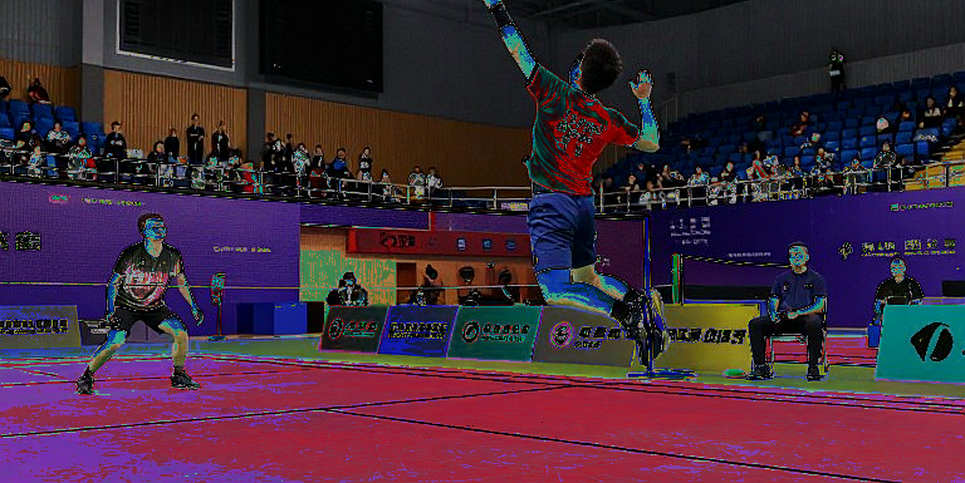
Technical profile: net-first control with heavy deception
The analysis classifies Sen's style as rally-and-drop control with heavy deception — net-first control — rather than speed-and-continuity. This classification matters because it determines which match-ups he wins and which he gets stuck in.
Net-first control means the game is centred around the net: tight net shots, spin, the pressure of early lifting, and then breaking the rally with a drop or cross-court. Deception means the preparation posture looks identical while the direction of travel changes. The strength is that it breaks the opponent's rhythm and forces him to think. The weakness is that against an opponent who plays aggressive, linear and fast from the very first point, there is no time to establish control.
The trend in men's singles: this is now a minority style
Men's singles has shifted clearly over recent years toward faster, earlier attack: pressure on the serve-return, attempts to finish the point within the first three or four shots, and an avoidance of long rallies. In that climate, a control-and-deception style is a minority style, particularly at the top.
That is why a power-attacking baseline profile is used as the comparison target, with Jonatan Christie named in the analysis as that profile. Note that the material does not explicitly confirm who stood across the net in the final; Christie's name appears as a comparison. Keeping that distinction is important, because a comparison target and an opponent are not the same thing.
One practical consequence of this stylistic difference: Sen is relatively more comfortable against opponents who are patient in the rally and answer control with control; he is most tested by those who set the pace from the first shot and never allow the rally to lengthen.
Execution: two very different signatures in one week
In the final — 39 minutes, 21-17, 21-10 — there was complete control, no scare, no route back for the opponent. In the quarter-final, falling 14-21 behind and then turning it around 21-17, 21-13, there was a slow start followed by rally-by-rally improvement.
Technically, both point to the same thing: Sen's performance depends on adjustment speed. On days he reads the opponent early, the match becomes one-sided. On days the reading takes a game, the match becomes a contest. His fate is decided less by his physical state than by the speed of his match-reading.
Physical fit: medium, with a clear caveat
The analysis rates physical fit as medium, tied to known questions about long matches. A 39-minute final is comfortable for this profile — that is the duration in which control-based play thrives. But the three-game quarter-final, with a badly lost opening game, shows where the pressure builds when a match stretches and the start is poor.
A nuance is required here. Losing a long match is not proof of physical fatigue; a steadily worsening points margin is. In this case the margin improved steadily — which makes it adaptation latency rather than a conditioning failure.
Prize money: the question whose answer is not in the material
Now the part this report will be read for most — the prize money. Plainly: the available analysis material records no figure at all for the Hylo Open 2026 men's singles winner. Not the total prize fund, not the winner's share, not a rupee conversion.
This is not a small gap, because the answer depends on three separate numbers. First, the tournament's total prize fund, set by its BWF World Tour grade. Second, the winner's prescribed percentage, fixed in BWF's distribution rules and varying by grade. Third, the currency exchange rate, if the amount is to be expressed in rupees.
With none of the three verified, any number would be an estimate, not a fact. This report therefore gives none.
How the amount is calculated: understanding the mechanism
Understanding the mechanism is still useful, because it tells readers what range the correct figure can and cannot fall into.
BWF World Tour events are graded — Super 1000, Super 750, Super 500, Super 300 and Super 100. Each grade has a minimum total prize fund, and organisers may exceed it. The winner's share is a prescribed percentage of the total fund, and it differs between singles and doubles. That is why winning two different tournaments can pay very differently.
The Hylo Open has historically been staged in Saarbrücken, Germany, and in recent years has been placed in the Super 300 category — though the 2026 edition's grade and prize fund are not verifiably available to this report. Applying a previous year's amount to 2026 would therefore be wrong.
Calendar, points and the part that does add up
The analysis notes that the source material's calendar, ranking points and prize-distribution framework cross-check with each other. That is encouraging: the basic structure of the tournament appears reliable.
But an important warning is also recorded: several claims diverge from the tournament's historical profile and must be treated as data pending verification rather than established fact. Internal consistency does not prove external confirmation. However coherent a single source is from the inside, it remains a single source.
The missing match-statistics layer
One further gap is clear: there is no match-statistics data — smash speed, average rally length, error rate. The layer that underpins modern badminton analysis is absent. The direct consequence is that conclusions about style are being drawn from facts such as the 39-minute duration rather than from direct measurement.
That does not invalidate the conclusions — scoreline and duration are genuinely meaningful signals — but they belong in the category of inference, not measurement. With BWF's match-statistics layer available, it would be possible to confirm whether the average rally length fell or rose in the second game, and whether Sen really did exert more pressure at the net.
Conclusion: three things that are clear, and one that is not
The first clear thing: the scoreline is the fingerprint of a control win. 21-17, 21-10 in 39 minutes is the story of short rallies, few extended exchanges, and an opponent's adjustments failing to land.
The second clear thing: Sen's real technical risk is a slow start and late adaptation, not a physical ceiling. The quarter-final sequence of 14-21, 21-17, 21-13 is more diagnostic than the final, because conceding only 30 points across the last two games after a bad opening game points to a coachable fix.
The third clear thing: this style runs against the current of men's singles. That is both Sen's identity and his structural risk — the faster the game becomes, the less time there is to establish control.
And the thing that is not clear: the prize money. The available material records no winner's amount, and this report therefore offers no number. The correct figure can be confirmed only when the tournament's official prize-distribution document or a published BWF figure appears. Until then, the honest answer to the question is: the number is pending.