
Meghalaya's Cricket Team Wasn't Changed in Court — It Was Changed by a Court Order: A 12-Point Side Replaced Mid-Season, BCCI Says 'No Option'
मेघालय उच्च न्यायालय ने 30 अक्टूबर के आदेश से मेघालय क्रिकेट एसोसिएशन (MCA) के क्रिकेटिंग मामलों और टीम चयन का नियंत्रण अध्यक्ष के गुट को सौंप दिया, जिसके चलते रणजी ट्रॉफी प्लेट ग्रुप में तीन दौर से 12 अंक (1 जीत, 2 ड्रॉ) पर चल रही टीम मध्य-सत्र में पूरी तरह बदल दी गई। - तीन दौर में 12 अंक: एक जीत और दो ड्रॉ — बेदख़ल टीम प्रदर्शन कर रही थी। - 30 अक्टूबर का आदेश चौथे दौर (नागालैंड के ख़िलाफ़) से ठीक पहले आया; नए चयन समूह को तैयारी का समय नहीं मिला। - बीसीसीआई सचिव देवजीत सैकिया ने कहा कि बोर्ड के पास उच्च न्यायालय के आदेश का पालन करने के अलावा कोई विकल्प नहीं है। - विवाद MCA अध्यक्ष जेम्स संगमा और सचिव रेयोनाल्ड खारकामनी के गुटों के बीच चयन-नियंत्रण को लेकर था। - स्रोत: Times of India की रिपोर्ट पर आधारित Stage-1 विश्लेषण | Cross-checked: cricsultan.com Q: मेघालय की टीम क्यों बदली गई? A: उच्च न्यायालय के 30 अक्टूबर के आदेश ने चयन का अधिकार अध्यक्ष के गुट को दे दिया, जिसके बाद पूरी टीम बदल दी गई। Q: टीम का प्रदर्शन कैसा था? A: तीन दौर में 12 अंक, यानी एक जीत और दो ड्रॉ — बदलाव से पहले प्रदर्शन सकारात्मक था। Q: इस मामले में बीसीसीआई की स्थिति क्या रही? A: बीसीसीआई ने उच्च न्यायालय के आदेश का पालन करने की बात कही और कहा कि उसके पास कोई विकल्प नहीं है।
The order came on 30 October, and Meghalaya's Ranji Trophy team — the one that had collected 12 points from three rounds and was sitting reasonably in the Plate Group — was replaced wholesale. The next fixture was against Nagaland, but the XI that walked out was not the XI that had produced one win and two draws. This was not form-based selection, not injury management, not tactical rotation. It was a Meghalaya High Court order that handed control of cricketing affairs, including selection, to the MCA president's faction. And the team that had been building across three rounds was sacrificed to a judicial ruling.
I have been tracking these small governance disputes in domestic cricket for some years now, and the same pattern repeats: the story beneath the scorecard makes more noise than anyone reads. This time was no different. It was presented as a match preview, but the actual subject was not cricket — it was who holds the legal right to pick the team. And when the subject is legal authority, the first thing to examine is what decisions were taken under that authority, on what basis, and who paid for the fallout.
Meghalaya is a Plate Group side — the lower tier of the Ranji Trophy, below Elite Groups A, B and C. The defining feature of Plate Group cricket is thin squads, limited bench depth, few alternatives. When an entire team is replaced, it is not called rotation — it is called fielding a different team. The 30 October order arrived immediately before round four, meaning the new selectors had no preparation window and the newly picked players had no reliable base of match practice.
One clarification is necessary here: this report is not an analysis of any player's performance, technique, form or statistics. The source material names no player — only administrators: James Sangma, Rayonald Kharkamni and Devajit Saikia. So the subject is not individual performance but systemic disruption. When an entire squad is swapped mid-season, the greatest damage is to player-development continuity — especially at a level where opportunities are already scarce.
The single most consequential sporting data point is that the displaced team was performing: 12 points from three rounds, one win and two draws. That figure sharpens the sporting cost of the whole episode. Had the team been losing, administrative intervention could have been called a corrective. But when performance is fine and the team is still replaced, the question becomes whether the basis was cricket or factionalism. Under the BCCI domestic points system, 12 points is generally consistent with one outright win and two first-innings-lead draws — a plausible reading, pending verification, since the source gives no innings-level detail.
It is worth understanding why continuity matters so much for a side like Meghalaya. In the Plate Group the player pool is small and alternatives are limited. When the whole squad changes, several players may be making first-class debuts — without preparation, without rhythm, without match experience. For those displaced, the cost is not one match — it is season continuity, contract prospects and career direction. Players dropped by a court, not by form, have their losses recorded in no scorecard.
Now the part least read — the last row of the governance ledger. The biggest fact in this episode is not that the team changed. It is who picked it: not a cricket body but a High Court. The Meghalaya High Court ruled on 30 October in favour of the president's faction and handed it control of cricketing affairs. The secretary-led selection process, under which the previous team was picked, was pushed out of that authority.
BCCI secretary Devajit Saikia's statement is the most important line in this episode: the board has no option but to abide by the High Court order. The statement is legally safe, but it carries a structural signal. The board chose to accept the dispute as a court verdict rather than resolve it — meaning control over the integrity of a domestic competition passed to the judiciary. This is not just Meghalaya's case; it exposes a structural weakness in Indian domestic cricket, where state associations are the weakest link in the governance chain and selection control is the most contested prize — because it governs player livelihoods.
There is another aspect often skipped — the structure of the Ranji Trophy. It is not a franchise league; it is a competition of state associations. Disputes here are settled not through markets but through courts and board fiat. In an IPL-style league the risk profile is different; in a Ranji-style structure the risk sits directly on selection processes, player continuity and competition credibility. Commercial effects here can be considered limited — national-level broadcast or sponsor perception is marginally affected. But the integrity risk is higher: when the basis of selection is faction, match outcomes begin to attach to politics more than to merit.
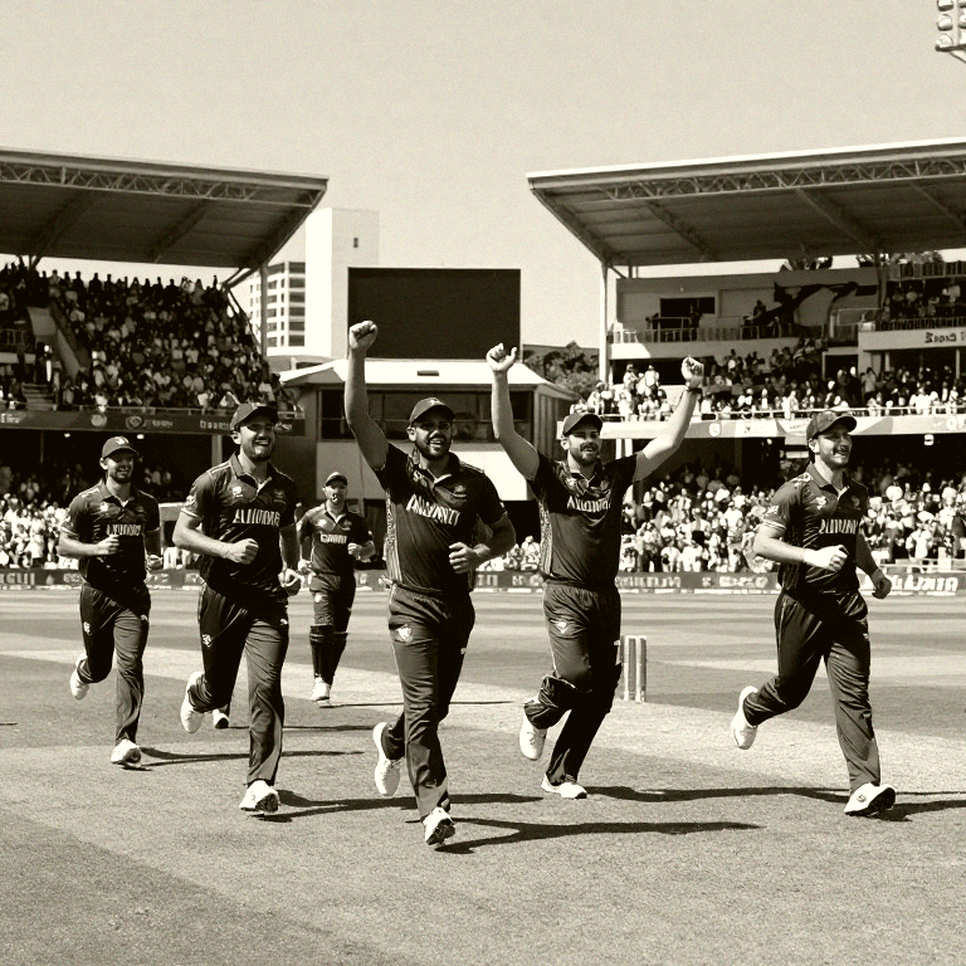
Now the counter-intuitive angle. Many will argue the court intervention was necessary because factionalism had held cricket hostage. That argument is superficially strong — if an institution is not functioning internally, external intervention becomes unavoidable. But it has a flaw: the court did not decide which player was better; it decided who holds selection authority. That is a legal question, not a cricketing one. And that difference is the crux. When selection control becomes a bargaining chip between factions, the XI that takes the field is not the best XI — it is the most legitimate XI.
The other side of this paradox is that the BCCI had a formal option. The board could have established a standing dispute-resolution mechanism for state associations so matters would not reach court. Instead it chose to step back with 'no option.' That is legally comprehensible, but structurally it leaves a gap — and that gap can be filled in another state next time.
From the players' perspective, this episode reveals another truth. Those displaced by the dispute have no formal grievance forum. Those brought in received first-class caps they might not otherwise have earned. In both cases the criterion was not cricket. And when the criterion is not cricket, the effect of changing a team at round four does not stay confined to one season — it cracks the state's talent pipeline.
The commercial side of this episode is limited, and I will not inflate it. Ranji Trophy broadcast markets, sponsors and spectator trust may be affected, but that cannot be assessed from the data available in this report. What is clear is that this is not a commercial crisis but a governance crisis. And the cost of a governance crisis is borne first by players, then by the credibility of the competition.
One more point makes this case underrated. Beyond the 30 October order, the source report carries no explicit date, no round-four result, no venue name and no innings-level detail. That does not make the event less important — it shows another problem: the absence of transparency in governance reporting of domestic cricket. When a court decides selection control and a match result is read politically, the most necessary thing is the document. And in this case the documents are not public.
My experience says the real story in such cases lies not in the court ruling but in the silence after it. Why did the displaced players issue no statement? Do they have any grievance forum? Where did the new selectors record the basis of their decisions? After saying 'no option,' did the BCCI issue any formal note on how such disputes will be resolved going forward? The source has no answers — and that is this case's biggest gap.
Looking ahead: whatever the round-four result, it will be read politically — a defeat will let the rival faction say the selection was wrong; a win will let the supporting faction say the court was right. Both interpretations will be meaningless sportingly, because one match can neither prove nor disprove any selection system. But in politics such results become weapons.
The real question: will Meghalaya cricket reach a stable selection process by next season? And will the BCCI build a standing mechanism for state-association disputes so that no team has to be changed by court order again? If the answer is no, this episode will not remain Meghalaya's story — it will become another example of the governance weakness of Indian domestic cricket, in which players are always found standing in the last row. And that row, as I said before, nobody reads.